
Choosing a glass storage container supplier with stable quality
Choosing a reliable glass storage container supplier is essential for procurement professionals seeking consistent quality, food safety, and long-term supply stability. In a competitive kitchen equipment market, the right supplier can help reduce purchasing risks, improve operational efficiency, and meet evolving customer expectations. This article explores the key factors buyers should evaluate when selecting a dependable glass storage container supplier.
Why supplier stability matters more than unit price
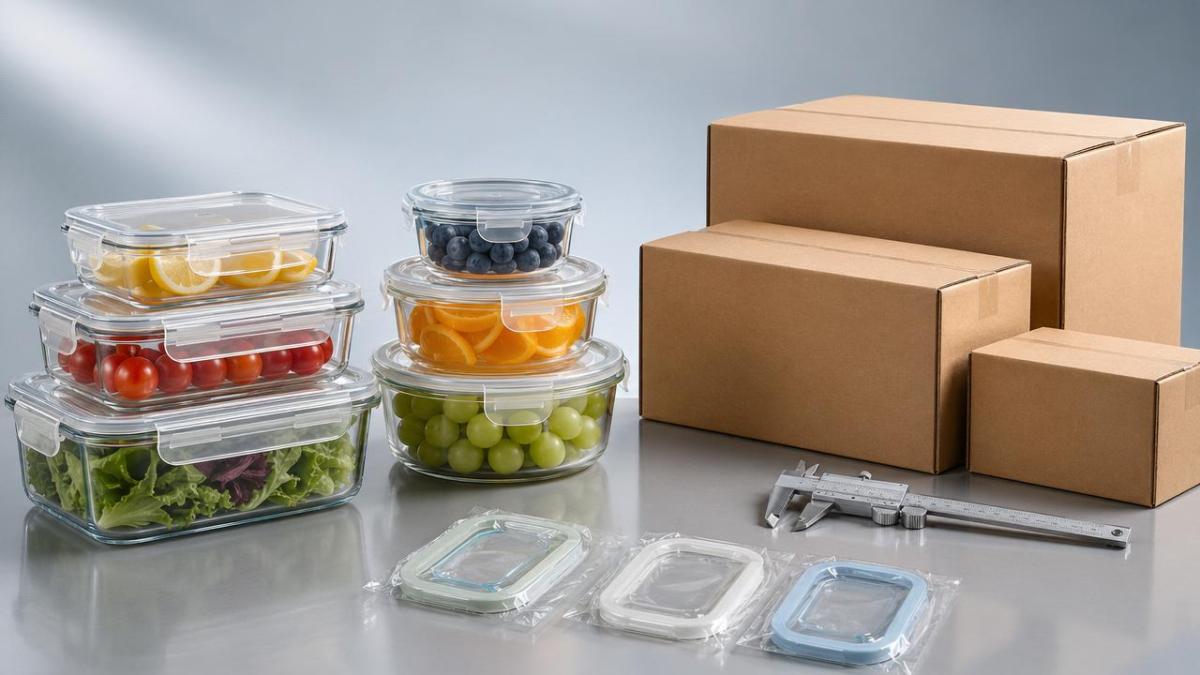
For procurement teams in restaurants, hotels, food processing plants, central kitchens, and retail kitchenware channels, a glass storage container supplier is not only a source of products. The supplier influences food safety, replenishment speed, packaging consistency, brand reputation, and total purchasing cost. A low initial price can quickly lose its appeal if breakage rates rise, lids fail, cartons arrive damaged, or deliveries become inconsistent.
In the kitchen equipment industry, buyers are under pressure to balance several goals at once: safe food contact materials, efficient storage solutions, reliable export packaging, and predictable lead times. As foodservice businesses adopt more standardized workflows and digital inventory systems, they increasingly need suppliers that can support repeatable specifications and stable batch quality.
- A stable glass storage container supplier helps reduce hidden costs caused by returns, replacement claims, and emergency reorders.
- Consistent product dimensions improve compatibility with shelving, stacking systems, kitchen prep stations, and transport crates.
- Reliable documentation supports food-contact reviews, import compliance checks, and customer audits.
- Stable production planning matters when seasonal purchasing peaks or multi-site rollouts require fixed delivery windows.
How to evaluate a glass storage container supplier before placing volume orders
Procurement decisions improve when buyers use a structured evaluation model. Instead of relying only on product photos, quotation sheets, or sales claims, it is better to review the supplier across manufacturing, quality control, compliance, logistics, and service responsiveness. This is especially important in cross-border sourcing, where communication gaps and unclear specifications often create avoidable losses.
The table below summarizes practical criteria procurement teams can use when screening a glass storage container supplier for commercial or distribution use.
A capable glass storage container supplier should perform reasonably well across all five dimensions. If one area is weak, such as compliance or packaging control, that weakness can offset price advantages and create downstream operational costs for buyers.
Questions buyers should ask during supplier screening
- Can the supplier provide the same mold, lid fit, and carton standard for repeat orders over time?
- What defect criteria are used for bubbles, scratches, rim chips, sealing issues, and logo position?
- How are samples controlled so that approved samples match bulk production?
- What packaging tests or transport protections are used for export shipments?
- How does the supplier handle urgent replenishment, design changes, or nonconforming lots?
Which technical details indicate stable quality?
Stable quality in glass food storage containers depends on more than appearance. Procurement teams should look at measurable product characteristics that affect durability, safety, usability, and repeatability. In commercial kitchens and food processing settings, even small inconsistencies can disrupt stacking, washing, labeling, and portion control.
Key technical points to verify
- Wall thickness consistency, because uneven thickness can increase breakage risk during transport or thermal use.
- Rim flatness and lid fit, since sealing performance directly affects food freshness and leakage control.
- Dimensional tolerance, especially for nesting, stacking, shelf planning, and accessory compatibility.
- Resistance to routine use conditions such as refrigeration, dishwashing, and normal reheating scenarios where applicable.
- Carton strength and internal protection design, which strongly affect the actual delivered quality.
The following table gives a practical reference for buyers who need to compare technical checkpoints when working with a glass storage container supplier.
Buyers do not always need laboratory-level detail, but they do need consistency. A supplier that can clearly explain tolerance control, inspection criteria, and packaging logic is usually easier to manage in long-term procurement programs.
What certifications and compliance documents should procurement teams review?
Compliance review is often where purchasing delays begin. A glass storage container supplier serving foodservice, retail, or import markets should be prepared to support common food-contact and export documentation requests. Exact requirements vary by destination market and application, but buyers should verify document readiness early rather than after production begins.
Common compliance areas to confirm
- Food-contact material declarations for the glass body and lid-related materials where applicable.
- Product testing support aligned with the destination market’s routine import expectations.
- Packaging and labeling accuracy, including carton marks, origin statement, barcode format, and item coding.
- Batch traceability records that help resolve complaints or support warehouse controls.
Procurement teams should also ask whether the supplier can coordinate third-party inspection or pre-shipment verification if the order value or customer requirement justifies it. This step can be especially useful when launching a new SKU, switching factories, or sourcing for regulated foodservice chains.
How different usage scenarios change supplier selection
Not every buyer needs the same type of glass storage container supplier. Selection criteria should match the real use case. A distributor serving household retail buyers may prioritize appearance, packaging design, and SKU variety. A central kitchen may focus more on repeat dimensions, lid reliability, and fast replenishment. A food processing business may emphasize traceability, pallet efficiency, and operational durability.
The table below shows how application scenarios influence procurement priorities.
When buyers define the end-use scenario clearly, supplier selection becomes more objective. This reduces internal debate and helps align sourcing, warehousing, sales, and quality teams around the same purchasing criteria.
Common mistakes when choosing a glass storage container supplier
Many procurement issues do not come from poor intentions. They come from incomplete evaluation. In the kitchen equipment trade, where suppliers may offer similar-looking products, small overlooked details can produce major costs after delivery.
Frequent procurement mistakes
- Choosing only by quoted price without reviewing breakage history, sealing reliability, or packaging design.
- Approving a sample without confirming whether bulk production will use the same mold, lid source, and packing method.
- Ignoring carton dimensions and pallet layout, which can affect freight cost and warehouse handling efficiency.
- Starting production before finalizing artwork, barcode rules, or carton marks, leading to relabeling or shipment delay.
- Failing to set a complaint handling process for shortages, visible defects, or transit damage.
A disciplined sourcing process can prevent these problems. Buyers should document product specifications, approval milestones, and quality acceptance criteria before issuing a purchase order. This is particularly important when coordinating multiple SKUs or seasonal launches.
A practical procurement process for lower-risk sourcing
If your team needs a repeatable method for evaluating a glass storage container supplier, the process below can improve decision quality while keeping projects on schedule.
- Define application needs, including capacity range, lid type, expected usage conditions, carton requirements, and target market.
- Request technical details, sample lead time, compliance support, and packaging information from shortlisted suppliers.
- Compare samples using a structured checklist that covers dimensions, fit, finish, weight consistency, and packing quality.
- Confirm commercial terms such as MOQ, lead time, replenishment flexibility, defect handling, and documentation support.
- Approve a final reference sample and link it to the purchase order, artwork file, and packing standard.
- Review the first shipment closely and use actual delivery results to decide whether to scale the supplier relationship.
This workflow is well suited to buyers managing hotel supply chains, restaurant groups, import distribution, and kitchen equipment procurement projects where continuity matters as much as cost.
FAQ: what procurement teams often ask
How do I know whether a glass storage container supplier can maintain stable quality?
Look for repeatability rather than isolated sample quality. Ask about inspection points, approved sample control, packaging standards, and how the supplier handles batch variation. Stable quality usually shows up in consistent dimensions, reliable lid fit, controlled appearance defects, and fewer delivery surprises over multiple orders.
What is more important: low MOQ or production stability?
That depends on your business model, but for most professional buyers, production stability creates more long-term value. A low MOQ may help with testing a market, yet unstable quality can quickly generate returns and reordering pressure. If possible, balance trial flexibility with clear confirmation of capacity and repeatability.
What should I prioritize for export orders?
Prioritize packaging strength, carton labeling accuracy, batch traceability, and document readiness. Glass products are vulnerable in logistics, so export success often depends as much on protection design and shipping preparation as on the container itself.
How long does supplier evaluation usually take?
For a standard program, buyers often need time for quotation comparison, sample review, specification confirmation, and document checks. The exact cycle varies by SKU complexity, private label needs, and whether testing or pre-shipment inspection is required. Building a clear checklist early can shorten the process significantly.
Why choosing the right partner supports future kitchen equipment growth
The kitchen equipment industry is moving toward smarter operations, better food safety control, energy-efficient workflows, and more integrated supply systems. In that environment, procurement teams need suppliers that can support consistency, traceability, and flexible cooperation. A dependable glass storage container supplier fits into that broader shift by helping buyers standardize storage tools across kitchens, food preparation lines, and retail channels.
As international trade continues to expand, procurement decisions will increasingly favor suppliers that combine manufacturing discipline, responsive communication, export familiarity, and realistic customization support. That is how purchasing teams reduce risk while improving long-term category performance.
Why choose us for your sourcing discussion
If you are comparing glass storage container supplier options for restaurant supply, hotel projects, food processing use, or distribution programs, we can support a more practical evaluation process. Instead of limiting the conversation to price, we can help you review product parameters, sample matching, packaging method, delivery planning, and application fit.
- Parameter confirmation for size, capacity, lid type, and packaging requirements.
- Product selection advice based on restaurant, hotel, central kitchen, retail, or private label scenarios.
- Lead time discussion for sample preparation, bulk order scheduling, and replenishment planning.
- Customization communication for logo, gift box, carton mark, barcode, and packing configuration.
- Support on certification expectations, document preparation, and shipment coordination.
- Quotation review based on realistic order quantity, shipping terms, and total procurement efficiency.
If you want to reduce sourcing uncertainty, send your required specifications, target application, expected order volume, and delivery destination. That makes it easier to discuss suitable models, sample support, compliance expectations, and a practical purchasing plan with fewer surprises later.
Popular Tags
Kitchen Industry Research Team
Dedicated to analyzing emerging trends and technological shifts in the global hospitality and foodservice infrastructure sector.
Industry Insights
Join 15,000+ industry professionals. Get the latest market trends and tech news delivered weekly.
No spam. Unsubscribe anytime.
Contact With us
Contact:
Anne Yin (Ceramics Dinnerware/Glassware)
Lucky Zhai(Flatware)