
Why some glass honey jars leak after hot filling
Hot filling can improve efficiency and product safety, but it may also reveal sealing weaknesses in a glass honey jar. For quality control and safety managers, understanding why leakage happens after filling is essential to reducing product loss, preventing contamination, and maintaining packaging reliability. This article explains the main causes and practical checks that help identify and prevent post-fill leaks.
Why does a glass honey jar leak after hot filling?
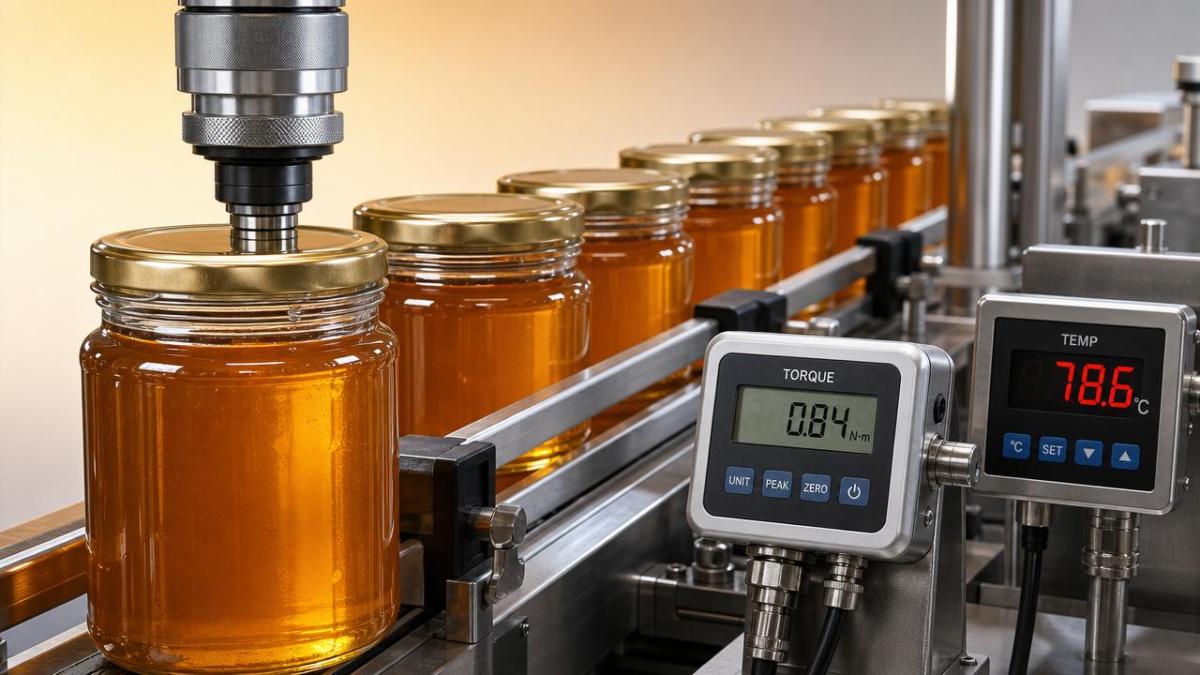
In food processing, packaging failure rarely comes from one single defect. A leaking glass honey jar after hot filling is usually the result of interaction between product temperature, closure torque, glass finish dimensions, liner performance, and post-fill handling. In kitchens, central production facilities, and foodservice supply chains, these failures matter because even a small leak can create hygiene risks, sticky secondary contamination, label damage, and customer complaints.
For QC and safety teams, the key question is not only whether a jar leaks, but when and why it leaks. Some units fail immediately at the capper. Others pass visual inspection and only leak during cooling, warehousing, or transport. That timing gives clues about the root cause. If leakage appears during cooling, vacuum formation and liner response become major suspects. If it starts after pallet movement, impact, thread mismatch, or insufficient application torque may be involved.
In the broader kitchen equipment and food processing sector, hot filling lines are becoming faster and more automated. That improves throughput, but it also reduces tolerance for poor cap application, inconsistent jar dimensions, or unverified cooling procedures. A glass honey jar that performs acceptably on a slow manual line may fail on a high-speed automated line if process controls are not tightened.
- Seal failure can begin at the contact point between lid liner and glass land surface.
- Thermal expansion during filling may temporarily mask defects that become visible only during cooling.
- Honey viscosity slows visible leakage, so weak seals may go unnoticed until cartons or pallets are opened.
- Line speed, capper setup, and supplier tolerance stack-up often explain recurring batch complaints.
What are the most common root causes QC teams should check first?
Before changing packaging suppliers or adjusting fill temperatures, it helps to screen the most common root causes in a structured order. Most post-fill leakage in a glass honey jar can be traced to five areas: glass finish quality, cap and liner condition, capping parameters, product and temperature behavior, and downstream mechanical stress. A disciplined review reduces guesswork and shortens corrective action time.
The table below helps QC personnel prioritize inspection points when a glass honey jar shows leakage after hot filling. It is especially useful in commercial kitchens, food processing rooms, and automated filling environments where multiple equipment variables can influence seal integrity.
This screening table shows why leakage is often a systems problem rather than a packaging-only problem. In many operations, the jar supplier, closure supplier, filling machine, and warehouse team each control one part of the outcome. QC managers get faster results when they review the full process chain instead of isolating the jar alone.
1. Finish and thread defects on the glass container
A glass honey jar may look acceptable from a distance yet still contain sealing defects. Small chips on the sealing land, thread irregularities, cocked finishes, or oval openings can prevent uniform liner compression. Hot filling increases sensitivity because the closure must hold a reliable seal while the product cools and internal pressure changes.
For incoming inspection, do not rely only on random visual checks under normal room lighting. Use magnified inspection for finish damage, sample dimensional checks for critical neck dimensions, and clear acceptance criteria with the packaging supplier. If leakage appears in only one cavity pattern or one pallet zone, supplier process variation may be involved.
2. Closure-liner performance at elevated temperature
Not every lid liner behaves the same during hot fill. Some materials soften too much, some recover poorly after compression, and some are better suited for dry products than viscous warm foods. A glass honey jar filled hot needs a liner that can maintain contact pressure through thermal change without imparting unwanted odor or compromising food contact requirements.
If your line uses standard metal twist caps, review whether the liner type is rated for the actual product temperature, not just the nominal target. Actual fill temperature at the nozzle may differ from tank readings. In automated kitchen and food processing operations, this gap is common when heating, holding, and transfer systems are not uniformly controlled.
3. Torque variation and capper setup
Capping torque is a frequent source of hidden leakage. Under-torque leaves the closure too loose to maintain seal compression. Over-torque can distort the liner, strip threads, or create false confidence because the cap feels tight while the sealing interface is damaged. For a glass honey jar, repeatability matters more than a single target number written in a setup sheet.
QC teams should compare applied torque, removal torque, and bridge integrity trends if tamper-evident caps are used. It is also important to check capper head wear, chuck alignment, spindle pressure, and whether bottle stabilization is adequate during high-speed closure application.
How do temperature, vacuum, and honey viscosity affect leakage risk?
Hot filling changes the physical conditions around the package. When honey or honey-based syrup enters a glass honey jar at elevated temperature, the product, air in headspace, glass body, and closure all respond differently. As the package cools, volume change and pressure change can either strengthen the seal or expose weak points. That is why jars that look stable on the line may later develop sticky residue around the thread or lug area.
Honey adds complexity because it is viscous. A low-viscosity liquid may leak quickly and become obvious during inspection. Honey can leak slowly, especially through micro-gaps. Operators may miss early-stage leakage because the product does not drip immediately. Instead, it creeps under the closure and attracts dust, damages labels, or appears only after cartons are opened.
- If the fill temperature is too high, the liner may soften excessively or closure compound behavior may change.
- If the fill temperature is too low, the intended vacuum effect may be weak, and seal formation may be inconsistent.
- If headspace is too small, pressure dynamics may become unstable during closure and cooling.
- If product contacts the finish area before capping, residue can interfere with seal contact.
In kitchen equipment environments focused on hygiene and throughput, precise thermal management is increasingly important. Heating tanks, transfer pumps, filling valves, and cap application stations should be treated as one controlled system. Small temperature drift across this chain can change leakage rates significantly, especially during long production runs.
A practical process window for safety managers
Safety managers do not always need to redesign packaging first. They often get faster control by defining a validated process window: acceptable fill temperature range, headspace range, capping delay limit, torque range, and cooling conditions. When a glass honey jar fails, the first question should be whether the batch stayed within that validated window from filler to pallet.
Which inspection and test methods are most useful after hot filling?
Leak investigation becomes more effective when tests are selected according to the failure mode. Not every facility needs advanced laboratory equipment, but every facility handling a glass honey jar should have a defined post-fill verification plan. That plan should include on-line checks, hold-time observation, and transport-related review where necessary.
The following table compares practical test methods and what they reveal in day-to-day quality control of hot-filled glass honey jar production.
These methods do not need to be applied equally in every facility. A restaurant supply producer shipping locally may rely more on torque and hold testing. A food processing company exporting through long distribution channels should add transport-related validation because vibration, temperature swings, and stacking pressure can turn a marginal seal into a reported leak.
A simple troubleshooting sequence
- Separate leaking units by production time, closure lot, and jar lot to see whether failure clusters by material or shift.
- Check fill temperature and headspace records against actual retained samples, not only machine settings.
- Measure torque on retained non-leaking and leaking units from the same batch.
- Inspect jar finish and liner impression patterns to confirm whether sealing contact was uniform.
- Review cooling, case packing, pallet stacking, and transport handling for delayed-failure triggers.
How should buyers evaluate jars, lids, and equipment as one system?
Procurement decisions directly affect leakage risk. Many teams purchase the glass honey jar, cap, and capping equipment separately, then try to solve compatibility problems on the production floor. That approach often increases total cost because failures appear late, after labels, cartons, labor, and product have already been added.
For quality and safety managers in the kitchen equipment sector, a better approach is system-based evaluation. The package should be selected based on actual process conditions: product viscosity, fill temperature, line speed, closure style, operator skill level, secondary packing, and shipping profile. This is especially important in modern automated foodservice and food processing operations where integrated equipment performance determines packaging consistency.
Key selection criteria before approving a glass honey jar
- Confirm neck finish specification consistency, including tolerance expectations for sealing surface and thread geometry.
- Match closure and liner material to real hot-fill temperatures, not estimated values from recipe documentation.
- Ask whether the capper can maintain stable application under your actual production speed and jar height variation.
- Review whether the jar shape supports stable conveyance, accurate capping, and efficient downstream packing.
- Include retained-sample testing after cooling and after short-term storage before final approval.
Why integrated kitchen and packaging knowledge matters
In many facilities, the packaging issue is treated separately from the heating, transfer, and capping equipment. That separation slows root-cause analysis. Suppliers with experience in kitchen equipment, food processing workflows, and packaging integration can help teams evaluate how heating systems, filling accuracy, capper design, and cooling layout interact. This is increasingly valuable as smart production systems and digital monitoring become common in commercial kitchen and food manufacturing environments.
What compliance and documentation should safety managers request?
A leaking glass honey jar is not only a yield problem. It can become a food safety and compliance issue if leakage contaminates outer surfaces, attracts debris, compromises traceability labels, or leads to customer handling concerns. Safety managers should therefore request documentation that supports food-contact suitability and process consistency.
- Food-contact compliance information for closure and liner materials, based on the target market’s applicable regulatory framework.
- Packaging specifications with agreed tolerances for the jar finish and closure dimensions.
- Incoming inspection criteria and defect classification rules for critical sealing defects.
- Line validation records showing acceptable ranges for temperature, torque, headspace, and cooling conditions.
- Retention and complaint investigation procedures linking material lots to production batches.
Common management systems and food safety programs often expect documented control of packaging materials, critical handling steps, and corrective action records. Even when no specific jar standard is mandated for the application, disciplined records make it easier to defend decisions, support audits, and reduce repeat failures.
FAQ for QC and safety teams handling a glass honey jar
Is leakage mainly caused by the jar or by the cap?
Usually neither should be blamed alone at the start. A glass honey jar leaks most often because jar finish quality, liner behavior, torque, fill temperature, and handling conditions interact. If failures occur across multiple jar lots with one closure lot, the cap system becomes more suspect. If failures cluster around one jar lot or one cavity pattern, the glass finish may be the stronger lead.
Should we increase torque to stop hot-fill leaks?
Not automatically. Increasing torque can help if the current level is below the validated range, but too much torque may damage the seal interface or create opening problems for end users. First confirm the recommended torque window for the closure system, then verify whether actual application is stable across time, operators, and machine speed.
Why do some jars leak only after storage or transport?
That pattern suggests a marginal seal rather than a catastrophic initial failure. During storage or transport, vibration, compression, temperature fluctuation, and side loading can open a micro-path that did not show on the line. With a viscous product, the leak may develop slowly and become visible only after cases are moved or opened.
What is the fastest improvement if we have recurring complaints?
Start with a controlled trial: define one jar lot, one closure lot, one validated temperature range, and one monitored torque range. Hold cooled samples for observation, then compare with current production practice. This focused method often identifies whether the main issue is material variation or process variation without disrupting the full plant schedule.
Why choose us for packaging process support and next-step consultation?
If your team is evaluating a glass honey jar for hot filling, we can support more than basic container supply discussion. We understand how packaging decisions connect with kitchen equipment, filling workflows, hygiene control, automation needs, and shipment risk. That matters for QC and safety managers who need fewer assumptions and more usable process guidance.
You can contact us to discuss specific points such as jar and closure parameter confirmation, hot-fill suitability review, line compatibility with your capping equipment, sample support for verification, documentation expectations for food-contact materials, delivery timing, and quotation planning based on your production scale. If you are comparing alternative jar formats, liner options, or integrated filling solutions, we can also help structure the evaluation so your team can make a practical decision faster and with lower leakage risk.
Popular Tags
Kitchen Industry Research Team
Dedicated to analyzing emerging trends and technological shifts in the global hospitality and foodservice infrastructure sector.
Industry Insights
Join 15,000+ industry professionals. Get the latest market trends and tech news delivered weekly.
No spam. Unsubscribe anytime.
Hot Articles
 ASEAN FTA Upgrade Enters Text Verification Phase; Smart Kitchen Controls Added to Zero-Tariff List
- Electronics Manufacturing Leads with 13.6% Output Growth; Kitchen Appliance Chip Supply Stabilizes
- OpenCLAW-like Agent Deployment Risk Management Guidelines Released
- Green Power Stocks Rally; Overseas Buyers Prioritize Green Electricity Usage

Contact With us
Contact:
Anne Yin (Ceramics Dinnerware/Glassware)
Lucky Zhai(Flatware)