
Display refrigerator choices that hurt impulse sales
Choosing the wrong Display Refrigerator can quietly reduce impulse sales, weaken product visibility, and increase operating costs. For business decision-makers in foodservice, retail, and hospitality, every refrigeration choice affects customer behavior, brand presentation, and daily efficiency. Understanding which display refrigerator features help or hurt spontaneous purchases is essential for building a more profitable and competitive operation.
What a Display Refrigerator Really Does in a Sales Environment
A Display Refrigerator is not only a cooling appliance. In commercial settings, it functions as a silent salesperson, a visual merchandising tool, and a key part of the customer journey. Whether placed in a café, bakery, hotel lobby, convenience area, supermarket, or quick-service restaurant, it shapes how products are seen, evaluated, and purchased within seconds.
In the kitchen equipment industry, the role of refrigeration has expanded beyond food preservation. Businesses now expect a Display Refrigerator to support food safety, reduce energy waste, integrate with modern layouts, and help convert casual interest into immediate action. This matters because impulse buying often depends less on the product itself and more on visibility, accessibility, lighting, temperature consistency, and trust in freshness.
For enterprise decision-makers, the issue is strategic. A poor refrigeration choice can create hidden losses: slower stock rotation, unattractive presentation, higher maintenance, and lower average transaction values. By contrast, the right display solution can support revenue growth without changing product assortment or staffing levels.
Why the Industry Pays Close Attention to Display Performance
Across the broader kitchen equipment market, businesses are under pressure to improve efficiency, hygiene, sustainability, and customer experience at the same time. Refrigeration sits at the intersection of all four. As foodservice operations become more data-driven and design-conscious, the Display Refrigerator is being evaluated not only by technical specifications but also by how well it supports merchandising and brand consistency.
This is especially relevant in sectors where buying decisions happen quickly. Ready-to-drink beverages, desserts, dairy items, pre-packed meals, sandwiches, and grab-and-go products rely on immediate visual appeal. If customers cannot quickly see the item, understand its freshness, or access it comfortably, impulse sales decline. In many operations, this loss is gradual and therefore easy to miss in standard reporting.
Another reason for industry focus is energy efficiency. Modern commercial kitchens and retail spaces are looking for equipment that reduces utility costs while maintaining high performance. A Display Refrigerator that harms impulse sales and consumes excessive power creates a double burden: weak commercial return and avoidable operating expense.
The Wrong Choices That Commonly Hurt Impulse Sales
Not every refrigeration unit designed for storage should be used for display. One of the most common mistakes is selecting a model with strong cooling capacity but weak merchandising value. Business buyers sometimes focus on size, price, or brand familiarity while underestimating how design details influence customer behavior.
Poor lighting is one major problem. If the interior is dim, unevenly lit, or creates shadows, products look less fresh and less premium. This is particularly damaging for cakes, beverages, salads, fruit cups, and branded packaged foods, where visual cues strongly affect spontaneous decisions.
Another issue is obstructed visibility. Thick door frames, fogging glass, poorly positioned shelves, and overcrowded layouts can reduce the impact of even high-margin products. Customers do not spend much time decoding what is inside a refrigerator. If they have to bend awkwardly, open the door too often, or search through clutter, the impulse moment disappears.
Temperature inconsistency also hurts sales indirectly. Products that appear partially dried, unevenly chilled, or visibly aged undermine confidence. In hospitality and foodservice, perceived freshness influences not only that one purchase but also broader trust in the operation. A Display Refrigerator that struggles with recovery after frequent door openings can make fast-selling zones look unreliable during peak hours.
Placement-related design mistakes are equally important. Units that are too tall, too deep, or awkwardly opened may suit back-of-house storage better than front-of-house selling. If the equipment does not fit traffic flow, customers may simply pass it by. The best-selling items often need to be placed between natural eye and hand level, but some equipment designs make this difficult.
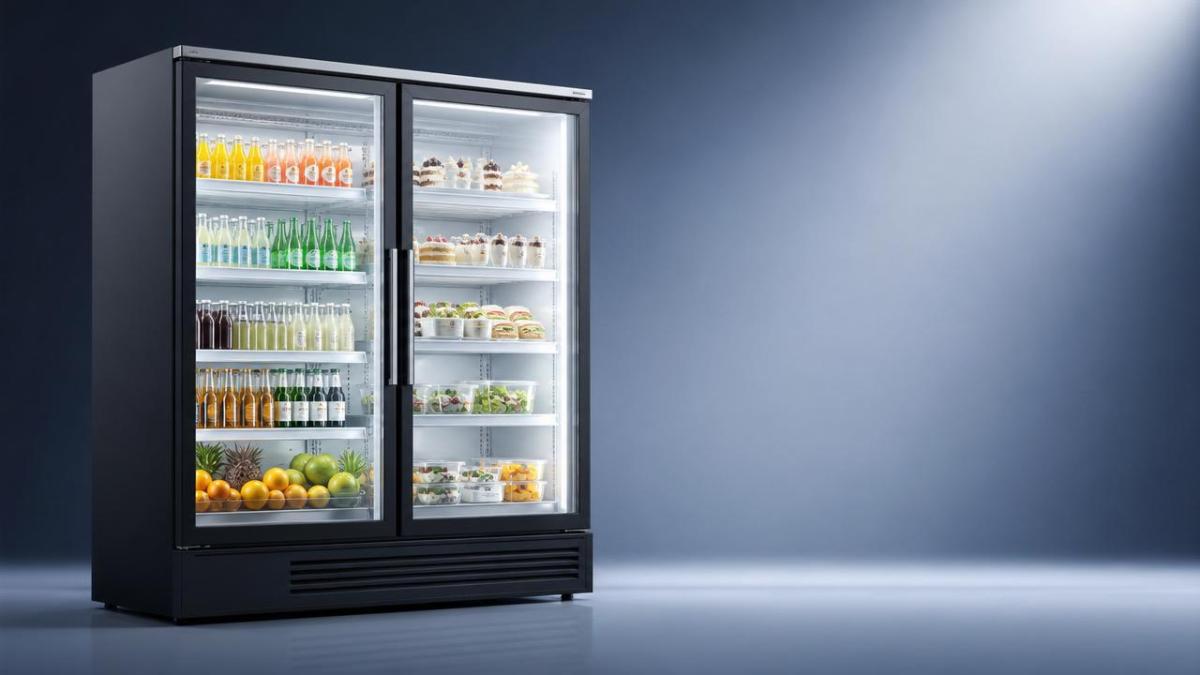
How Display Refrigerator Features Influence Customer Behavior
Impulse sales are driven by speed, clarity, and desire. A well-designed Display Refrigerator helps customers notice a product, understand it, and feel comfortable buying it immediately. Several features shape this process.
Glass quality matters because clear, anti-fog doors support uninterrupted visibility. Lighting matters because it enhances color, texture, and freshness cues. Shelf design matters because adjustable layouts allow best-sellers to remain prominent instead of hidden behind packaging or blocked by larger items. Door type matters because sliding or self-closing doors may work better in some high-traffic settings than swing doors that interrupt flow.
Noise and heat output can also influence perception. In premium hospitality or café environments, loud refrigeration systems can weaken the atmosphere. Excess external heat may make nearby seating or service areas less comfortable. These details seem operational, yet they shape the total retail experience and can affect dwell time near displayed products.
Digital temperature control, energy-saving components, and durable materials are increasingly valuable as businesses seek smarter kitchen equipment solutions. In modern integrated environments, a Display Refrigerator is expected to support both aesthetics and performance, not force a trade-off between the two.
Industry Overview: What Decision-Makers Should Evaluate
Before choosing equipment, it helps to review the main decision factors in a structured way. The table below highlights how a Display Refrigerator can either support or weaken impulse selling performance.
Typical Business Scenarios and Display Needs
Different industries use a Display Refrigerator for different commercial goals. Understanding the context helps avoid poor equipment matching.
Practical Guidance for Better Equipment Decisions
A sound Display Refrigerator decision should begin with customer behavior, not only with technical specification sheets. Business leaders should ask where impulse decisions happen, which products deliver the highest margin, and how fast those items need to be seen and accessed. Once that is clear, equipment selection becomes more strategic.
It is also important to evaluate the refrigerator in real operating conditions. Peak-hour door openings, ambient room temperature, lighting conditions, and replenishment routines all affect performance. A unit that looks acceptable in a catalog may fail to support sales on a busy service floor. Reviewing line of sight from the entrance, checkout, seating area, or service counter can reveal whether the Display Refrigerator is helping conversion or merely occupying space.
Maintenance planning should not be treated as a secondary issue. Dirty condenser coils, damaged seals, poor shelf organization, and neglected glass cleaning can quickly reduce visual appeal and energy efficiency. In many businesses, a good refrigeration asset underperforms because daily merchandising discipline is weak. Equipment choice and operating practice must work together.
For organizations managing multiple sites, standardizing key display principles can improve performance across locations. That does not mean using the same model everywhere. It means defining what success looks like: clear visibility, consistent cooling, easy restocking, low operating cost, and strong compatibility with the brand environment.
Long-Term Business Value Beyond Immediate Sales
Although impulse conversion is a major concern, the benefits of selecting the right Display Refrigerator extend further. Better presentation supports brand perception. Stable storage conditions reduce waste. Energy-efficient systems lower overhead. Reliable equipment reduces service disruption and protects inventory quality. In a market where operational resilience matters, these gains are cumulative.
This is why the kitchen equipment industry increasingly values integrated solutions. Refrigeration is no longer viewed as an isolated appliance. It is part of a broader system that includes product display, food safety compliance, workflow efficiency, sustainability targets, and customer experience design. Decision-makers who recognize this wider role are better positioned to improve both short-term revenue and long-term asset performance.
Conclusion and Next Step
A Display Refrigerator can either support impulse buying or quietly suppress it. The difference often comes down to visibility, lighting, access, temperature consistency, and fit with the customer journey. For decision-makers in foodservice, hospitality, retail, and broader commercial kitchen environments, the right choice should align technical performance with merchandising value.
If your current equipment is generating traffic but not converting it into spontaneous purchases, the issue may not be your product mix alone. Reviewing how each Display Refrigerator performs in real selling conditions can uncover missed opportunities in presentation, efficiency, and revenue. A careful reassessment today can lead to stronger sales, lower waste, and a more competitive operating model tomorrow.
Popular Tags
Kitchen Industry Research Team
Dedicated to analyzing emerging trends and technological shifts in the global hospitality and foodservice infrastructure sector.
Industry Insights
Join 15,000+ industry professionals. Get the latest market trends and tech news delivered weekly.
No spam. Unsubscribe anytime.
Hot Articles
 ASEAN FTA Upgrade Enters Text Verification Phase; Smart Kitchen Controls Added to Zero-Tariff List
- Electronics Manufacturing Leads with 13.6% Output Growth; Kitchen Appliance Chip Supply Stabilizes
- OpenCLAW-like Agent Deployment Risk Management Guidelines Released
- Green Power Stocks Rally; Overseas Buyers Prioritize Green Electricity Usage

Contact With us
Contact:
Anne Yin (Ceramics Dinnerware/Glassware)
Lucky Zhai(Flatware)