
Why glass whiskey tumblers chip sooner in busy service
A glass whiskey tumbler may look sturdy on the shelf, but in busy service it often chips faster than many people expect. Constant stacking, rapid washing, hard countertop contact, and repeated temperature changes all add stress that weakens the rim and base over time. Understanding why this happens can help consumers choose more durable drinkware and make smarter buying decisions.
A checklist approach is the fastest way to judge whether a glass whiskey tumbler will hold up in real use. Most buyers focus on appearance, weight, or price first, yet early chipping usually comes from a combination of design, handling, washing conditions, and service speed. If you know which points to check before buying, you can avoid fragile tumblers that look premium but fail quickly in homes, bars, restaurants, and entertainment spaces.
Start with the key question: where does the damage really begin?
In most cases, chips do not begin with one dramatic drop. They begin with repeated micro-impacts. The rim taps another glass during stacking. The base lands hard on a stone counter. The tumbler moves from a hot dishwasher cycle to a cool room. Over days or weeks, tiny weak points develop. Eventually, a visible chip appears, often on the rim, corner edge, or thick base transition.
For end consumers, that means the best buying decision is not simply choosing the thickest glass. A thick-looking glass whiskey tumbler can still chip quickly if the lip is poorly finished, the shape encourages collision, or the material is not suited to frequent washing. Durability depends on both material quality and service reality.
Core checklist: what to inspect before buying a glass whiskey tumbler
- Rim thickness and finish: The rim is the most vulnerable area. Very thin rims feel elegant, but in busy use they chip sooner. Look for a smooth, evenly finished rim without sharp transitions.
- Base stability: A heavy base can improve feel, but if the edge where the base meets the sidewall is abrupt, impact stress concentrates there. A stable, balanced base is better than a base that is only thick.
- Wall consistency: Uneven wall thickness creates stress points. Hold the tumbler to light and check whether the shape and thickness look uniform.
- Stackability risk: Some whiskey tumblers nest too tightly. This increases rim-to-base contact during storage and removal. If a tumbler is sold as stackable, confirm that contact points are protected by design.
- Dishwasher suitability: If the product is likely to be machine washed often, check whether it is labeled for repeated dishwasher use, not just occasional cleaning.
- Glass type: Tempered or strengthened glass often performs better in demanding settings than standard soda-lime glass, especially where speed and turnover are high.
- Edge shape: Straight, exposed corners chip more easily than softly rounded profiles. Small geometry differences matter more than many buyers realize.
- Intended use: A decorative tumbler for occasional sipping is very different from one used daily for whiskey, cocktails, water service, or mixed drink rotation.
This checklist matters because the kitchen equipment and drinkware market now offers many visually similar options. As commercial and household kitchen solutions become more advanced and more global, consumers have access to a wider range of materials, manufacturing standards, and price points. That makes careful comparison more important, not less.
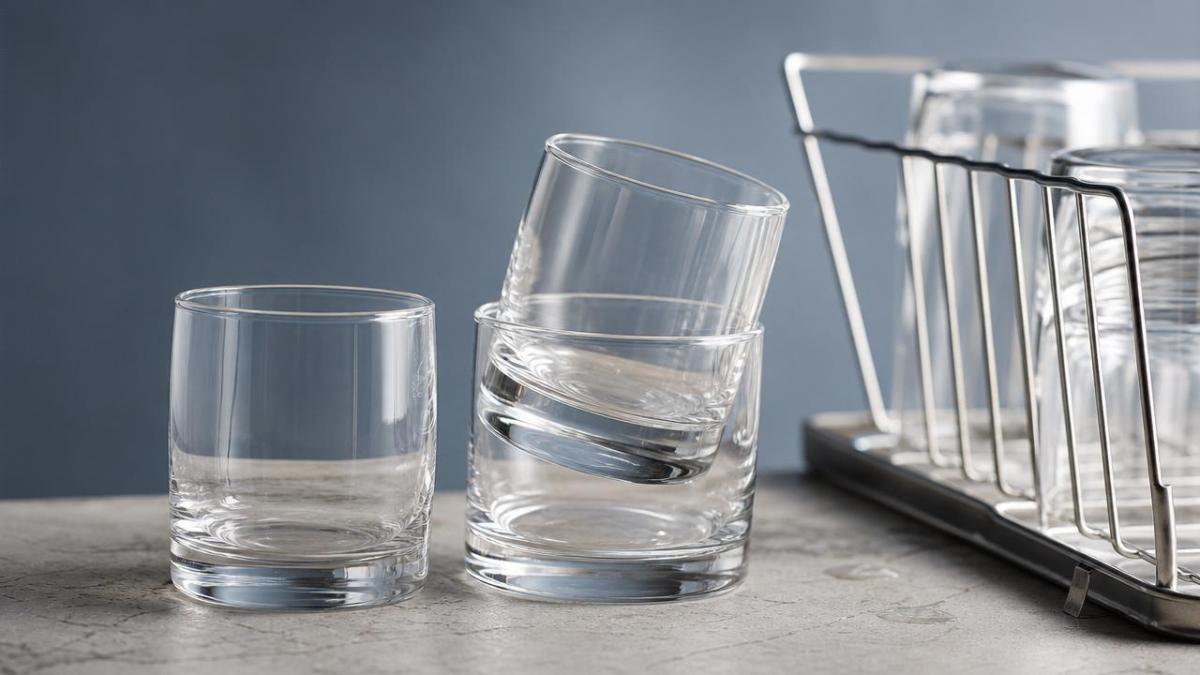
Why busy service makes a glass whiskey tumbler chip sooner
1. Repeated glass-to-glass contact
In fast beverage service, tumblers rarely rest untouched. They are moved in racks, grouped on trays, stacked in storage, and sorted quickly after washing. Every light tap may seem harmless, but the rim of one tumbler striking the harder base edge of another is one of the most common causes of chipping. This is especially true when staff or users are working fast and cannot place each glass gently.
2. Hard landing on counters and sinks
Granite, stainless steel, stone composite, and ceramic surfaces are unforgiving. A glass whiskey tumbler that is set down firmly dozens of times a day experiences repeated shock. The damage may not appear right away, but the edge and base slowly weaken. Homes with hard counters can recreate the same problem, especially during parties or frequent entertaining.
3. Dishwasher and thermal stress
Rapid temperature changes can increase the chance of weakness becoming a chip. Commercial dishwashing is especially demanding because the cycle combines heat, detergent chemistry, water pressure, and fast drying. Even at home, moving a tumbler from hot washing conditions to cold rinsing or filling it with ice immediately after cleaning can create stress over time.
4. Poor storage design
Many chips happen off the table. Tight shelves, overcrowded cabinets, unstable racks, and stacking without separators all increase impact frequency. If storage space is limited, a stylish tumbler with a broad rim or square profile can be more vulnerable than a simpler round design.
5. Hidden manufacturing differences
Two tumblers can look nearly identical online, yet perform very differently in use. Variations in annealing, finishing, wall consistency, and strengthening methods affect resistance to impact. This is why the cheapest option may cost more in replacement frequency, and why a premium look alone does not guarantee a longer lifespan.
Quick comparison table: which factors raise or reduce chipping risk?
Extra checks for different users and service scenarios
For home consumers
If you mainly use a glass whiskey tumbler for personal sipping, occasional guests, or a home bar, prioritize comfort, stable grip, and dishwasher compatibility. You may not need full commercial-grade strength, but you should still avoid fragile rims and tightly stackable shapes if cabinet space is limited.
For frequent entertainers
If you host often, your tumblers face many of the same risks as busy hospitality settings: fast refills, quick cleanup, shared trays, and accidental knocks. In this case, choose a model built for repeated handling, with a reinforced lip and a design that does not jam together when stacked after washing.
For restaurant or bar buying decisions
Even though the audience here is the end consumer, many buyers compare what they use at home with what they see in hospitality. In foodservice environments, replacement cost, wash-cycle durability, and safe storage matter more than elegance alone. A tumbler that survives high-turnover service is often a smart benchmark for consumers who want lasting value.
Commonly ignored warning signs before chips appear
- Tiny roughness on the rim: If your finger catches slightly, a chip may already be forming.
- Clouding near contact zones: Wear around the rim or base can signal repeated abrasion and impact.
- Clicking when stacked: A sharp clicking sound often means hard contact points are hitting repeatedly.
- Minor wobble: A small base distortion can increase uneven landing stress on every use.
- Very light decorative cuts or etched edges: These can create weak points if paired with thin glass construction.
These warning signs are useful because chips are not only a cosmetic issue. Once a glass whiskey tumbler chips, comfort, hygiene, and safety all decline. A damaged rim can affect the drinking experience and may eventually require immediate replacement.
Practical buying and care advice that reduces replacement costs
To buy smarter, compare products using a durability-first method. Read material details, not just marketing descriptions. Check whether the tumbler is described as tempered, strengthened, heavy-use, or suitable for hospitality. Look at rim close-ups in product images. Read reviews that mention dishwasher use, stacking, and breakage patterns, since these reveal how the tumbler performs under real conditions.
After purchase, a few habits can extend service life significantly. Avoid forcing tumblers into tight stacks. Do not overload dishwashers so glasses knock during cycles. Set them down with control on stone or metal surfaces. If possible, use shelf liners or separated storage. These are simple steps, but they directly reduce the repeated impact events that cause most chips.
Consumers should also think beyond the glass itself. The broader kitchen equipment environment matters. Countertop material, sink design, dishwasher performance, storage layout, and even tray use all affect drinkware lifespan. As kitchen systems become more efficient and better integrated, selecting drinkware that matches actual cleaning and storage conditions becomes part of a smarter household or hospitality setup.
FAQ: fast answers before choosing a glass whiskey tumbler
Is heavier always better?
No. Weight can feel premium, but poor rim design or uneven glass can still lead to fast chipping. Balance and finish matter more than mass alone.
Do crystal-style tumblers chip faster?
Some do, especially if they have thin lips or decorative edges and are used heavily. They may be best for occasional use rather than constant service.
Are stackable whiskey glasses a bad choice?
Not always. They work well when engineered for safe contact points. The problem is poorly designed stacking that causes rim-to-base impact.
What is the safest all-around option for durability?
A rounded, dishwasher-suitable, strengthened glass whiskey tumbler with a smooth rim and stable base is usually the most dependable choice for regular use.
Final checklist before you buy
Before making a final decision, confirm these priority points: how often the tumbler will be used, whether it will be machine washed, whether it will be stacked, what surfaces it will contact, and whether the design favors appearance over resilience. If you are comparing suppliers or product lines, ask about glass type, strengthening process, dishwasher suitability, storage recommendations, replacement rate expectations, and packaging protection during delivery.
That short conversation can reveal more than a product description alone. Whether you are buying for a home bar, a gift, or a high-turnover service setting, choosing the right glass whiskey tumbler starts with checking the real risk points first. When durability, care requirements, budget, and usage conditions are aligned, you are far more likely to get drinkware that keeps its finish, lasts longer, and delivers better overall value.
Popular Tags
Kitchen Industry Research Team
Dedicated to analyzing emerging trends and technological shifts in the global hospitality and foodservice infrastructure sector.
Industry Insights
Join 15,000+ industry professionals. Get the latest market trends and tech news delivered weekly.
No spam. Unsubscribe anytime.
Hot Articles
 ASEAN FTA Upgrade Enters Text Verification Phase; Smart Kitchen Controls Added to Zero-Tariff List
- Electronics Manufacturing Leads with 13.6% Output Growth; Kitchen Appliance Chip Supply Stabilizes
- OpenCLAW-like Agent Deployment Risk Management Guidelines Released
- Green Power Stocks Rally; Overseas Buyers Prioritize Green Electricity Usage

Contact With us
Contact:
Anne Yin (Ceramics Dinnerware/Glassware)
Lucky Zhai(Flatware)