
Restaurant supplies for cafeterias with lower refill frequency
Choosing the right restaurant supplies for cafeterias can significantly reduce refill frequency, improve workflow, and support consistent food quality throughout busy service hours. For operators, smart equipment and efficient serving solutions not only save labor and time but also help maintain hygiene, temperature control, and customer satisfaction in high-demand dining environments.
Understanding restaurant supplies for cafeterias in daily operations
In practical terms, restaurant supplies for cafeterias are the equipment, serving tools, storage systems, and support items that help staff prepare, hold, display, serve, and replenish food efficiently. In a cafeteria setting, the goal is not only to serve large volumes of meals, but to do so with fewer interruptions, stable temperatures, and predictable portion control. Lower refill frequency matters because every refill takes labor away from other tasks, increases the chance of spills or contamination, and can slow down service during peak periods.
This topic has become more important as foodservice operations seek higher efficiency, better food safety, and lower energy and labor costs. Cafeterias in schools, hospitals, factories, office campuses, and institutional dining spaces often manage high traffic within limited serving windows. In such environments, selecting restaurant supplies for cafeterias is not simply about buying larger containers. It is about creating a coordinated system that combines capacity, insulation, automation, easy cleaning, and durable materials.
Operators usually feel the difference directly. When hot food wells hold temperature evenly, when beverage dispensers have adequate volume, and when trays, pans, lids, and utensils are matched correctly, service runs more smoothly. Refill intervals become more predictable, staff movement becomes more efficient, and customer lines stay shorter. For that reason, understanding the operational role of restaurant supplies for cafeterias is a practical step toward better performance, not just a purchasing decision.
Why the industry is focusing on lower refill frequency
The kitchen equipment industry is evolving toward automation, intelligence, and energy efficiency, and cafeteria service reflects these wider trends clearly. Foodservice operators are under pressure to provide safe meals, maintain consistency, and control labor costs at the same time. Lower refill frequency supports all three goals. Fewer replenishment trips reduce handling, which can help improve sanitation. Larger or better-designed serving equipment reduces heat loss and product exposure. Labor that would be used for constant refill can instead support customer assistance, cleaning, or back-of-house coordination.
At the same time, modern commercial kitchen technology offers more solutions than before. Heated cabinets, insulated beverage systems, smart holding units, and modular buffet lines allow cafeterias to keep food ready in serviceable quantities without sacrificing quality. Digital monitoring, where available, also helps staff track temperatures and refill timing more accurately. This reflects a broader industry shift toward integrated kitchen systems that connect preparation, holding, and service more effectively.
Demand is also influenced by the expansion of global foodservice and institutional dining. Large cafeterias require reliable, scalable equipment that can operate every day with minimal downtime. As a result, restaurant supplies for cafeterias are increasingly evaluated based on durability, ease of maintenance, energy performance, and compatibility with high-volume workflows rather than appearance alone.
Core value of restaurant supplies for cafeterias with reduced refill needs
The main value lies in operational continuity. In busy lunch periods, customers expect speed and availability. If food pans empty too quickly or drink stations need repeated attention, service quality drops almost immediately. Well-chosen restaurant supplies for cafeterias help maintain stock at the point of service for longer periods, allowing operators to sustain output without creating visible shortages.
A second value is consistency. Refill frequency affects portion appearance, serving temperature, and product texture. Frequent opening of lids or repeated transfer of food can reduce quality, especially for soups, sauces, rice, pasta, or hot entrees. Equipment designed for stable holding conditions supports more consistent presentation from the first customer to the last.
A third value is staff efficiency. Operators often work under tight staffing conditions. Reducing refill frequency means fewer rushed movements between storage, kitchen, and service line. This lowers physical strain and helps reduce service disruptions. In institutional settings where labor planning is critical, such gains can be significant over time.
Key supply categories that support longer service intervals
Not every product contributes equally to lower refill frequency. The most effective restaurant supplies for cafeterias usually fall into a few essential categories. Each one supports a different part of the service cycle.
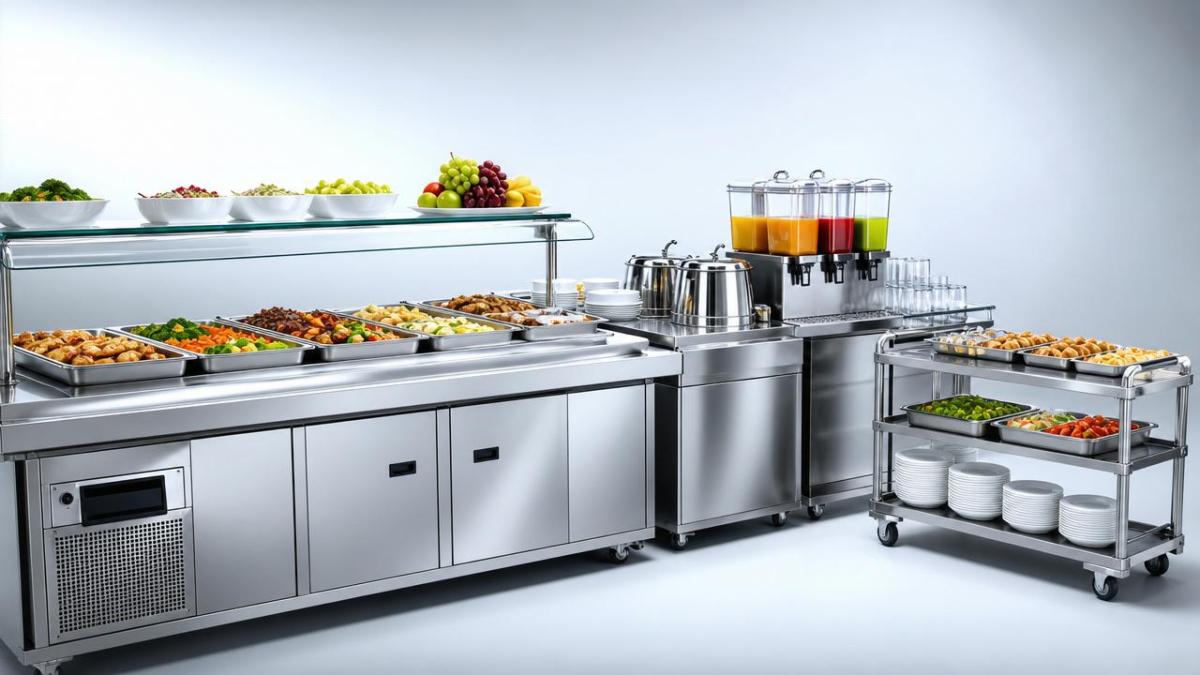
Food holding equipment includes steam tables, heated display units, induction warmers, refrigerated wells, and insulated transport containers. These are often the foundation of restaurant supplies for cafeterias because they allow operators to hold more product safely at the point of service. If capacity is increased without reliable holding performance, food quality may suffer. Therefore, volume and temperature management should be considered together.
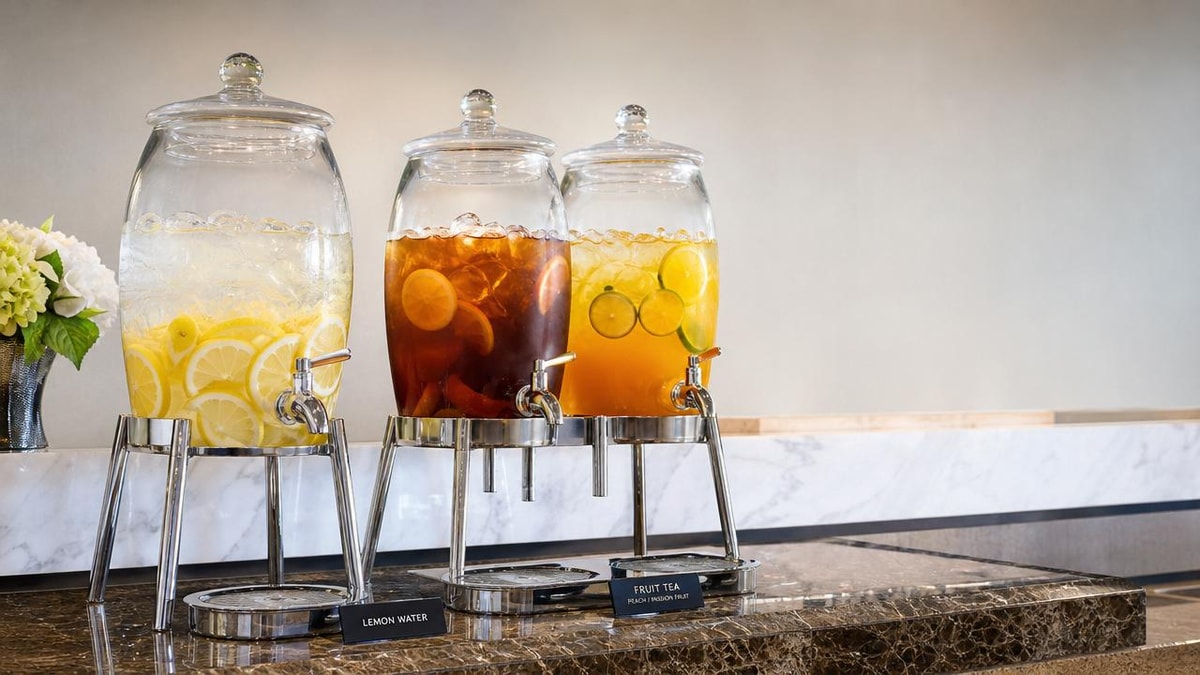
High-capacity pans, lids, inserts, and GN containers also matter. The right depth and material affect both serving volume and thermal retention. Stainless steel remains a common choice because it is durable, hygienic, and easy to clean. For some cold applications, clear and impact-resistant food-safe materials may improve visibility and speed while still supporting efficient service.
Typical cafeteria environments and their supply priorities
Different cafeteria models need different supply strategies. While the keyword restaurant supplies for cafeterias is broad, its most useful application depends on service pattern, menu structure, and user flow.
For operators, this means there is no single universal setup. A school may prioritize speed and ruggedness, while a hospital may prioritize hygiene and controlled access. In both cases, however, restaurant supplies for cafeterias should reduce unnecessary handling and support smooth replenishment planning. The right combination often balances front-line capacity with nearby backup storage, so service stations stay active without becoming overloaded.
How to evaluate supplies beyond basic capacity
Capacity is important, but it should not be the only selection factor. Operators should also evaluate heat retention, cold holding performance, cleaning requirements, material durability, and compatibility with existing kitchen workflows. A larger pan that is awkward to lift or slow to clean may create new problems. Likewise, a large beverage dispenser without easy refill access may reduce convenience rather than improve it.
Ergonomics deserve attention as well. Handles, lid design, serving access, and station layout affect how efficiently staff can work. Supplies that reduce bending, lifting strain, or repeated opening can make a meaningful difference in long shifts. This is especially relevant for operators who manage both self-service areas and supervised serving lines.
Energy efficiency is another growing factor in the kitchen equipment industry. Heated and refrigerated service units run for extended periods, so efficient models can lower operating costs over time. In addition, supplies that integrate with smart monitoring systems may help operators maintain safe conditions while reducing manual checks. As cafeterias modernize, these connected and energy-conscious features are becoming more valuable.
Practical steps for operators implementing better service supplies
A good starting point is to map refill pressure points. Identify which stations require the most attention during peak service: hot entrees, salad bars, soup stations, beverage counters, or cutlery areas. Once the most frequent refill zones are clear, operators can match the right restaurant supplies for cafeterias to the right operational issue. Sometimes the answer is a larger container; sometimes it is a better dispenser, nearby reserve storage, or improved portion control.
It is also useful to standardize pan sizes, lids, containers, and transport tools wherever possible. Standardization reduces confusion, speeds cleaning and storage, and improves equipment compatibility across stations. When staff do not need to search for matching parts or adapt to inconsistent setups, service becomes smoother and less error-prone.
Training should not be overlooked. Even well-designed restaurant supplies for cafeterias deliver the best results only when staff understand loading limits, safe holding times, cleaning routines, and replenishment timing. Operators benefit from clear procedures that define when to refill, how much backup product to stage, and how to maintain food quality during long service windows.
Common mistakes that reduce efficiency
One common mistake is increasing container size without reviewing menu behavior. Some foods hold well in larger volumes, while others lose texture or appeal if stored too long. Another mistake is overlooking serving utensils and dispensing controls. If portion sizes are inconsistent, even large-capacity stations may empty faster than expected. A third issue is poor station layout, where backup items are stored too far from the service line, causing staff to spend unnecessary time walking during peak periods.
Operators should also avoid treating all cafeteria zones equally. Beverage service, hot meals, cold displays, and condiments have different refill patterns. Effective restaurant supplies for cafeterias are chosen according to actual demand, not only according to what is commonly used elsewhere. Data from daily service counts, waste tracking, and refill timing can make selection decisions more accurate.
A practical direction for long-term improvement
As the kitchen equipment industry continues moving toward automation, integrated systems, and energy-efficient solutions, cafeterias have more opportunities to improve service with smarter supply choices. Restaurant supplies for cafeterias should be viewed as part of a connected operational system that links preparation, holding, presentation, and replenishment. When these elements work together, operators gain more than lower refill frequency. They also gain safer food handling, steadier quality, reduced labor pressure, and a better customer experience.
For operators reviewing current service performance, the most effective next step is to assess where refill interruptions happen most often and which supply categories influence those points directly. By aligning equipment capacity, food safety needs, workflow design, and staff usability, cafeterias can build a more reliable and efficient service environment. In that context, choosing the right restaurant supplies for cafeterias becomes a strategic operational improvement with measurable daily value.
Popular Tags
Kitchen Industry Research Team
Dedicated to analyzing emerging trends and technological shifts in the global hospitality and foodservice infrastructure sector.
Industry Insights
Join 15,000+ industry professionals. Get the latest market trends and tech news delivered weekly.
No spam. Unsubscribe anytime.
Contact With us
Contact:
Anne Yin (Ceramics Dinnerware/Glassware)
Lucky Zhai(Flatware)