
How to Evaluate a Restaurant Supplies Manufacturer for Quality, MOQ, and Lead Time
Why does the choice of a restaurant supplies manufacturer matter so much?
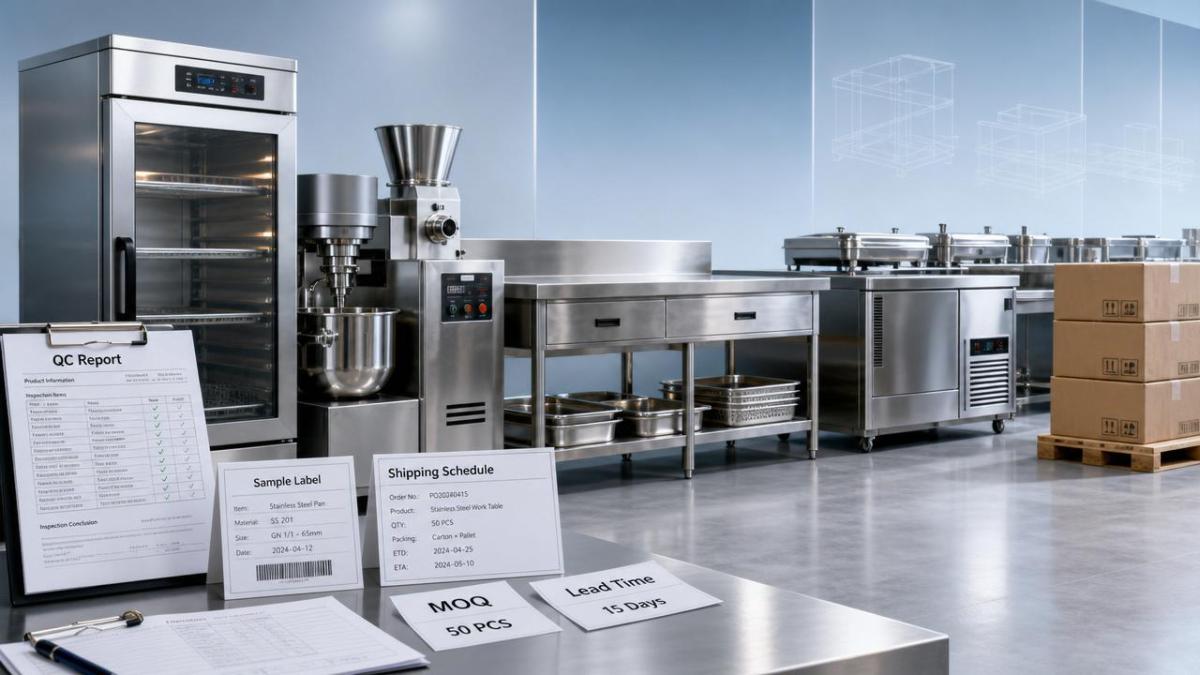
A reliable restaurant supplies manufacturer influences more than unit price. It shapes product consistency, replenishment speed, compliance confidence, and the daily stability of kitchen operations.
That matters even more in a market where kitchen equipment is becoming smarter, more automated, and more energy efficient. Buyers are no longer comparing basic utensils alone.
They are often reviewing commercial appliances, food prep tools, stainless worktables, heated holding units, and integrated kitchen systems in one sourcing cycle.
In practical terms, a weak supplier can create hidden costs. Rework, delayed launches, inconsistent batches, and missing certifications usually cost more than a slightly higher quote.
A strong restaurant supplies manufacturer, by contrast, supports long-term planning. It can align quality targets, flexible MOQ terms, and realistic lead times with expansion goals.
This is especially relevant in global sourcing. Manufacturing hubs such as China, Germany, Italy, and Japan offer broad capability, but not every factory operates at the same level.
The better question is not simply, “Can they produce it?” A more useful question is whether they can produce it repeatedly, economically, and on schedule.
What should you check first when evaluating quality?
Quality review should begin with process control, not marketing claims. A restaurant supplies manufacturer may show attractive samples, yet still struggle with stable mass production.
Start by looking at materials, workmanship, and documented standards. For kitchen equipment, food-contact safety, corrosion resistance, weld quality, insulation performance, and electrical safety often matter most.
It is also useful to ask how the factory manages incoming material checks. If stainless steel grade, motor components, or heating elements vary, final product quality usually follows.
The next layer is production discipline. Well-run suppliers typically use inspection points during fabrication, assembly, testing, and packing rather than relying only on final inspection.
For equipment used in restaurants, hotels, and food processing facilities, quality is not just about appearance. Reliability under daily load is what reduces service interruptions.
A useful evaluation checklist often includes the following:
- Material certificates for food-contact or structural parts.
- Test records for electrical safety, temperature accuracy, or load performance.
- Photos or videos from normal production, not sample-room displays only.
- Packaging standards that reduce damage during export transport.
- Corrective action handling for defects and customer complaints.
If the supplier offers smart or energy-saving kitchen solutions, ask one more question. Are the control systems proven in the field, or are they still early-stage features?
Is MOQ a pricing issue only, or a sign of manufacturing fit?
MOQ is often treated as a negotiation point, but it reveals much more. In many cases, MOQ reflects tooling cost, setup complexity, component sourcing, and the supplier’s planning model.
A very high MOQ may indicate that the restaurant supplies manufacturer depends on volume efficiency. That can work well for standardized utensils or repeat commercial kitchen accessories.
It becomes less suitable when product testing, regional adaptation, or phased rollout is needed. This is common with new kitchen concepts, branded cookware lines, or niche foodservice formats.
On the other hand, an unusually low MOQ is not always good news. It may mean the factory is trading inventory, outsourcing loosely, or lacking stable production planning.
A more realistic approach is to connect MOQ with business purpose. Are you validating demand, replacing an existing line, or building a long-term supply base?
This quick table helps frame the conversation before asking for revised terms.
In actual sourcing, the best outcome is often a staged arrangement. A restaurant supplies manufacturer may accept a smaller first order in exchange for a forecast or broader item bundle.
How can lead time be judged without relying on promises alone?
Lead time should be treated as a capability metric. It reflects production loading, component availability, engineering clarity, and export coordination all at once.
A quoted lead time means little without context. One supplier may count from deposit receipt. Another may start counting only after artwork approval, sample sign-off, and material booking.
That is why detailed milestone questions matter. Ask when drawings are frozen, when critical parts are purchased, when testing happens, and when goods are ready for inspection.
For commercial kitchen equipment, longer lead times are not always negative. More complex products often need careful assembly, calibration, and final verification before shipment.
The real risk appears when timelines are short on paper but unstable in execution. Delays usually come from missing parts, unclear specifications, or overbooked production lines.
A dependable restaurant supplies manufacturer should be able to explain lead time in stages:
- Engineering confirmation and approval cycle.
- Raw material and component procurement window.
- Production and in-process inspection period.
- Final testing, packing, and booking preparation.
- Buffer time for peak season or port disruption.
This matters more today because global kitchen equipment trade is tied to shifting freight schedules, energy costs, and cross-border compliance checks.
What warning signs usually appear before quality or delivery problems?
Most supplier problems do not arrive without signals. They show up early, usually in communication gaps, vague documents, or inconsistent technical answers.
One common sign is the mismatch between sales language and factory evidence. If a restaurant supplies manufacturer claims broad capability but shares little process detail, caution is reasonable.
Another warning sign is unstable quotation logic. Sudden price changes, unclear inclusions, or soft answers about packaging and spare parts often create problems later.
Documentation quality is another reliable clue. Incomplete specifications, missing test references, and poorly controlled revisions often lead to production mistakes.
When evaluating factories serving restaurants, hotels, or central kitchens, pay attention to how they discuss after-sales support. Serious suppliers plan for maintenance, replacement parts, and usage feedback.
The following issues deserve extra scrutiny:
- Samples look strong, but production references are limited.
- MOQ, lead time, and price all change after technical review.
- No clear answer on certifications or destination-market compliance.
- Inspection standards are discussed loosely, not documented.
- Factory response slows once specifications become detailed.
In many cases, these signs do not mean the supplier is unsuitable. They do mean the evaluation should move deeper before any commitment is expanded.
So how do you compare suppliers and make a confident decision?
A useful comparison method combines hard data with operational fit. The cheapest option rarely wins once quality drift, reorder friction, and shipment delays are included.
Start with a short evaluation sheet. Score each restaurant supplies manufacturer against the same decision points, then review where trade-offs are acceptable and where they are not.
Typical decision areas include product consistency, MOQ flexibility, lead time transparency, compliance readiness, communication speed, and post-shipment support.
If the sourcing scope includes smart kitchen systems or energy-efficient appliances, include software stability, component traceability, and service documentation in the comparison.
Where possible, validate with one controlled trial order. This reveals more than presentation decks because it tests packing, labeling, timeline accuracy, and defect handling under real conditions.
A balanced final review often looks like this:
The strongest choice is usually the supplier that fits your operating model, not the one with the most aggressive opening offer.
What is the smartest next step before final approval?
Before moving ahead, tighten the requirement sheet. Confirm exact specifications, expected quality level, packaging rules, testing method, acceptable defect rate, and delivery milestones.
Then compare each restaurant supplies manufacturer against the same written standard. This reduces the risk of choosing based on polished communication alone.
For broader kitchen equipment programs, it also helps to separate critical items from routine items. High-risk equipment deserves deeper review than simple consumables or standard accessories.
If uncertainty remains, a sample review plus pilot order is often the clearest path. It turns assumptions about quality, MOQ flexibility, and lead time into measurable evidence.
In the end, selecting a restaurant supplies manufacturer is a decision about operational reliability. The right partner supports quality today and makes future scaling easier.
A practical next move is simple: define the must-have standards, compare suppliers with one scorecard, and verify the result through a controlled first order.
Popular Tags
Kitchen Industry Research Team
Dedicated to analyzing emerging trends and technological shifts in the global hospitality and foodservice infrastructure sector.
Industry Insights
Join 15,000+ industry professionals. Get the latest market trends and tech news delivered weekly.
No spam. Unsubscribe anytime.

Contact With us
Contact:
Anne Yin (Ceramics Dinnerware/Glassware)
Lucky Zhai(Flatware)