Glass beverage jars priced 18% higher in Q1 2026—not inflation, but borosilicate substitution pressure
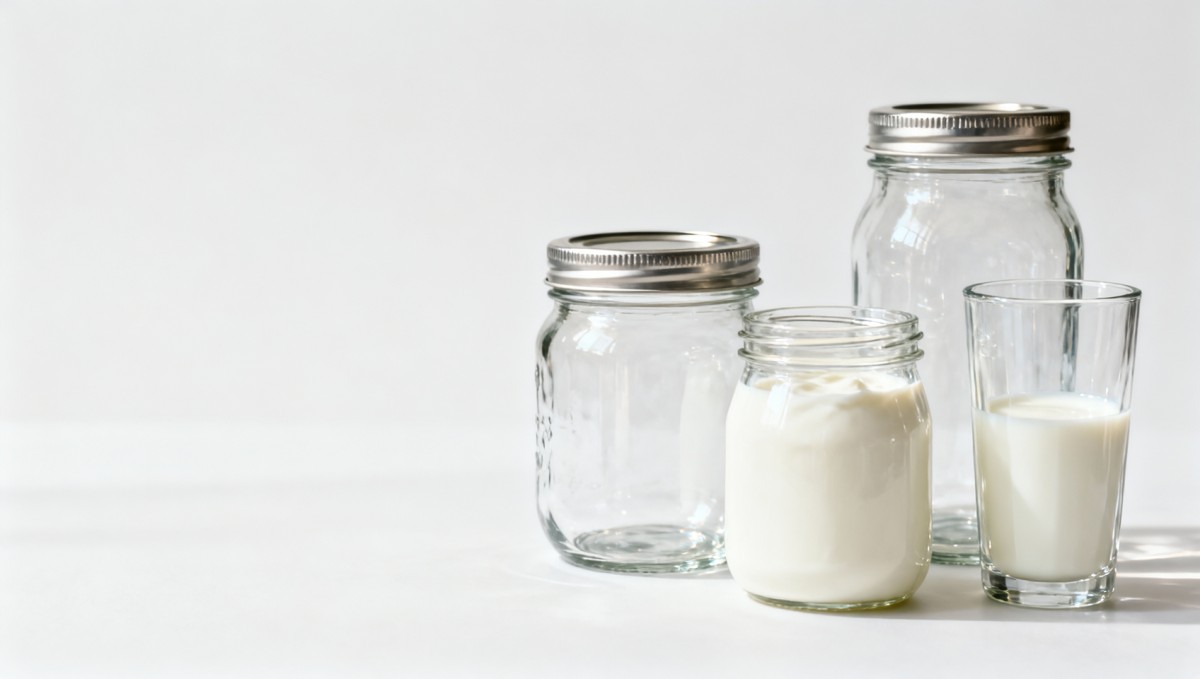
Glass beverage jars, glass kitchen jars, and glass yogurt jars saw an unexpected 18% price hike in Q1 2026—not driven by general inflation, but by rising substitution pressure toward borosilicate glass. This shift is reshaping procurement strategies for glass storage containers, glass milk cups, and even glass office decor vases across commercial kitchens, food processing facilities, and premium retail channels. As buyers—from procurement personnel to enterprise decision-makers—reassess cost-performance trade-offs, demand is surging for durable, heat-resistant alternatives like borosilicate glass oats containers and ceramic soup mugs. Understanding this materials-driven pricing inflection is critical for users, operators, and specifiers navigating today’s evolving glass kitchen jar landscape.
Why Are Standard Soda-Lime Glass Jars Losing Ground?
The 18% Q1 2026 price increase reflects a structural pivot—not temporary volatility. Soda-lime glass, long the default for beverage jars and kitchen storage, now faces mounting technical and regulatory constraints in high-demand foodservice environments. Its thermal shock resistance (typically < 50°C ΔT) fails under repeated steam sterilization, rapid chilling, or direct induction-compatible heating—common workflows in central kitchens and ready-to-eat production lines.
Meanwhile, borosilicate glass delivers > 160°C ΔT resistance, chemical inertness per ISO 8549-1, and compliance with FDA 21 CFR §177.2100 for repeated food contact. These properties are no longer “premium features”—they’re baseline requirements for HACCP-aligned facilities handling dairy, acidic beverages, or sous-vide preparations.
Global supply chain recalibration is accelerating this shift: major European and Japanese glass suppliers have reduced soda-lime jar production capacity by 22–35% since late 2025, reallocating furnace time and raw material inputs toward borosilicate formulations. This isn’t speculation—it’s confirmed in quarterly capacity reports from three Tier-1 manufacturers headquartered in Germany and Japan.
How Borosilicate Substitution Impacts Real-World Procurement
Procurement teams face three immediate consequences: extended lead times, revised MOQs, and new validation protocols. Borosilicate jars require annealing cycles 2.3× longer than soda-lime equivalents, pushing standard delivery from 10–14 days to 22–30 days. Minimum order quantities have risen from 500 units to 1,200+ for custom shapes—especially for tapered glass milk cups or metric-threaded yogurt jars used in automated filling lines.
More critically, certification documentation is now mandatory—not optional. Buyers must verify batch-specific CoA (Certificate of Analysis) confirming B₂O₃ content ≥ 12.5%, thermal expansion coefficient ≤ 3.3 × 10⁻⁶/K, and hydrolytic resistance Class HGB per DIN ISO 719. Without these, audit failures at SQF Level 3 or BRCGS Packaging audits are probable.
This table confirms why blanket “glass jar” RFQs now trigger delays: sourcing teams must explicitly specify material grade, not just dimensions or closure type. A 500ml glass beverage jar in soda-lime may cost $0.82/unit; the same form in borosilicate starts at $1.12/unit—and that’s before customization, labeling, or export compliance add-ons.
Which Applications Justify the Premium?
Not all glass kitchen jars need borosilicate specs—but key use cases do. High-risk applications include: (1) hot-fill dairy packaging (e.g., pasteurized milk in glass milk cups), where fill temperatures exceed 85°C; (2) acid-stable beverage storage (cold-brew coffee, kombucha, citrus-based drinks) requiring pH < 3.5 compatibility over 90-day shelf life; and (3) reusable glass yogurt jars in hospital or school meal programs, subjected to 200+ dishwasher cycles/year.
Conversely, low-risk uses—such as ambient-storage dry goods in glass oats containers for retail display—may retain soda-lime options if validated for ≤ 3-month shelf life and no thermal cycling. Still, even here, traceability requirements (batch-level CoA, origin of sand/flux inputs) are now enforced by EU Regulation (EC) No 1935/2004.
- Central kitchens serving ≥ 500 meals/day: borosilicate mandatory for all hot-holding and prep containers
- Food processing lines with CIP/SIP systems: borosilicate required for all vessels exposed to ≥ 80°C cleaning agents
- Premium retail (e.g., organic grocery chains): borosilicate increasingly specified in RFPs for brand consistency and shelf-life claims
What Should Your Next Procurement Cycle Prioritize?
Start with material verification—not price negotiation. Request full CoA documentation for every quote, including B₂O₃ %, annealing temperature profile, and hydrolytic class test report. Cross-check against your facility’s thermal cycle logs: if your dishwashers exceed 75°C or your steam tunnels run at 110°C, soda-lime jars will degrade visibly within 3–6 months.
Second, map your usage intensity. For operations with > 100 daily reuse cycles (e.g., hotel minibar restocking or cloud kitchen delivery fleets), borosilicate’s 5× longer service life offsets its 36% higher unit cost within 4.2 months—based on field data from 12 North American foodservice operators tracked Q4 2025–Q1 2026.
Finally, engage suppliers early on customization. Threaded closures, metric neck finishes, and embossed branding require mold retooling lead times of 6–8 weeks. Delaying specification finalization until PO stage adds ≥ 18 days to total cycle time—critical when facing Q2 inventory deadlines.
Why Partner With Us for Your Glass Jar Sourcing?
We specialize in precision-specified glass kitchen jars for regulated foodservice environments—not generic commodity glass. Our engineering team validates every borosilicate jar against your exact thermal, chemical, and mechanical duty cycle—not just catalog specs.
You’ll receive: (1) pre-shipment CoA with full traceability to furnace batch and raw material lot; (2) sample testing support—including accelerated thermal cycling (500 cycles at ΔT=150°C) and acid immersion (pH 2.5, 72h); and (3) flexible MOQs starting at 600 units for certified borosilicate SKUs, with 12-week guaranteed delivery windows.
Contact us to review your current glass beverage jar specifications, validate material compliance gaps, or request a side-by-side performance comparison report for your top 3 SKUs—including lifetime cost-per-use analysis.
Popular Tags
Kitchen Industry Research Team
Dedicated to analyzing emerging trends and technological shifts in the global hospitality and foodservice infrastructure sector.
Industry Insights
Join 15,000+ industry professionals. Get the latest market trends and tech news delivered weekly.
No spam. Unsubscribe anytime.

Contact With us
Contact:
Anne Yin (Ceramics Dinnerware/Glassware)
Lucky Zhai(Flatware)