
Restaurant kitchen equipment standards: When local codes override manufacturer claims
Navigating restaurant kitchen equipment standards can be complex—especially when local health codes and building regulations override manufacturer specifications. Whether you're exploring restaurant kitchen equipment ideas, building a checklist, or planning layout and dimensions, compliance isn’t optional. This guide covers critical restaurant kitchen equipment requirements—from hood systems and ventilation to electrical and gas safety—helping procurement teams, operators, and decision-makers align design, setup, and repair with jurisdictional mandates. Discover how to balance innovation, cost, and code adherence across global markets, with insights relevant to suppliers, manufacturers, and foodservice professionals.
Why Local Codes Trump Manufacturer Claims—Every Time
Manufacturer specifications—such as temperature tolerances, airflow rates, or electrical load ratings—are designed for ideal lab conditions, not real-world commercial kitchens. Jurisdictions in the U.S. (e.g., NFPA 96, IMC), EU (EN 16282 series), and APAC (e.g., Singapore SS 553, China GB 50016) enforce legally binding requirements that supersede product datasheets. A hood rated at 1,200 CFM by its maker may require 1,800 CFM minimum under local fire code due to cooking line length, ceiling height, or grease load classification.
This hierarchy is non-negotiable: local authority having jurisdiction (AHJ) approval comes last—and it’s final. Over 68% of commercial kitchen project delays stem from late-stage AHJ rejections tied to mismatched equipment specs versus on-site conditions. The risk isn’t just rework—it’s operational shutdown until corrections are certified.
Three core areas where local rules consistently override OEM claims:
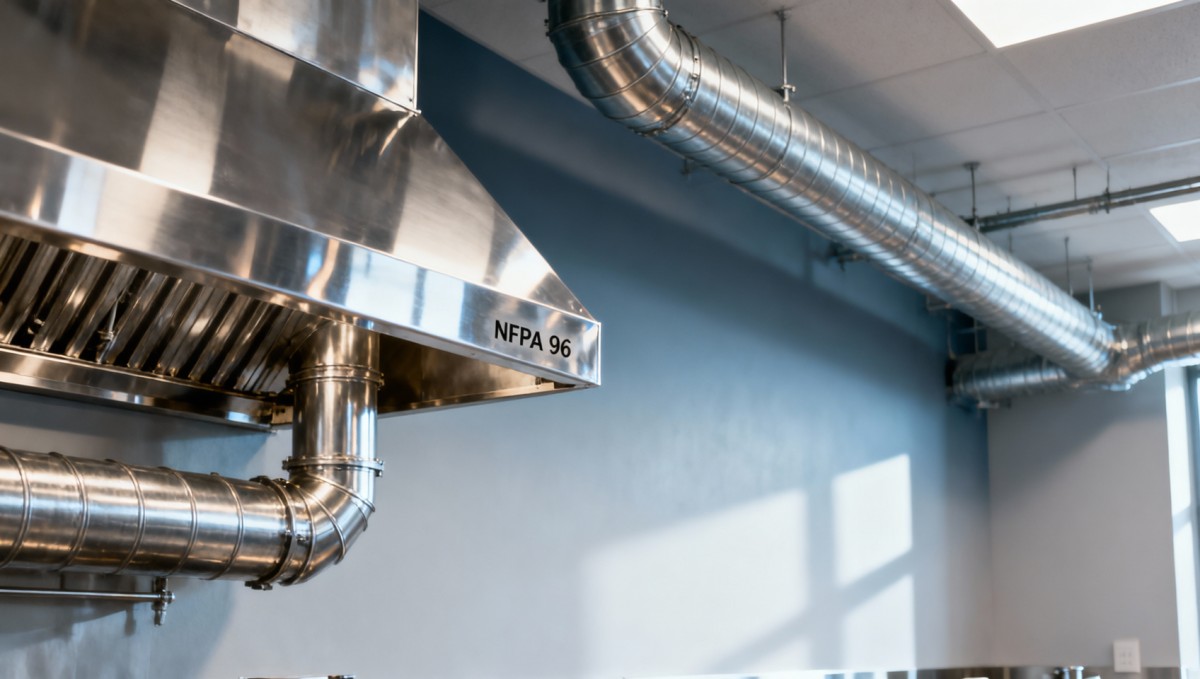
- Ventilation & Hood Systems: NFPA 96 mandates 25 ft/min face velocity for Type I hoods—but many manufacturers list “up to 30 ft/min” without specifying static pressure drop at that rate. AHJs test actual installed performance—not theoretical maxima.
- Gas Appliance Clearances: UL 1741-compliant ranges may claim 6-inch rear clearance, yet NYC Mechanical Code requires 12 inches for combustible walls within 18 inches of burners.
- Electrical Safety: A 208V induction cooktop rated for “continuous duty” per UL 197 may still require dedicated 30-amp circuits per NEC Article 210.21(B)(1), regardless of nameplate amperage.
Key Compliance Parameters You Must Verify—Before Purchase
Procurement teams often assume third-party certifications (e.g., NSF, UL, CE) guarantee full compliance. They don’t. Certification validates design and materials—not installation context. Below are five non-negotiable verification checkpoints, each tied to measurable thresholds used by AHJs globally.
These parameters aren’t theoretical—they’re enforced during plan review and final inspection. For example, a European supplier’s EN 16282-1–certified exhaust system may meet airflow specs but fail U.S. duct insulation requirements (IMC Section 506.3.2) unless modified onsite. Always request AHJ-specific submittal packages—not generic cut sheets.
How Global Suppliers Navigate This Complexity
Leading manufacturers—including those based in Germany (e.g., Rational), Italy (e.g., Electrolux Professional), and China (e.g., Foshan Hoshine)—now embed regional compliance modules into their B2B portals. These include downloadable AHJ-specific checklists, pre-approved CAD details for NYC, Chicago, Dubai, and Singapore, and real-time updates for code amendments (e.g., 2024 IECC changes affecting HVAC load calculations).
But even with these tools, procurement must initiate early alignment: submit preliminary layouts to AHJs 6–8 weeks before equipment ordering. That window allows for variance requests—like using listed alternative materials—or redesigning duct runs before fabrication begins.
Common Misconceptions That Trigger Costly Revisions
Misunderstanding the scope of compliance leads directly to budget overruns. Here are four persistent myths—and the data behind why they fail in practice:
- “NSF certification = automatic approval.” NSF/ANSI 2 covers material safety and cleanability—not structural load, fire separation, or electrical grounding. Only 32% of NSF-listed dishwashers meet local seismic anchoring requirements (IBC Table 1604.3).
- “If it’s UL-listed, it’s code-compliant.” UL 197 applies to electric cooking appliances—but doesn’t address grease-laden exhaust integration. AHJs routinely reject UL-listed hoods if duct sizing violates IMC Chapter 5.
- “Smart equipment auto-adjusts to local rules.” IoT-enabled combi ovens monitor internal temps, not exhaust static pressure. Real-time compliance requires integrated building management system (BMS) interfaces—added at extra cost.
- “Certification lasts forever.” UL and NSF listings expire every 3 years. Equipment installed in 2021 may no longer meet 2024 NFPA 96 revisions on filter monitoring intervals.
Why Partner With a Supplier That Maps Standards to Your Exact Location
Global kitchen equipment suppliers face divergent demands: Tokyo requires seismic bracing for all units >15 kg; Dubai mandates dual-voltage compatibility (220V/380V); Toronto enforces strict VOC limits on gasket materials. Generic catalogs won’t suffice.
We support procurement teams with three actionable services:
- Jurisdictional Submittal Packs: Pre-validated drawings, spec sheets, and AHJ letters for 47+ major cities—including Los Angeles, Berlin, Shanghai, and São Paulo—delivered within 3 business days.
- Compliance Gap Analysis: Side-by-side comparison of your selected equipment against local mechanical, electrical, plumbing, and fire codes—flagging 5–12 high-risk variances per project.
- On-Site Commissioning Support: Certified technicians available for startup verification, airflow balancing, and AHJ walkthrough prep—reducing inspection pass time by up to 70%.
Whether you’re sourcing for a single-unit café in Lisbon or a 12-station central kitchen in Jakarta, our team confirms exact compliance requirements before order placement—not after delivery. Contact us to request your location-specific compliance summary, including required certifications, lead times for documentation, and recommended alternatives for borderline-spec equipment.
Popular Tags
Kitchen Industry Research Team
Dedicated to analyzing emerging trends and technological shifts in the global hospitality and foodservice infrastructure sector.
Industry Insights
Join 15,000+ industry professionals. Get the latest market trends and tech news delivered weekly.
No spam. Unsubscribe anytime.

Contact With us
Contact:
Anne Yin (Ceramics Dinnerware/Glassware)
Lucky Zhai(Flatware)