
Common mistakes in kitchen design for bakeries to avoid
Avoiding costly planning errors starts with understanding the most common pitfalls in kitchen design for bakeries. A strong bakery layout supports hygiene, production speed, equipment coordination, and long-term expansion.
In practice, kitchen design for bakeries is rarely only about placing ovens and tables. It affects labor efficiency, utility consumption, maintenance access, product consistency, and the ability to scale output.
This guide explains where bakery projects often go wrong, how needs change by operating scenario, and what to check before construction, equipment purchase, or line upgrades.
Why kitchen design for bakeries changes by operating scenario
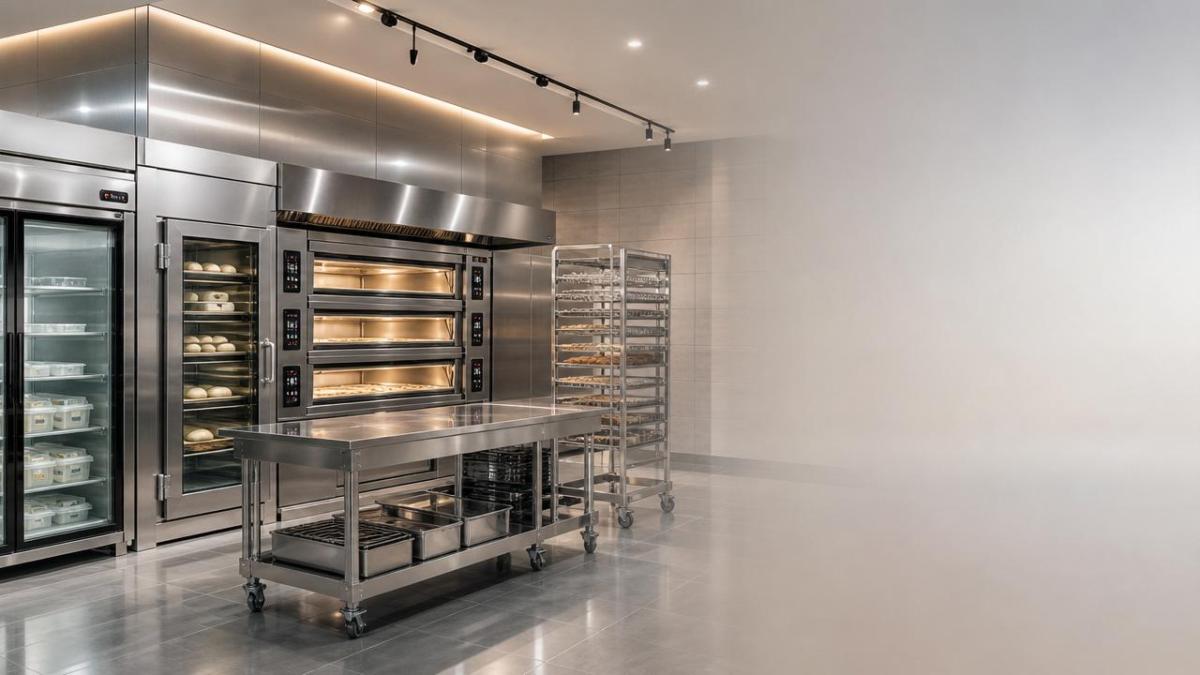
Not every bakery needs the same workflow. A retail bread shop, a hotel pastry room, and a central production kitchen operate under very different space, staffing, and volume conditions.
A common mistake in kitchen design for bakeries is copying another facility without testing local production needs. That shortcut often creates bottlenecks, sanitation risks, and oversized or undersized equipment zones.
Bakery kitchens also depend on coordinated systems. Ventilation, refrigeration, proofing, washing, drainage, power load, and storage must work together rather than as separate design decisions.
Scenario value: design must match output and product mix
A pastry-focused operation needs precise climate control and cold storage. A bread-heavy bakery needs better dough flow, rack movement space, and reliable oven throughput.
When kitchen design for bakeries matches real production patterns, equipment investment becomes more efficient and daily operation becomes easier to manage.
Common mistakes in retail bakery kitchen design
Retail bakeries often work in limited footprints. The biggest error is giving too much space to display and too little space to back-of-house preparation and cooling.
Another mistake is poor separation between customer-facing areas and production movement. Staff crossing sales space with trays, dough tubs, or waste slows service and raises safety concerns.
Typical retail planning errors
- Insufficient bench space near mixers and dough dividing stations
- No dedicated cooling path after baking
- Cold storage placed too far from finishing stations
- Undersized washing area during peak hours
- Ignoring delivery access for flour, butter, and packaging supplies
In retail settings, kitchen design for bakeries should protect a simple path from receiving to storage, mixing, proofing, baking, cooling, finishing, and sale.
Common mistakes in hotel and hospitality bakery kitchens
Hotel bakeries face menu variation, banquet peaks, and strict service timing. A frequent mistake is designing for average demand instead of peak event production.
Shared support areas can also cause trouble. If pastry production competes with hot kitchen traffic, product quality and labor efficiency can quickly decline.
What gets overlooked in hospitality environments
Cold rooms may be shared, but temperature needs differ. Chocolate work, laminated dough, cream storage, and plated desserts cannot always use one standard condition.
Kitchen design for bakeries in hotels should also include staging zones. Finished items need temporary holding before breakfast service, banquets, or room dining distribution.
Where central bakery and food processing layouts go wrong
Central kitchens and industrial bakery sites usually fail when flow is not linear. Backtracking between storage, preparation, baking, slicing, and packing wastes labor and increases contamination risk.
Another major issue is underestimating utility planning. Large-scale kitchen design for bakeries needs accurate load calculations for gas, electricity, steam, water, drainage, and ventilation.
High-impact industrial mistakes
- No space reserved for conveyors, racks, and pallet movement
- Packaging area placed too close to raw ingredient handling
- Maintenance access blocked by tightly packed equipment lines
- Future automation ignored during first-stage layout planning
These mistakes often cost more to fix later than to prevent during engineering design.
How bakery kitchen needs differ across scenarios
The best kitchen design for bakeries starts with comparing real use cases. Capacity, menu type, staffing skill, utility conditions, and delivery rhythm all shape the layout.
Practical design recommendations before equipment selection
Choosing equipment too early is a common project error. First define product categories, hourly output, batch timing, labor movement, cleaning needs, and utility limits.
Then test whether the kitchen design for bakeries supports both current and future production. Expansion space matters, especially where automation or additional refrigeration may be added later.
Useful planning checks
- Map ingredient receiving, waste exit, and staff routes separately.
- Confirm floor loading, drainage slope, and non-slip finishes.
- Verify oven heat, hood performance, and room temperature impact.
- Reserve service clearance around major bakery equipment.
- Plan data points for digital kitchen management and smart controls.
Modern kitchen projects increasingly use intelligent controls, energy-efficient appliances, and integrated bakery systems. These trends improve consistency, but only when the base layout is correct.
Frequently ignored risks in kitchen design for bakeries
Some design flaws are small on paper but serious in operation. One example is forgetting temporary tray parking near ovens, proofers, blast chillers, or packaging stations.
Another ignored risk is poor environmental control. Humidity, heat buildup, and airflow can damage dough handling, decoration work, and employee comfort.
Cleaning access is also often underestimated. If drains, corners, undersides, and wall interfaces are difficult to reach, hygiene performance and inspection readiness suffer.
Warning signs during review
- Crossing paths between raw and finished products
- No overflow storage for seasonal demand
- Single point failure for cold storage or baking capacity
- No allowance for spare parts or service intervention
A smarter next step for bakery layout planning
Better kitchen design for bakeries begins with a scenario-based review instead of a simple equipment list. Start with product flow, peak output, hygiene zoning, and utility coordination.
Next, compare layout options against labor efficiency, food safety, energy use, and future flexibility. This process reduces redesign costs and supports stronger long-term equipment performance.
If a project is being built, renovated, or expanded, review drawings with operating data before final approval. Small corrections early can prevent major losses after installation.
By avoiding these common mistakes, kitchen design for bakeries becomes more practical, scalable, and aligned with modern foodservice and food processing demands.
Popular Tags
Kitchen Industry Research Team
Dedicated to analyzing emerging trends and technological shifts in the global hospitality and foodservice infrastructure sector.
Industry Insights
Join 15,000+ industry professionals. Get the latest market trends and tech news delivered weekly.
No spam. Unsubscribe anytime.

Contact With us
Contact:
Anne Yin (Ceramics Dinnerware/Glassware)
Lucky Zhai(Flatware)