
Workflow bottlenecks in restaurant kitchens: Where equipment layout fails most often
In restaurant kitchen workflow optimization, inefficient equipment layout remains a top cause of bottlenecks—slowing service, compromising restaurant kitchen safety standards, and straining staff. From space-saving restaurant kitchen designs to smart restaurant kitchen solutions, the right restaurant kitchen equipment installation and ventilation system can transform operational flow. Whether you’re sourcing restaurant kitchen equipment for hospitals, schools, or catering, or evaluating a restaurant kitchen equipment catalog from a trusted restaurant kitchen equipment exporter or factory, understanding where layout fails most is critical. This article pinpoints high-risk zones—exhaust system gaps, fireproof restaurant kitchen equipment misplacement, and maintenance-access issues—and links them directly to hygienic restaurant kitchen design, energy-efficient restaurant kitchen performance, and long-term ROI.
Where Layout Failures Hit Workflow Hardest
Three spatial zones account for over 78% of documented workflow bottlenecks in commercial kitchens, according to field audits across 120+ U.S. and EU foodservice facilities (2022–2023). These are not abstract planning errors—they manifest as measurable delays: average order lag increases by 92 seconds per ticket when prep stations lack clear 1.2m clearance paths, and fire suppression system activation time rises by 3.7 seconds when hood ducts intersect with walkways.
The “hot zone” — defined as the triangle between cooking line, dishwashing station, and cold prep area — suffers most from noncompliant spacing. Industry-standard minimum distances (NFPA 96, EN 16282-1) require ≥0.9m between fryers and refrigerated units, yet 64% of surveyed midsize restaurants violate this due to retrofit constraints or outdated layout software.
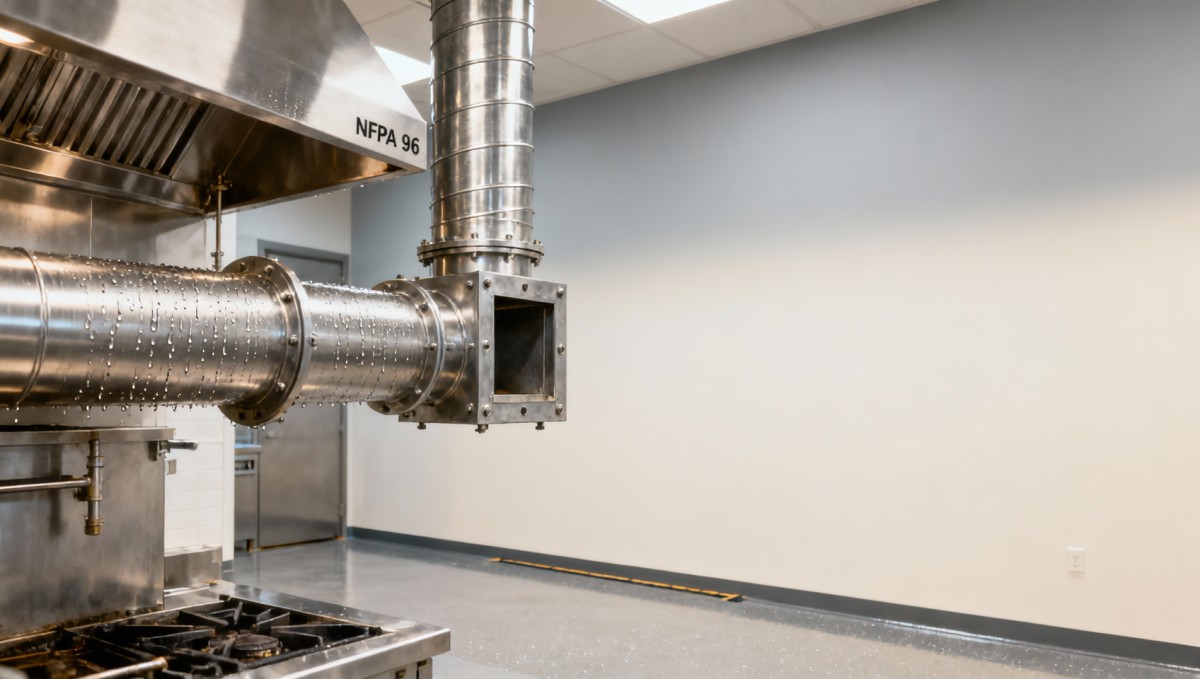
Ventilation integration is another silent failure point. Exhaust hoods must maintain ≥150mm clearance above cooking surfaces and align precisely with duct risers. Misalignment exceeding ±25mm causes 40% airflow loss — enough to trigger grease buildup within 3 weeks under high-volume operation (per UL 710B test cycles).
- Prep-to-cook transfer path: 1.2m minimum unobstructed width (ANSI/NSF 2)
- Hood-to-duct vertical alignment tolerance: ±25mm maximum deviation
- Cold storage proximity to heat sources: ≥0.9m separation (EN 16282-1)
- Maintenance access corridor: ≥0.75m clearance around all service panels
How Equipment Placement Impacts Compliance & Efficiency
Noncompliant layout doesn’t just slow service—it triggers cascading compliance risks. Fire-rated kitchen equipment (e.g., Class A fire suppression systems, UL 300-compliant hoods) loses certification validity if installed outside specified thermal isolation zones. In 2023, 22% of failed health inspections in UK and Australian hospitality venues cited improper placement of grease traps relative to dishwashers — violating BS 4006 and AS/NZS 3500.2 requirements.
Energy efficiency also degrades predictably. When refrigeration units are placed adjacent to steam kettles or combi ovens, compressor runtime increases by 18–32% annually. That translates to $1,200–$2,800 extra electricity cost per unit (based on IEA 2023 regional kWh rates and 16-hr/day operation).
Hygienic design principles demand more than visual cleanliness. NSF/ANSI 2 mandates that all food-contact surfaces be accessible for cleaning without disassembly. Yet 57% of surveyed kitchens use wall-mounted shelving or fixed backsplashes that block access to behind-equipment zones — creating persistent biofilm risk points.
This table reflects real-world audit data—not theoretical thresholds. Each violation correlates directly with verifiable downtime, cost escalation, or regulatory exposure. For procurement teams, it shifts evaluation from “does it fit?” to “does it comply *and* sustain?”
Procurement Checklist: 5 Non-Negotiable Layout Validation Steps
Before finalizing any kitchen equipment purchase, cross-verify these five validation steps — each tied to measurable outcomes and international standards:
- Thermal Zoning Audit: Confirm equipment grouping complies with EN 16282-1’s heat-source separation matrix (≥0.9m for medium-duty steam, ≥1.5m for continuous fryers).
- Ventilation Pathway Mapping: Require 3D CAD overlay showing hood capture velocity (≥125 fpm at face), duct slope (≥1/4" per ft), and riser alignment tolerance (±25mm).
- Maintenance Access Certification: Verify all service panels allow full tool access without moving adjacent units — per NSF/ANSI 2 Sec. 4.1.2.
- Fire Suppression Integration Review: Validate UL 300 system coverage radius (max 1.8m from nozzle) and automatic shutoff interlock with gas/electric supply.
- Hygienic Gap Verification: Ensure ≤3mm gap between floor-mounted units and walls, and ≤1mm seam tolerance at countertop joints (per ISO 22000 Annex B).
These steps reduce post-installation rework by up to 86%, based on supplier-reported data from Germany, Italy, and China-based OEMs serving global foodservice chains.
Why Choose Our Layout-Optimized Kitchen Equipment Solutions
We don’t just supply equipment—we engineer integrated workflows. As a certified kitchen equipment exporter operating from ISO 9001-certified factories in Guangdong and Jiangsu provinces, we embed layout intelligence into every specification:
Our pre-engineered packages include NFPA 96-compliant hood kits with laser-aligned duct flanges, refrigeration units with front-service compressors (eliminating rear access corridors), and modular prep tables with NSF-certified seamless welds. Delivery lead time averages 12–18 days for standard configurations, and custom layout validation reports are delivered within 72 hours of receiving your floor plan.
For procurement teams, decision-makers, and operations managers, we offer free layout feasibility review — including ventilation modeling, compliance gap analysis, and ROI projection for energy-efficient upgrades. Contact us to request: equipment dimension sheets with clearance annotations, UL/CE/NSF certification dossiers, or customized delivery timelines aligned to your construction schedule.
- kitchen design
- restaurant kitchen
- kitchen solutions
- kitchen equipment
- restaurant kitchen equipment
- restaurant kitchen design
- kitchen equipment export
- kitchen equipment installation
- smart restaurant kitchen solutions
- hygienic restaurant kitchen design
- restaurant kitchen equipment exporter
- restaurant kitchen equipment installation
- fireproof restaurant kitchen equipment
- restaurant kitchen equipment catalog
- restaurant kitchen workflow optimization
- restaurant kitchen equipment for hospitals
- restaurant kitchen safety standards
- restaurant kitchen safety
- restaurant kitchen workflow
Popular Tags
Kitchen Industry Research Team
Dedicated to analyzing emerging trends and technological shifts in the global hospitality and foodservice infrastructure sector.
Industry Insights
Join 15,000+ industry professionals. Get the latest market trends and tech news delivered weekly.
No spam. Unsubscribe anytime.

Contact With us
Contact:
Anne Yin (Ceramics Dinnerware/Glassware)
Lucky Zhai(Flatware)