
Proofer vs Retarder Proofer: Key Differences for Dough Fermentation Control
Proofer vs Retarder Proofer: Why the Difference Matters
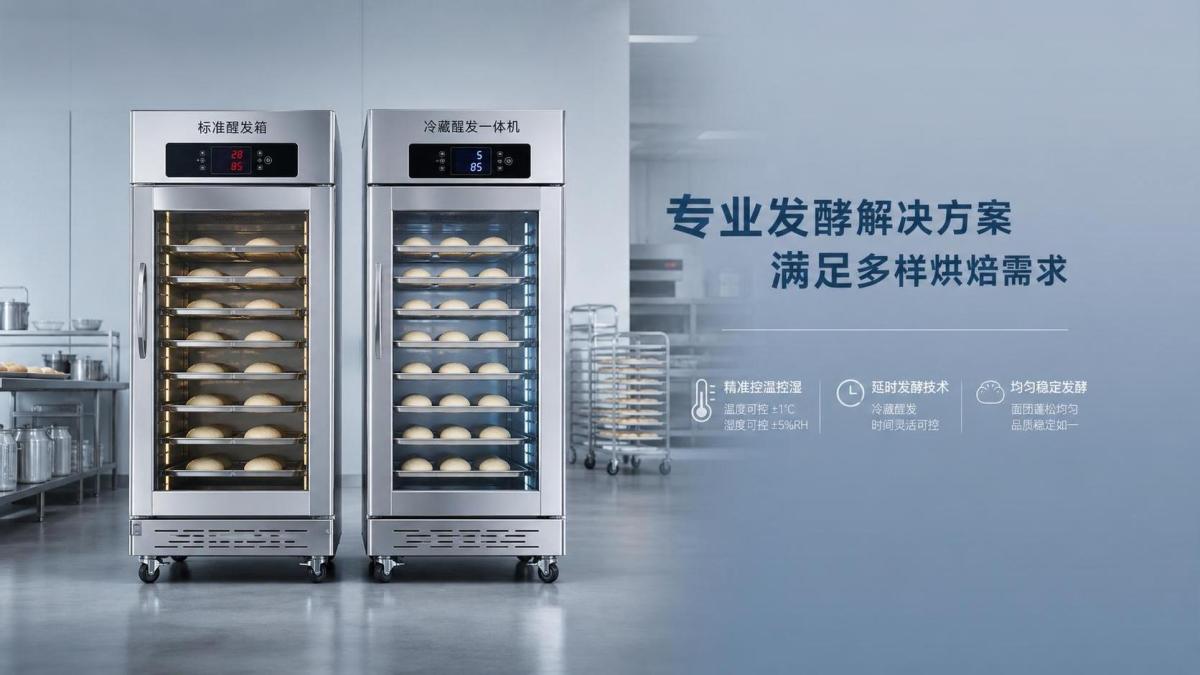
Choosing the right Proofer affects fermentation stability, batch timing, and final product consistency.
That choice becomes more critical when bakery output, labor planning, and product quality must stay predictable.
A standard Proofer creates a warm, humid environment for dough to rise under controlled conditions.
A retarder proofer goes further by combining refrigeration and proofing in one controlled cabinet.
This means dough can be slowed down, held, and then proofed on schedule without repeated manual handling.
In practical operations, that difference shapes workflow flexibility more than many buyers first expect.
For kitchen equipment evaluation, the real question is not which system sounds more advanced.
The better question is which Proofer strategy supports the target dough process, output rhythm, and control standard.
How a Proofer Works in Dough Fermentation
A Proofer is designed to maintain steady proofing temperature and relative humidity.
Typical settings support yeast activity, gas retention, and dough surface protection during final rise.
Most commercial Proofer units operate in a range suitable for bread rolls, loaves, laminated dough, and buns.
Humidity is just as important as heat because dry air can skin the dough and reduce oven spring.
A well-calibrated Proofer helps standardize fermentation across trays, shifts, and operators.
That consistency is especially useful in bakeries with repetitive daily output and fixed production windows.
However, a standard Proofer mainly supports active proofing rather than long scheduling delays.
If production starts late, dough may need to wait elsewhere, which adds process variation.
Typical strengths of a standard Proofer
- Fast setup for straightforward proofing tasks.
- Lower system complexity than a retarder proofer.
- Good fit for same-day production cycles.
- Usually lower upfront equipment investment.
- Easier operator training in basic bakery workflows.
What Makes a Retarder Proofer Different
A retarder proofer combines cold holding and proofing into one programmed fermentation sequence.
It can slow yeast activity first, then gradually shift conditions for controlled proofing later.
This function supports overnight scheduling, early-morning baking, and better labor distribution.
Instead of mixing, moving, refrigerating, and proofing in separate stages, one cabinet handles the sequence.
That reduces transfer steps and lowers the risk of timing errors between fermentation phases.
From a control perspective, a retarder proofer offers stronger scheduling precision than a standard Proofer.
It is particularly valuable when product freshness must align with narrow service windows.
Hotels, chain bakeries, central kitchens, and premium retail bakeries often prefer this flexibility.
Main advantages of a retarder proofer
- Supports delayed fermentation without separate cold storage steps.
- Improves batch release timing and labor efficiency.
- Helps stabilize product availability during peak hours.
- Reduces manual dough movement between cabinets.
- Allows more advanced recipe scheduling and fermentation control.
Proofer vs Retarder Proofer: Core Technical Differences
The comparison becomes clearer when temperature, humidity, time control, and process integration are reviewed side by side.
The biggest difference is control over time, not just control over climate.
A Proofer manages the fermentation environment once the dough is ready to rise.
A retarder proofer manages when fermentation slows, when it starts again, and when product becomes oven-ready.
That extra time logic is often the deciding factor in technical evaluations.
Key Evaluation Criteria for Equipment Selection
When comparing a Proofer with a retarder proofer, performance claims should be tested against application requirements.
This is where technical assessment becomes more useful than broad feature comparison.
1. Temperature uniformity
Check whether the Proofer maintains stable conditions across all rack positions.
Poor air circulation can create uneven fermentation and inconsistent dough volume.
2. Humidity management
Humidity control should prevent skin formation without causing condensation on dough surfaces.
A reliable Proofer must keep humidity repeatable under partial and full loads.
3. Program accuracy
For a retarder proofer, stage transitions are crucial.
Cooling, holding, ramp-up, and proofing must follow recipe logic with minimal drift.
4. Recovery speed
Door openings are common in busy bakeries.
The equipment should recover temperature and humidity quickly after loading or inspection.
5. Sanitation and maintenance
Drainage, interior materials, corner design, and service access influence long-term usability.
This matters even more where food safety standards are audited regularly.
Application Scenarios: Which Proofer Fits Better
In real operations, the best choice depends on schedule pressure, menu mix, and process maturity.
- Choose a standard Proofer for small bakeries with same-shift production and stable SKU planning.
- Choose a retarder proofer for overnight dough control and early service readiness.
- Choose a retarder proofer when labor shortages make manual timing less reliable.
- Choose a Proofer when recipes are simple and refrigeration already exists in the process line.
- Reassess both options when product quality issues come from scheduling rather than mixing.
A useful signal is how often dough waits between process steps.
If waiting time is frequent, unmanaged, or labor-dependent, a retarder proofer often delivers stronger control.
Common Risks and Practical Buying Advice
One common mistake is selecting a Proofer based only on cabinet size and price.
That approach ignores fermentation timing, recipe variability, and operator behavior.
Another risk is overbuying a retarder proofer without the recipe discipline needed to use programmable stages well.
The most effective evaluations usually include these checks:
- Match the Proofer type to actual fermentation windows, not assumed future demand.
- Review recipe categories, especially dough sensitivity and holding tolerance.
- Ask for performance data under full-load conditions, not empty-cabinet demonstrations.
- Check controller usability, alarm logic, and program repeatability.
- Estimate energy use and maintenance needs across the full operating cycle.
From a long-term equipment strategy view, process fit is usually more valuable than extra features.
Final Takeaway on Proofer Selection
A standard Proofer is best for direct, repeatable proofing in stable production environments.
A retarder proofer is better when fermentation timing must be delayed, staged, and synchronized with service demand.
Both systems can improve dough quality, but they solve different operational problems.
The smartest decision comes from mapping dough behavior, labor rhythm, and batch release needs before comparing specifications.
If fermentation control is the real bottleneck, choosing the right Proofer can unlock better consistency, lower risk, and stronger bakery performance.
Popular Tags
Kitchen Industry Research Team
Dedicated to analyzing emerging trends and technological shifts in the global hospitality and foodservice infrastructure sector.
Industry Insights
Join 15,000+ industry professionals. Get the latest market trends and tech news delivered weekly.
No spam. Unsubscribe anytime.
Hot Articles
 How to Specify Stainless Steel Kitchen Equipment for High-Volume Commercial Kitchens
- How to Choose Food Containers for Hot, Cold, and Leak-Prone Takeout Meals
- How to Size a Commercial Oven for Peak Production Without Wasting Energy
- How to Evaluate Foodservice Equipment Suppliers for Reliability, Service, and Total Cost
Contact With us
Contact:
Anne Yin (Ceramics Dinnerware/Glassware)
Lucky Zhai(Flatware)