
Cutlery Set Materials Compared: Stainless Steel Grades, Finish, and Daily Use
Cutlery Set Materials Compared: What Really Matters in Daily Use
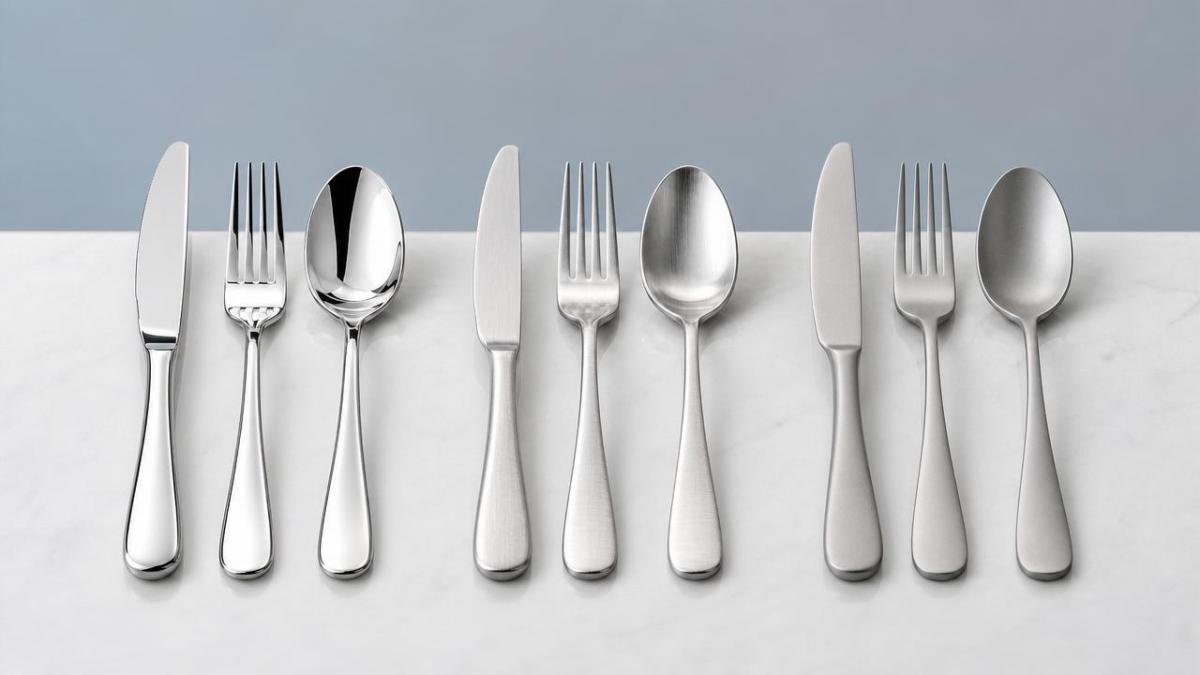
Choosing a cutlery set is not only about shine or style.
Material grade, finish, weight, and edge retention shape the daily experience.
That matters in home kitchens, restaurants, hotels, and catering operations.
A good cutlery set should feel comfortable, resist corrosion, clean easily, and keep a consistent appearance over time.
In practice, buyers often compare price first.
But stainless steel grade and surface treatment usually decide long-term value.
This guide breaks down the main cutlery set materials, common stainless steel grades, finish options, and real-world use cases.
The goal is simple: help you match performance, hygiene, and budget with the right choice.
Why Stainless Steel Dominates the Cutlery Set Market
Most modern cutlery set products use stainless steel for one reason.
It offers a practical mix of corrosion resistance, strength, hygiene, and cost control.
Compared with silver, carbon steel, or plastic-heavy options, stainless steel is easier to maintain.
It also suits both hand washing and commercial dishwashing.
From recent market changes, the stronger signal is clear.
Buyers now want a cutlery set that looks premium but survives heavy turnover.
That is especially true in foodservice, where hygiene rules and replacement costs both matter.
This also explains why steel grade labels such as 18/10, 18/8, and 18/0 appear so often.
What the numbers mean
The first number refers to chromium content.
Chromium improves corrosion resistance and helps create the protective surface layer.
The second number refers to nickel content.
Nickel increases luster, improves rust resistance, and often gives a smoother feel.
In a cutlery set, that difference can affect both appearance and lifespan.
Stainless Steel Grades Compared
Not every stainless steel cutlery set performs the same way.
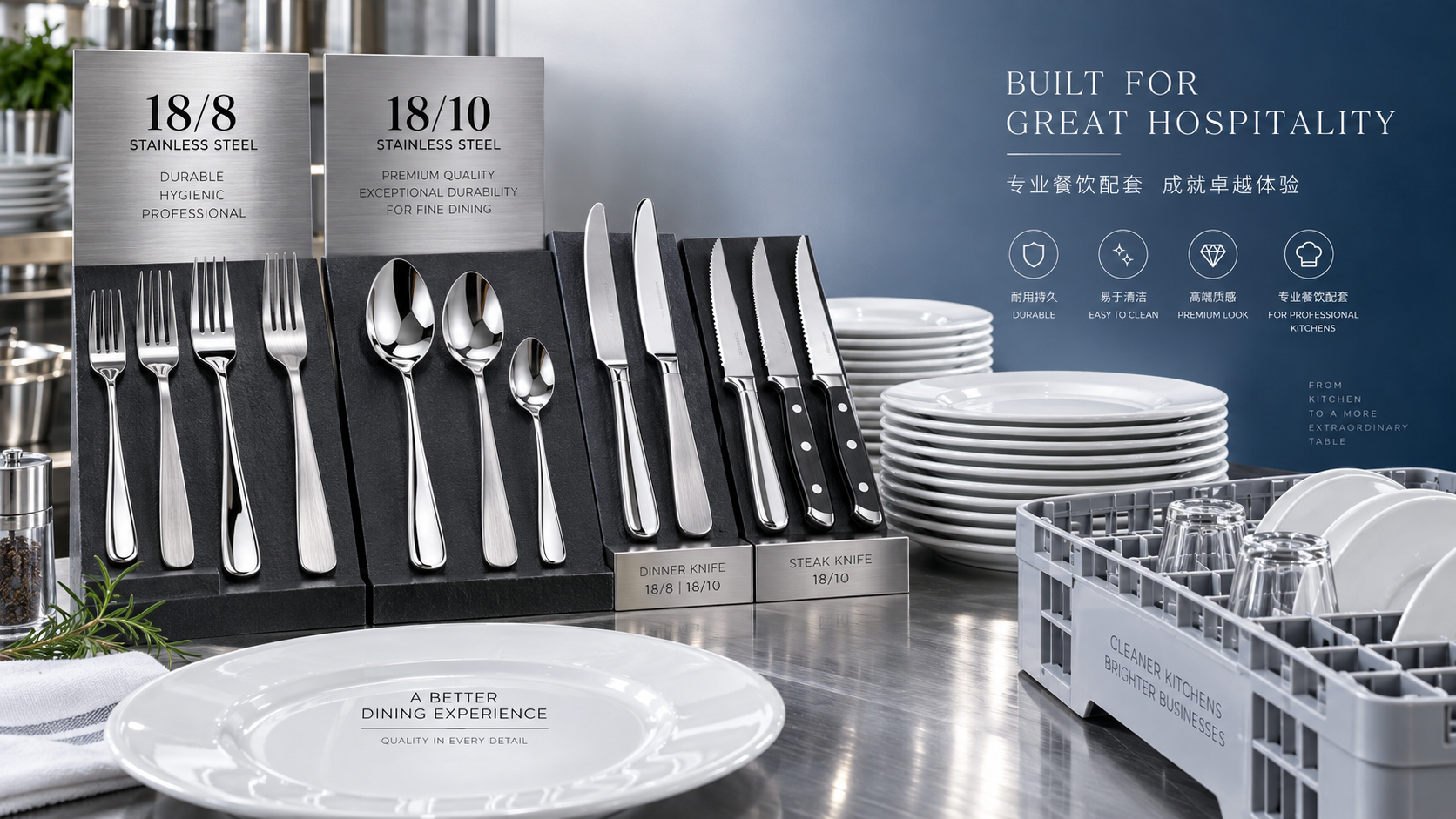
The three most common options are 18/10, 18/8, and 18/0.
Each one serves a different price point and usage pattern.
18/10 stainless steel
An 18/10 cutlery set is often considered the premium standard.
It has a brighter finish and usually holds its appearance longer.
For brands serving hotels or fine dining, this grade supports a more polished presentation.
It is also a strong fit for households that prefer durable tableware with less visible aging.
18/8 stainless steel
An 18/8 cutlery set delivers similar everyday performance at a slightly lower cost.
For many buyers, the difference from 18/10 is small in normal use.
That makes it one of the most balanced choices in the market.
18/0 stainless steel
An 18/0 cutlery set removes nickel, which reduces material cost.
It is common in schools, canteens, quick-service restaurants, and bulk procurement projects.
However, it may show staining or dullness sooner under harsh washing conditions.
If the operation uses strong detergents or saline food exposure, maintenance becomes more important.
Knife Blades, Hardness, and Cutting Performance
A cutlery set is not only forks and spoons.
Knives create a separate performance issue because edge retention matters.
Many manufacturers use different steel processing for knife blades than for handles.
Some dinner knives are made from hardened martensitic stainless steel.
This improves cutting ability and helps the blade keep a sharper edge.
In daily use, that means less tearing of meat and a smoother dining experience.
Stamped vs forged feel
Stamped knives are usually lighter and more affordable.
Forged pieces tend to feel heavier, more stable, and more premium in hand.
Neither is automatically better for every cutlery set.
The right choice depends on service style, user preference, and budget target.
Surface Finish: Mirror, Satin, Stonewashed, and Coated Options
Finish affects more than visual style.
It changes scratch visibility, grip comfort, cleaning behavior, and perceived quality.
For any cutlery set, finish should match the service environment.
Mirror polish
Mirror finish gives a bright, reflective appearance.
It is popular in premium hospitality because it looks clean and elegant on the table.
The trade-off is that fingerprints and fine scratches show more clearly.
This finish works best where presentation matters and polishing routines are consistent.
Satin or brushed finish
A satin cutlery set has a softer, less reflective surface.
It hides wear better and often feels more practical for busy restaurants.
For mixed-use dining rooms, this is often the easiest finish to live with.
Stonewashed or textured finish
Textured surfaces help reduce visible scratching and create a more modern look.
They can suit casual dining concepts and design-led household collections.
Still, rougher textures may need extra attention during cleaning inspections.
PVD and colored coatings
Black, gold, copper, and other coated cutlery set styles are increasingly common.
PVD coating can improve surface hardness and support distinctive branding.
But coating quality varies widely between suppliers.
Low-grade coating may chip, fade, or wear unevenly after repeated dishwashing cycles.
Weight, Balance, and User Comfort
Daily comfort is easy to overlook during purchasing.
Yet weight and balance strongly shape whether a cutlery set feels cheap, tiring, or just right.
Heavier pieces often signal quality.
However, excessive weight can reduce comfort in fast-turnover dining environments.
A balanced cutlery set usually performs best across broad user groups.
- Lightweight designs suit cafeterias, outdoor use, and high-volume service.
- Medium-weight designs fit most households and casual restaurants.
- Heavy-gauge designs support premium dining and stronger table presence.
Hygiene, Corrosion Risks, and Dishwasher Reality
A cutlery set may look excellent on delivery and still fail later.
The usual problems are water spots, pitting, tea staining, and edge dullness.
These issues often come from cleaning chemistry, water quality, or poor drying habits.
In actual operations, maintenance standards matter as much as material grade.
Common risk factors
- Leaving a cutlery set wet for long periods after washing.
- Using chlorine-heavy cleaners or overly aggressive detergent formulas.
- Mixing stainless steel items with reactive metals during washing.
- Allowing food acids or salt residue to sit on surfaces too long.
Practical care tips
Rinse promptly after acidic meals.
Dry fully before storage.
Use supplier-approved detergent systems in commercial kitchens.
For coated cutlery set products, confirm dishwasher compatibility before bulk purchase.
How to Choose the Right Cutlery Set for Different Scenarios
The best cutlery set depends on where and how it will be used.
A simple decision framework can make selection much easier.
For households
Choose 18/8 or 18/10 if appearance and long-term durability matter.
A satin or mirror finish depends on whether you prioritize easy upkeep or a more formal look.
For restaurants and hotels
Focus on replacement cycles, dishwasher performance, and matching service identity.
An 18/8 or 18/10 cutlery set often offers the best balance between brand image and operational life.
For institutional and bulk procurement
18/0 can be a sensible choice when cost control is the first priority.
Still, request salt spray data, finish details, and dishwasher testing records.
That step reduces the risk of buying a cutlery set that wears out faster than expected.
Final Takeaway
The right cutlery set is a balance of steel grade, finish, knife quality, comfort, and maintenance reality.
If you want the safest all-around choice, 18/8 remains a strong middle ground.
If premium presentation comes first, 18/10 is usually worth the higher investment.
If budget and scale drive the decision, 18/0 can work with realistic care standards.
Before placing an order, compare sample pieces under real washing and serving conditions.
That final check often reveals more than a specification sheet.
A well-matched cutlery set should not only look good on day one, but also stay reliable through daily use.
Popular Tags
Kitchen Industry Research Team
Dedicated to analyzing emerging trends and technological shifts in the global hospitality and foodservice infrastructure sector.
Industry Insights
Join 15,000+ industry professionals. Get the latest market trends and tech news delivered weekly.
No spam. Unsubscribe anytime.
Hot Articles
 How to Size a Commercial Oven for Peak Production Without Wasting Energy
- How to Evaluate Foodservice Equipment Suppliers for Reliability, Service, and Total Cost
- How to Choose a Cutlery Set for Restaurants: Material, Durability, and Cost
- How to Evaluate Restaurant Supplies Distributors for Reliable Multi-Location Delivery



Contact With us
Contact:
Anne Yin (Ceramics Dinnerware/Glassware)
Lucky Zhai(Flatware)