
Ceramic vs. Porcelain Plates: Differences in Durability and Everyday Use
Porcelain is a type of ceramic, so the practical choice is usually between porcelain and other ceramic dinnerware, particularly stoneware or earthenware. Porcelain plates are generally dense and well suited to frequent use, but they are not unbreakable. A plate’s shape, rim, glaze and care instructions can matter as much as the material name on the box.
For a low-maintenance everyday set, a dishwasher- and microwave-safe porcelain plate is a strong starting point. Stoneware can be equally appealing if you prefer a heavier feel and a less formal finish, while earthenware is worth considering when appearance matters more than resistance to frequent handling. The best choice depends on how you stack, wash, heat and use your plates.
What “ceramic” means on a dinner plate
The difference between ceramic and porcelain plates is not a clean division between two unrelated materials. Ceramic is the broad family: it includes earthenware, stoneware and porcelain. When a retailer lists a plate simply as “ceramic,” the description may not tell you which type it is or how it will perform.
Porcelain is made from refined clay materials and fired at a high temperature. This produces a dense body with low water absorption. It can be made relatively thin while retaining strength, although the finished plate’s design and manufacturing quality still influence its durability.
Stoneware is also fired to produce a relatively dense body, but its composition and finish vary. It is often thicker and has a substantial feel. Earthenware is generally more porous and relies more heavily on its glaze to provide a less absorbent surface. A glossy finish, however, does not turn an earthenware plate into porcelain or guarantee that every part of it is nonporous.
If a product page says only “ceramic,” look for a more specific material description. If none is available, judge the plate by its stated care requirements and physical design rather than assuming it has the properties of either porcelain or stoneware.
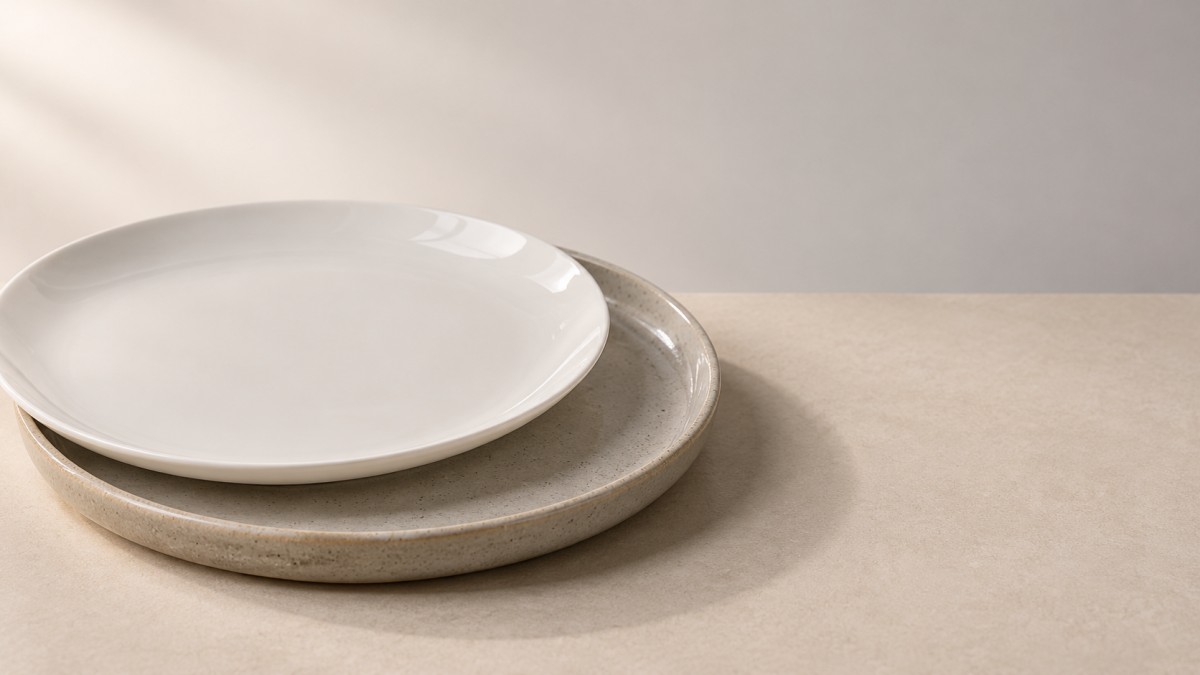
Which plates stand up better to everyday use?
Porcelain has a useful combination of density and strength, but “durability” covers several different problems. A plate can resist scratches yet chip at the rim, or survive daily washing but crack after a sudden temperature change. No material label guarantees protection against every kind of damage.
Chips, cracks and drops
Plate edges take much of the impact during loading, unloading and stacking. A wide, thin rim may be attractive, but it can be more exposed to knocks than a rounded or reinforced edge. Thick stoneware can feel robust in the hand, yet a thick plate can still chip if its edge hits a sink or another plate.
Porcelain’s strength can allow a relatively slim plate to handle regular meals and washing well. That does not mean every thin porcelain plate will outlast every thicker stoneware plate. The amount of exposed rim, the plate’s shape and the way it is handled all matter. Neither type should be expected to survive a fall onto a hard floor.
For a busy household, examine the edge rather than judging by weight alone. A gently rounded rim and a shape that stacks securely may be more useful than an unusually delicate profile. If plates will be carried by children or moved frequently between cupboards and a dishwasher, manageable weight is another practical consideration.
Cutlery marks and surface wear
Gray lines left by knives and forks are not always scratches. They can be metal marks deposited on the glaze, especially on plates with a textured surface. Some can be removed with a cleaner suitable for the manufacturer’s finish; a true scratch or worn glaze cannot simply be wiped away.
Both porcelain and other ceramic plates can develop marks. The glaze, its texture and the cutlery used all influence the result. Matte or reactive finishes may make certain marks more noticeable, while a glossy glaze can also show scratches under strong light. A pale plate is not automatically more resistant to marking; it may simply display marks differently.
If a uniform appearance matters, check the care information for the specific finish. Avoid treating every mark with an aggressive scouring pad: removing a superficial line is not worth permanently dulling the glaze.
What changes in the dishwasher and microwave?
A plate’s material is only part of its appliance suitability. Check the manufacturer’s instructions for the exact product, including any decoration. A porcelain body may be suitable for microwave use while a metallic rim is not; a ceramic plate with a decorative finish may require handwashing even when similar-looking plates can go in the dishwasher.
Dishwasher loading affects plate life regardless of material. Position plates so water can reach their surfaces and rims do not press tightly against one another. Overcrowding can turn a normal wash cycle into repeated edge-to-edge contact. If a plate has a delicate painted pattern or gold-colored trim, handwashing may preserve its appearance when the manufacturer recommends it.
In the microwave, a plate can become hot from contact with food, even if it is labeled microwave-safe. Use care when removing it. If a plate becomes unusually hot during normal use, stop using it in the microwave and consult the manufacturer’s guidance. Avoid using chipped or cracked dinnerware for heating, since damage can worsen and makes the plate harder to assess.
Thermal shock is another issue. Moving a cold plate directly into a hot oven, or placing a very hot plate on a cold, wet surface, can create stresses as different parts of the material change temperature at different rates. Porcelain’s dense body is not a blanket guarantee against cracking. For oven use, choose dinnerware specifically rated for that purpose and follow its temperature and handling limits.
How do the plates feel and function at the table?
Porcelain can provide a lighter-feeling plate for its size because it is often made with a thinner body. That can make a stack easier to lift and leave more room in a cupboard. It is available in both plain and decorated designs, so it need not look formal. A simple white porcelain plate can work for weekday meals as readily as for guests.
Stoneware often has a thicker profile and a weightier feel. Some people prefer that substantial grip, particularly for casual meals. Others may find a full stack awkward to lift or a large plate uncomfortable to carry. The right weight is a personal choice, not a reliable test of quality.
Shape also affects everyday convenience. A broad, flat plate gives food room but may take more cupboard and dishwasher space. A plate with a shallow raised edge can contain sauces while still stacking like a dinner plate. Irregular, handmade-looking forms may be attractive, but check whether they stack securely and fit the slots in your dishwasher.
Before buying a full set, compare the stated diameter with the space available. The usable eating surface can be smaller than the overall diameter if the plate has a wide decorative rim. If possible, handle one plate with a typical serving of food in mind: an empty plate that feels comfortable may be less convenient when full.
When is earthenware a sensible choice?
Earthenware can offer colors, patterns and shapes that suit a relaxed table setting. Its generally more porous body, however, makes the condition of the glaze especially relevant. An unglazed foot ring or a damaged glaze can be more exposed to moisture than the glazed eating surface.
Check whether the maker recommends avoiding prolonged soaking or particular cleaning methods. If the glaze develops fine cracks, known as crazing, do not assume the plate is either automatically unsafe or automatically suitable for continued food use. Ask the manufacturer about that product, particularly if the cracks are on the eating surface or have become stained.
Earthenware may be a less convenient choice for a household that wants every plate to move routinely from refrigerator to microwave to dishwasher. It can still work well if its care instructions fit your habits. The important distinction is between choosing it deliberately for its appearance and buying a set labeled only “ceramic” while expecting the same care requirements as a basic porcelain set.
Food contact, damage and older plates
Buy dinnerware intended for food use from a seller that provides clear product information. A decorative plate is not necessarily designed for serving meals, even if it looks similar to tableware. This distinction is particularly important with handmade, vintage or imported pieces when the glaze and intended use are uncertain.
Some ceramic glazes and decorations can contain substances that should not migrate into food in harmful amounts. Rules and testing requirements differ by market, so a broad claim such as “lead-free” is less useful without reliable information about the specific product. For an unfamiliar piece, ask the seller or maker whether it is intended for food contact and whether it meets the applicable requirements where it is sold.
Set aside plates with sharp chips, significant cracks or flaking surfaces. A chip on the rim can cut a hand or mouth, while cracks and damaged finishes can trap residue and become more difficult to clean. Retiring one damaged plate is usually a simpler decision than trying to judge how long it will remain usable.
Choosing a set that fits your routine
For everyday meals with minimal special care, look for porcelain with a comfortable rim, a manageable weight and explicit dishwasher- and microwave-safe labeling. It is a practical choice when cupboard space is limited or when you want plates that can move easily between casual and more formal settings.
Choose stoneware when you prefer a substantial plate or a particular glaze and are comfortable with its weight. Inspect the rim and check whether the finish has specific cleaning restrictions. A well-designed stoneware plate can be a good daily choice; its heavier feel alone should not be mistaken for a guarantee against chips.
If visual character is the priority, earthenware may be appealing, provided the set is intended for food use and its care requirements suit your kitchen. For any material, consider buying a single plate or a small set before committing to a full service. Use it with your cutlery, stack it in your cupboard and see how it fits your dishwasher. Those checks reveal more about everyday suitability than the material label alone.
Popular Tags
Kitchen Industry Research Team
Dedicated to analyzing emerging trends and technological shifts in the global hospitality and foodservice infrastructure sector.
Industry Insights
Join 15,000+ industry professionals. Get the latest market trends and tech news delivered weekly.
No spam. Unsubscribe anytime.


Contact With us
Contact:
Anne Yin (Ceramics Dinnerware/Glassware)
Lucky Zhai(Flatware)