
Commercial Freezer Problems Explained: Frost Buildup, Temperature Swings, and Noise
When a Commercial Freezer Problem Starts to Affect More Than Storage
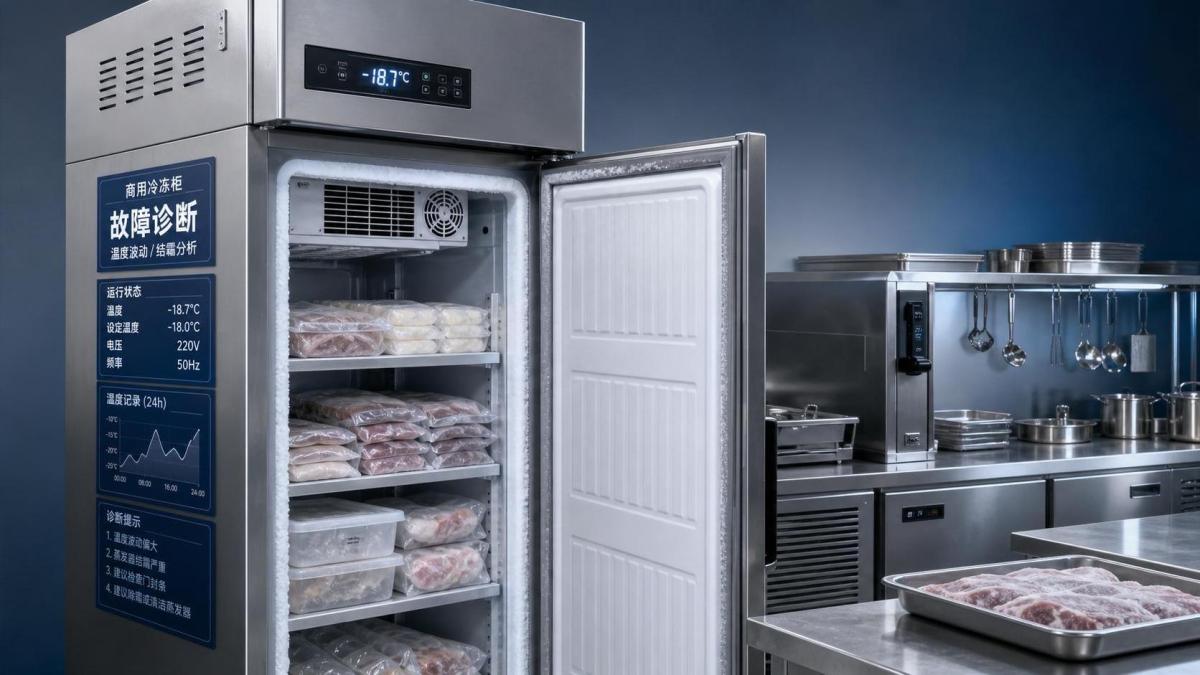
A commercial freezer is rarely judged by temperature alone. In active kitchens, it supports food safety, prep timing, inventory flow, and energy control at the same time.
That is why frost buildup, unstable cooling, and unusual noise deserve early attention. These symptoms often appear small, yet they can signal airflow restrictions, component stress, or poor operating conditions.
In restaurants, hotels, central kitchens, and food processing environments, the same commercial freezer issue may come from very different causes. The setting changes the diagnosis.
A freezer beside a busy hot line behaves differently from one in a low-traffic prep room. A unit opened every few minutes will not show the same pattern as one holding packaged products overnight.
In the broader kitchen equipment market, reliability now matters as much as output. Smart controls, energy-efficient designs, and tighter food safety expectations make accurate troubleshooting more important than quick guesses.
A practical diagnosis starts with the symptom, then moves to workload, ambient heat, door habits, product load, and maintenance history. That approach usually shortens downtime and prevents repeat service calls.
Why the Same Warning Sign Means Different Things on Different Sites
A commercial freezer in a hotel banquet kitchen often faces short bursts of heavy access. In a food processing room, the bigger issue may be continuous load and strict holding consistency.
That difference matters. Frost on the evaporator in one location may point to frequent door opening. In another, it may reflect a failed defrost heater or a weak door gasket.
Temperature swings also need context. A rise during restocking is not the same as a repeated swing during low-use hours, when the freezer should recover quickly and remain stable.
Noise can be equally misleading. A louder compressor during peak heat may be expected for a period. A grinding fan sound after frost accumulation points to a very different service path.
In actual use, better judgment comes from comparing the freezer symptom with the operating pattern. That is more reliable than replacing parts based on a single visual sign.
What usually changes the diagnosis first
- Door opening frequency and duration during service hours
- Ambient temperature near ovens, fryers, or loading doors
- Type of stored product, especially warm loads or uncovered items
- Cleaning condition of condenser coils and drain paths
- Age of sensors, fans, gaskets, and defrost components
Frost Buildup Usually Begins with Air, Moisture, or Defrost Failure
Frost buildup is one of the most common commercial freezer complaints. It often starts around the door, evaporator cover, or product-facing shelves before performance visibly drops.
In high-turn restaurant kitchens, moisture intrusion is the usual first suspect. Doors are opened often, products move quickly, and the freezer may be closed before the seal fully resets.
In central kitchens or processing areas, frost may build even with lower traffic. Here, blocked airflow, overpacking, or defrost system problems are more common than simple door misuse.
The key check is location. Frost around the frame suggests gasket leakage or humidity entry. Frost concentrated on the coil area suggests a defrost issue or restricted evaporator airflow.
It is also worth checking product handling. Warm food placed directly into a commercial freezer adds moisture fast. The symptom may look like a mechanical failure when the real trigger is loading practice.
Checks that usually save time
- Inspect door gaskets for tears, flattening, or poor contact
- Confirm the door closes evenly without hinge drag
- Look for blocked vents caused by boxes or liners
- Verify defrost timer, heater, and termination control function
- Ask whether hot product was recently loaded into the freezer
Temperature Swings Need Load Context Before Parts Are Blamed
A commercial freezer with temperature swings creates immediate concern because product safety and texture can both suffer. Still, the cause is not always the controller or compressor.
In quick-service operations, swings often follow repeated openings during rush periods. Recovery time matters more than the momentary spike. A unit that returns quickly may still be operating normally.
In a processing or bulk-storage setting, the standard is tighter. If the commercial freezer drifts during steady operation, sensor accuracy, refrigerant condition, fan performance, or coil cleanliness deserve closer review.
Another common issue is false confidence in the display. The control panel may show acceptable numbers while actual cabinet temperatures vary across zones because airflow is uneven.
This is more common in overloaded cabinets or mixed-product storage. Dense packaging near the air return can make one section stable while another quietly warms.
In practice, stable operation depends on how the commercial freezer is used, not only on its rated capacity. That is why site conditions belong in every temperature complaint review.
Unusual Noise Often Points to Stress Before Failure Becomes Obvious
Noise is easy to dismiss when a kitchen is already loud. Yet in a commercial freezer, new sounds often appear earlier than visible cooling loss.
A buzzing sound may relate to loose panels, tubing vibration, or an overworked compressor. A scraping sound often suggests fan blades touching frost or a damaged motor bearing.
Clicking can indicate relay or control issues, especially when the compressor struggles to start. That pattern deserves prompt attention because repeated hard starts increase wear and power use.
Noise diagnosis also changes by location. In an open kitchen, cabinet leveling and floor vibration may amplify normal sound. In a quiet prep area, the same sound may be a true mechanical warning.
When frost, temperature swings, and noise appear together, the problem is usually no longer minor. Fan obstruction, poor airflow, or compressor stress may already be affecting the whole cooling cycle.
Different Use Environments Create Different Service Priorities
Not every commercial freezer should be judged by the same priority list. A high-volume restaurant may accept short temperature movement but cannot tolerate slow recovery during service.
A food processing site usually places higher value on holding consistency, documentation, and repeatable performance. Small fluctuations matter more because process control is tighter.
Hotels often face mixed use. One commercial freezer may support banquet prep, room service backup, and overflow storage. That creates variable load patterns and increases the chance of misreading symptoms.
The current kitchen equipment trend toward smart monitoring helps, but data alone does not remove the need for site judgment. Sensor alerts still need interpretation against real traffic, heat, and loading behavior.
Where service focus usually shifts
- Fast-turn kitchens focus on recovery time and door discipline
- Bulk storage areas focus on airflow path and cabinet mapping
- Processing rooms focus on sensor reliability and continuous performance
- Mixed-use sites focus on usage peaks and inconsistent loading habits
Common Misreadings That Lead to Repeat Commercial Freezer Problems
One frequent mistake is treating every frost issue as a defrost failure. In many kitchens, the real cause is humidity intrusion from damaged gaskets or rushed access during peak hours.
Another mistake is replacing a sensor because of a display complaint without checking actual product temperature. The commercial freezer may be reading correctly while airflow inside the cabinet is poor.
Noise is also misread when installation conditions are ignored. Uneven flooring, poor clearance, and nearby heat sources can raise system strain and create sounds that look like internal failure.
A broader oversight is looking only at nameplate specifications. A commercial freezer may be properly sized on paper but still perform poorly if ambient heat, loading practice, and cleaning frequency are not aligned.
This matters more as kitchen operations become more automated and energy-conscious. Efficient equipment depends on stable conditions, not just advanced controls.
What to Check Next Before the Problem Spreads
A useful next step is to document the symptom by time, load condition, and operating period. A commercial freezer that struggles after deliveries needs a different response from one that drifts overnight.
Then confirm the basics on site: gasket seal, airflow clearance, coil condition, fan sound, drain condition, and temperature difference between cabinet zones. These checks often narrow the issue quickly.
It also helps to compare maintenance history with current usage. If traffic increased, menu volume changed, or nearby equipment was added, the commercial freezer may now be operating outside its earlier pattern.
Where smart monitoring is available, trend data should support, not replace, physical inspection. The most reliable judgment combines readings, sound, frost pattern, and actual operating context.
For long-term stability, build a simple site standard around access habits, loading limits, coil cleaning, and alarm review. That usually reduces repeat commercial freezer problems more effectively than reactive repairs alone.
Popular Tags
Kitchen Industry Research Team
Dedicated to analyzing emerging trends and technological shifts in the global hospitality and foodservice infrastructure sector.
Industry Insights
Join 15,000+ industry professionals. Get the latest market trends and tech news delivered weekly.
No spam. Unsubscribe anytime.
Hot Articles
 How to Size a Commercial Kitchen Hood for Cooking Equipment and Heat Loads
- How to Size a Planetary Mixer Machine for High-Viscosity Batch Production
- How to Choose Ceramic Rice Plates for Restaurants: Size, Glaze, and Chip Resistance
- Kitchen Innovation Trends in Emerging Markets: Where Growth Will Come From in 2026
Contact With us
Contact:
Anne Yin (Ceramics Dinnerware/Glassware)
Lucky Zhai(Flatware)