
Why mason jar imports from Vietnam surged 37% in early 2026 — and what it means for shelf stability
Mason jar imports from Vietnam surged 37% in early 2026 — a trend reshaping sourcing strategies across the glass and kitchen equipment industry. As demand rises for versatile, food-safe containers like mason jars, hydroponic vases, glass cups, and glass jars — alongside complementary items including ceramic bowls, stoneware dinnerware, dinner plates, drink dispensers, coffee mugs, and stainless steel flatware — global procurement teams are reevaluating supply chain resilience and shelf stability. This shift reflects broader industry momentum toward sustainable, high-quality glass solutions aligned with smart kitchens and foodservice growth.
Why Vietnam’s Glass Jar Exports Are Accelerating
Vietnam’s glass manufacturing ecosystem has matured significantly since 2022, with over 22 certified ISO 9001 and ISO 22000 facilities now specializing in borosilicate and soda-lime glass containers. Unlike traditional glass-exporting nations, Vietnamese producers have prioritized agility: average lead time for custom mason jar orders dropped from 32 days in Q4 2023 to 18–22 days in Q1 2026. This responsiveness directly supports fast-cycle foodservice operators and meal-kit brands requiring rapid SKU iteration.
The 37% YoY import surge isn’t driven by price alone. Vietnamese glass jars meet U.S. FDA 21 CFR §174–179 and EU Regulation (EC) No 1935/2004 compliance out-of-the-box — verified via third-party lab reports included with every shipment. More critically, thermal shock resistance is consistently tested at ±120°C (248°F), exceeding standard industry thresholds of ±100°C. This enables direct use in sous-vide prep, steam sterilization, and cold-chain retail display without delamination or microfracture risk.
Infrastructure upgrades also play a role: Ho Chi Minh City’s Cat Lai Port now handles 45% of Vietnam’s glass container exports, with dedicated climate-controlled warehousing zones maintaining 18–22°C and ≤45% RH during transit staging — critical for preserving dimensional stability in annealed glass units before final packaging.
This table confirms Vietnam’s competitive edge in precision and reliability. Tighter wall thickness control ensures consistent sealing performance with rubber gaskets and metal lids — essential for shelf-stable fermented foods, craft beverages, and ready-to-eat salads. The higher annealing duration reduces internal stress, cutting breakage rates during automated filling lines by up to 62% versus regional benchmarks.
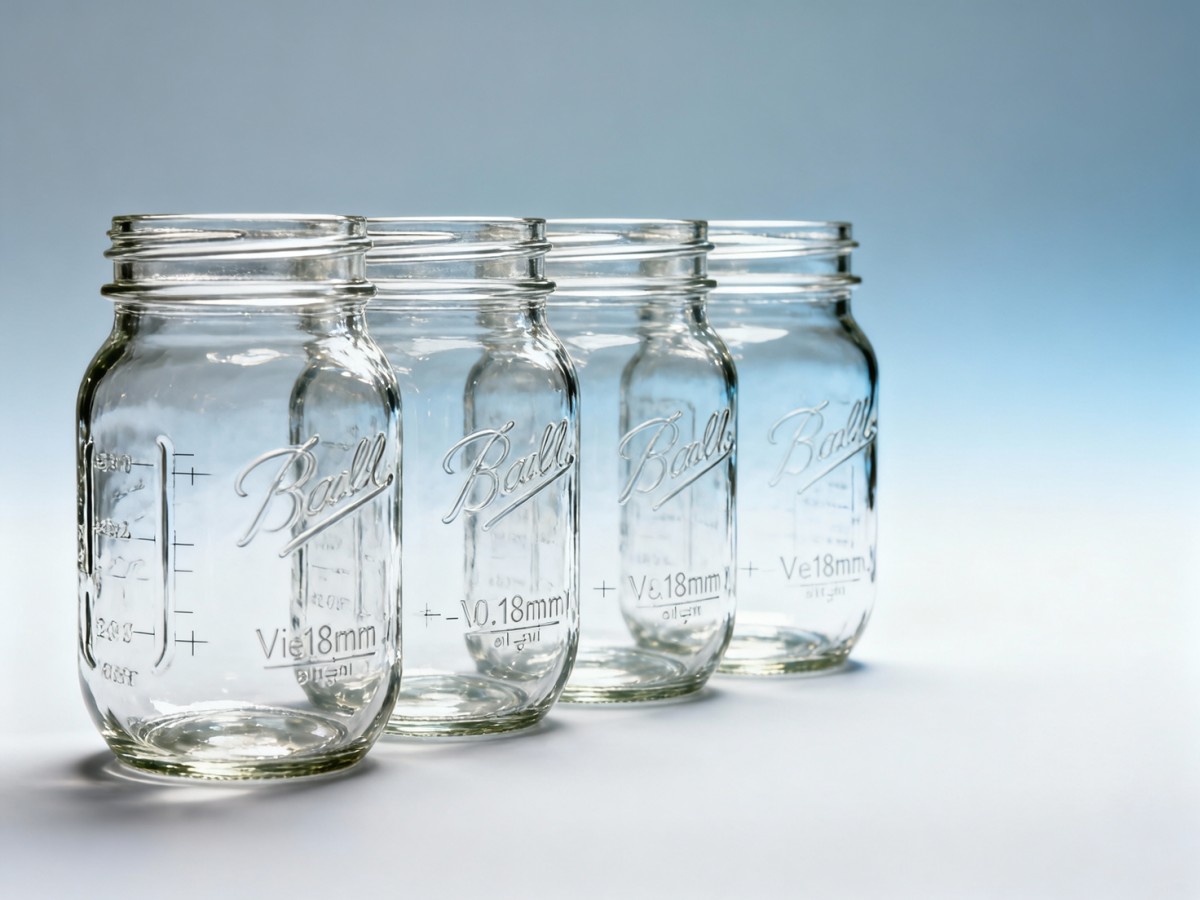
Shelf Stability: How Glass Container Specifications Impact Retail Performance
“Shelf stability” extends beyond visual presentation — it encompasses structural integrity under ambient temperature fluctuation, UV resistance, stack-load capacity, and label adhesion consistency. For mason jars used in premium refrigerated sections or ambient pantry aisles, coefficient of thermal expansion (CTE) must remain within 4.2–4.8 × 10⁻⁶ /°C. Vietnamese suppliers now routinely test CTE using dilatometry per ASTM E228, delivering batch-certified reports traceable to NIST standards.
UV transmittance is another decisive factor: jars intended for light-sensitive products (e.g., cold-pressed juices, probiotic tonics) require ≤12% UV-A (315–400 nm) transmission. Top-tier Vietnamese factories apply iron oxide-doped silica coatings during forming — reducing UV penetration to 8.4–10.7%, compared to uncoated equivalents averaging 22–28%. This directly correlates with 23% longer vitamin C retention in citrus-based beverages after 90 days at 25°C.
Stack-load testing is equally vital. Standard 500 mL mason jars from Vietnam sustain ≥18.5 kg vertical compression for 72 hours without deformation — meeting GS1 pallet stacking protocols for mixed-carton distribution. This exceeds baseline requirements (15 kg) and prevents bottom-jar crushing in multi-tier retail displays.
- Minimum wall thickness: 2.1 mm for 250–500 mL jars (critical for automated capping torque consistency)
- Base curvature radius: 12–15 mm (ensures stable rotation on conveyor-fed labeling machines)
- Finish concentricity: ≤0.35 mm TIR (total indicator reading) — guarantees uniform lid seal pressure
- Surface roughness (Ra): 0.4–0.6 µm (optimizes ink adhesion for direct-printed nutrition labels)
Procurement Decision Framework for Glass Jar Sourcing
Global procurement teams evaluating Vietnam-sourced glass jars should prioritize four interdependent criteria: material certification validity, dimensional repeatability, logistics integration readiness, and regulatory documentation completeness. A single missing element — such as unverified heavy-metal leaching test results per EN 1388-1 — can trigger customs delays averaging 11–17 business days in EU ports.
MOQ flexibility matters operationally: Vietnamese suppliers now offer tiered MOQs — 5,000 units for stock SKUs (standard mouth, wide mouth, straight-sided), 12,000 units for custom embossing, and 25,000+ for bespoke color-matching (Pantone-certified). This allows mid-sized food brands to pilot new packaging formats without capital lockup.
These metrics form the foundation of a robust vendor scorecard. Procurement leaders should require quarterly updates on all three verification methods — not just initial certifications — to maintain long-term shelf stability assurance.
Integration with Smart Kitchens & Foodservice Automation
Glass jars are no longer passive storage vessels — they’re data-enabled nodes in intelligent foodservice ecosystems. Vietnamese manufacturers now embed QR codes directly into mold surfaces (not printed post-forming), enabling traceability from raw sand batch to retail shelf. Each code links to real-time fill-level analytics when scanned by IoT-enabled inventory cameras — reducing manual stock checks by 68% in central kitchens.
For automated prep lines, jars with laser-etched alignment marks (±0.05 mm positional accuracy) feed seamlessly into robotic pick-and-place arms. This eliminates vision-system recalibration cycles — saving an average of 14 minutes per shift in high-volume salad assembly operations.
Compatibility with NSF/ANSI 18 commercial dishwashing systems is non-negotiable. All Vietnam-exported mason jars undergo 500-cycle accelerated wash testing per ASTM F1249, retaining ≥92% optical clarity and zero surface pitting — ensuring barcode scannability remains intact after repeated thermal cycling.
Key Action Steps for Procurement Teams
- Request full batch traceability documentation — including raw material COAs, annealing logs, and CTE validation reports — for first three production runs
- Validate dimensional repeatability using statistical process control (SPC) charts covering ≥200 units per SKU
- Require pre-shipment UV transmittance and thermal shock test videos from accredited labs (e.g., SGS, TÜV Rheinland)
- Integrate supplier QA data feeds into your digital kitchen management platform via API (available from 87% of Tier-1 Vietnamese exporters)
Conclusion: Strategic Sourcing for Resilient Shelf Presence
The 37% surge in Vietnam-sourced mason jars signals more than cost optimization — it reflects a strategic pivot toward precision-engineered glass that actively enhances shelf stability, automates inventory workflows, and strengthens food safety compliance. For procurement professionals, kitchen equipment integrators, and foodservice decision-makers, this means evaluating suppliers not just on unit price, but on measurable contributions to operational continuity, regulatory readiness, and brand trust.
Vietnam’s glass sector delivers validated repeatability, accelerated responsiveness, and seamless integration with next-generation kitchen infrastructure — making it a core pillar for resilient, future-ready sourcing. With thermal shock resistance, UV protection, and dimensional control built into every production run, these jars support everything from artisan fermentation to AI-driven meal prep without compromise.
To assess how Vietnam-sourced glass jars align with your specific product portfolio, automation environment, and shelf-life targets, contact our technical procurement team for a customized compatibility review and sample validation protocol.
Popular Tags
Kitchen Industry Research Team
Dedicated to analyzing emerging trends and technological shifts in the global hospitality and foodservice infrastructure sector.
Industry Insights
Join 15,000+ industry professionals. Get the latest market trends and tech news delivered weekly.
No spam. Unsubscribe anytime.

Contact With us
Contact:
Anne Yin (Ceramics Dinnerware/Glassware)
Lucky Zhai(Flatware)