
Stoneware Bowl vs Ceramic Serving Bowl: Which Is Easier to Source?
When comparing a stoneware bowl with a ceramic serving bowl, buyers often look beyond appearance to sourcing stability, pricing, customization, and supply chain flexibility. For restaurants, retailers, and distributors, understanding how products like a stoneware serving dish, stoneware plate, ceramic cereal bowl, ceramic pasta bowl, and ceramic baking dish perform in global procurement can help reduce risk and improve purchasing decisions.
In the kitchen equipment sector, servingware is not a minor add-on. For foodservice operators, tableware affects replacement frequency, menu presentation, breakage cost, storage planning, and supplier management. For importers and procurement teams, the question is practical: which category is easier to source consistently, at the right quality level, and with lead times that fit business cycles?
The answer depends on how the market defines “ceramic,” how factories position stoneware, and what level of customization a buyer expects. A broad ceramic serving bowl range is often easier to find because it includes multiple clay bodies and finishing options. However, a standardized stoneware bowl can be easier to manage when durability, repeat production, and hospitality use are the priority.
This article looks at sourcing difficulty from a B2B perspective, covering manufacturing availability, MOQ, lead time, quality control, application fit, and supplier evaluation. The goal is to help researchers, operators, buyers, and decision-makers choose products that reduce procurement friction and support long-term supply planning.
Understanding the Category Difference in Global Sourcing
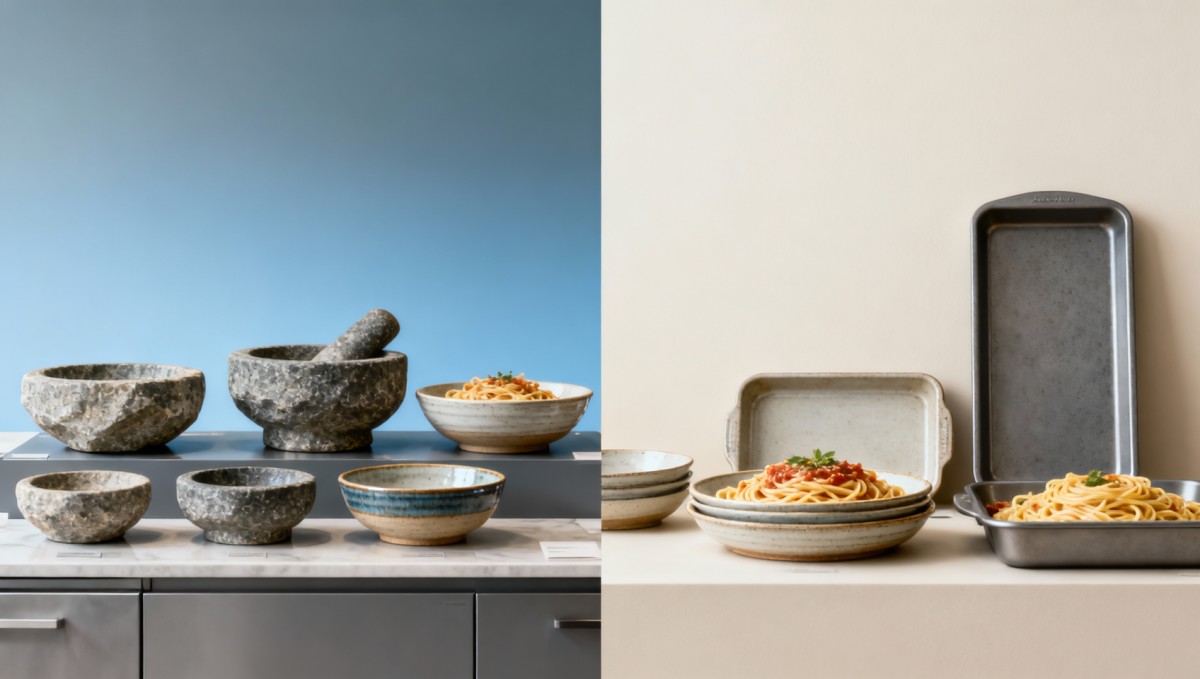
The first sourcing challenge is terminology. In international trade, “ceramic serving bowl” is a broad product label, while “stoneware bowl” is a more specific material and firing category. Ceramic can include earthenware, stoneware, porcelain, and mixed formulations depending on the factory, market, and buyer specification. That means ceramic listings are easier to find, but not always easier to compare.
Stoneware is generally fired at higher temperatures, often around 1,180°C to 1,300°C, which usually produces a denser body with stronger resistance to daily handling. For buyers in restaurants, hotels, or catering chains, this matters because higher-density bowls may reduce chipping and absorb less moisture. In procurement terms, clearer material identity often makes vendor qualification more straightforward.
A ceramic serving bowl, by contrast, offers wider variety in shape, glaze, color, and decorative style. This broad availability can be an advantage for retailers and distributors serving mixed customer segments. But the same flexibility can increase sourcing complexity if two suppliers use the same product name for bowls with different firing standards, body weights, or rim strength.
In practical sourcing, “easier” does not only mean “more suppliers.” It also means fewer specification gaps, lower sampling risk, and more predictable reorder performance over 6 to 12 months. A buyer choosing between a stoneware serving dish and a generic ceramic bowl should request clear technical definitions instead of relying on catalog labels alone.
How buyers usually define sourcing difficulty
- How many qualified factories can produce the item at the required finish and volume.
- Whether MOQ starts at 300, 500, or 1,000 pieces per design and color.
- How stable the lead time remains during peak production periods such as 30–60 day export cycles.
- Whether the product can be matched across related lines like stoneware plate, ceramic pasta bowl, and ceramic baking dish.
The comparison below shows why broad ceramic sourcing can be simpler at the search stage, while stoneware can become easier during standardization and reorder planning.
The key takeaway is that ceramic serving bowls are usually easier to locate in the market, but stoneware bowls are often easier to define, test, and reorder once a buyer wants stable commercial use. For procurement teams, the lower-risk option depends on whether variety or consistency matters more.
Supply Base, MOQ, and Lead Time: Which Option Is More Practical?
From a supply chain angle, ceramic serving bowls benefit from a larger supplier base. In major manufacturing regions such as China, parts of Southeast Asia, and selected European clusters, many factories offer ceramic cereal bowls, serving bowls, and baking dishes as standard export items. This often shortens the initial sourcing phase because catalogs are extensive and sample options can be prepared within 7–15 days.
Stoneware bowls are also widely available, but the supply base can be narrower when buyers require uniform glaze reaction, exact body color, and matching collections. A restaurant chain that wants the same bowl, plate, and side dish set over 3 reorder cycles may need a more specialized producer. That can mean slightly longer development time, even if the production outcome is more stable later.
MOQ is another difference. For standard ceramic serving bowl designs, some exporters can start around 300–500 pieces per shape, especially when using stock glaze colors. For custom stoneware bowl programs, MOQs often move closer to 500–1,200 pieces per item because of kiln setup, glaze testing, and mold planning. Buyers with lower annual volumes may find generic ceramic programs easier to launch.
Lead times also depend on seasonality. For stocked or semi-stocked ceramic lines, shipping readiness can fall within 15–30 days. For custom stoneware collections, realistic lead times are often 30–60 days, and 45–75 days during peak export months. If a foodservice group is opening multiple outlets on a fixed calendar, this timing difference can influence the sourcing choice more than unit price.
Typical B2B sourcing ranges
The table below summarizes common commercial ranges seen in kitchen equipment procurement. Exact numbers vary by country, packaging standard, and whether the buyer uses OEM, ODM, or stock models.
For buyers who need fast assortment expansion, ceramic serving bowls are usually easier to source. For buyers managing repeat hospitality supply with planned reorders every 3–6 months, stoneware may become the more practical option after the first qualification cycle.
When fast procurement matters most
- Choose stock or semi-custom ceramic serving bowl programs for seasonal retail or promotional launches.
- Use stoneware when menu presentation and durability justify a slightly longer sourcing window.
- Ask suppliers to confirm available mold inventory, color matching tolerance, and packing method before PO approval.
Quality Control and Performance Risks Buyers Should Check
Ease of sourcing should never be judged only by price and catalog variety. In commercial kitchens and hospitality environments, breakage, glaze defects, and dimensional inconsistency create hidden costs that can exceed the initial unit savings. A bowl that is easy to buy but hard to control is not truly easy to source.
Stoneware bowls often appeal to operators because they are associated with heavier body feel and everyday durability. That can be useful for restaurants with high table turnover, repeated dishwasher cycles, and frequent handling by staff. But buyers still need to verify practical points such as foot ring stability, rim thickness, stacking safety, and glaze uniformity across batches.
Ceramic serving bowls require even closer specification review because the category can include wide variations in body density and finish. A ceramic pasta bowl designed for retail gifting may not be suitable for back-of-house stacking or high-frequency service. The same applies to a ceramic baking dish: oven compatibility, thermal resistance, and packaging protection need separate confirmation.
A practical procurement process should include at least 6 quality checks before bulk confirmation. These checks reduce the risk of receiving bowls that look similar in photos but behave differently in daily use. For importers, this matters even more when consolidating several SKUs from one shipment.
Core inspection points for bowls and serving dishes
- Body consistency: compare weight tolerance and wall thickness across 5–10 sample units.
- Glaze surface: inspect for pinholes, color drift, uneven gloss, and rim exposure.
- Dimensional accuracy: confirm diameter and height tolerance, often within ±2 mm to ±4 mm for standard tableware.
- Stacking behavior: test 8–12 pieces to check nesting stability and storage efficiency.
- Packaging endurance: verify carton drop resistance and divider protection for export handling.
- Use-case fit: confirm microwave, dishwasher, or oven suitability where relevant.
The next table can help procurement teams prioritize control points based on application and product type instead of using a one-size-fits-all inspection sheet.
The most important conclusion is that stoneware is not automatically better and ceramic is not automatically lower grade. The easier product to source is the one with the clearer quality checklist. Buyers who define technical acceptance standards before sampling usually reduce dispute risk and improve reorder accuracy.
Choosing by Application: Retail, Foodservice, and Distribution
The sourcing decision becomes much clearer when linked to use case. Retailers often prioritize style diversity, fast new-item development, and packaging appeal. In that setting, a ceramic serving bowl range can be easier to source because suppliers often carry more shapes, decal options, reactive glazes, and gift-ready sets. A distributor serving supermarkets may need 10–20 SKUs across different price bands, which fits ceramic assortment sourcing well.
Foodservice buyers usually think differently. Restaurants, hotels, and chain cafés need bowls that are practical in storage, service, and cleaning. Here, a stoneware bowl or stoneware serving dish may be easier to manage over time because collections are often designed for repeat use and coordinated series, including matching stoneware plate options. The emphasis shifts from visual novelty to operating consistency.
For importers and wholesalers, the choice may depend on channel mix. If 70% of sales come from hospitality clients, sourcing a reliable stoneware platform can simplify stock planning. If demand comes from mixed retail accounts, a broader ceramic offering gives more flexibility in price, decoration, and seasonal trend alignment. Procurement strategy should follow customer profile, not just factory quotation.
Another factor is product family expansion. Some buyers need a bowl only, while others want a coordinated set including ceramic cereal bowl, ceramic pasta bowl, and ceramic baking dish. The broader the family requirement, the more important it is to ask whether the supplier can keep glaze and form consistency across 3 to 5 categories, not only one hero SKU.
Application-based buying guidance
- For restaurant groups: prioritize stacking, chip resistance, and reorder consistency over decorative complexity.
- For retail buyers: prioritize assortment width, packaging options, and lower MOQ entry points.
- For distributors: build a balanced portfolio with 1 stable stoneware line and 2–3 flexible ceramic collections.
- For project buyers: align lead time with opening date and keep a 5%–8% safety quantity for breakage reserve.
Common mistakes in bowl sourcing
One common mistake is choosing only by sample appearance. A bowl that looks premium in a showroom may be hard to stack in a busy kitchen or may create unstable packaging density. Another mistake is mixing “ceramic” and “stoneware” as if they are fully interchangeable terms. In procurement, technical definitions affect sampling approval, cost comparison, and repeatability.
A third mistake is underestimating packaging and logistics. Heavier stoneware can increase freight cost per carton, while lighter ceramic bowls may need stronger dividers if wall thickness is lower. Buyers should compare landed cost, not just ex-works price, especially when shipping in mixed containers or replenishing small batches.
A Practical Supplier Evaluation Framework for Lower-Risk Procurement
For decision-makers, the easiest product to source is usually the one backed by a dependable supplier process. A structured vendor review reduces uncertainty whether you buy stoneware bowls, ceramic serving bowls, or a mixed tableware program. Instead of asking only for the lowest quote, buyers should evaluate production capability, consistency, communication speed, and packaging discipline.
A useful evaluation model includes 4 stages: requirement definition, sample verification, pilot order assessment, and repeat-order review. This process may take 3–8 weeks before the first bulk PO, but it often prevents much larger losses later. In kitchen equipment procurement, especially for restaurant chains and distributors, slow mistakes are more expensive than careful onboarding.
During supplier comparison, ask for references in similar channels without demanding unsupported claims. What matters is whether the factory understands hospitality-grade expectations, mixed-SKU packing, and visual consistency across batches. A supplier that can explain its process clearly is often easier to work with than one offering an aggressive price but vague specifications.
Procurement teams should also separate “easy to buy today” from “easy to sustain for 12 months.” Stable glaze raw material supply, mold retention, seasonal capacity, and communication response within 24–48 hours are all more valuable than a small initial price gap when the program is ongoing.
Supplier screening checklist
- Can the supplier provide the same bowl family in coordinated formats such as serving, cereal, pasta, and baking lines?
- Does the quotation define MOQ, sample timing, packing method, and production cycle clearly?
- Can the factory maintain color consistency across repeat orders placed 90–180 days apart?
- Is there a clear approval path for sample, pre-production sample, and shipment inspection?
- Does the supplier understand commercial use conditions rather than only home-use retail presentation?
Final answer: which is easier to source?
If “easier to source” means broader availability, lower entry MOQ, and faster catalog sampling, the ceramic serving bowl usually wins. If “easier to source” means clearer material positioning, better repeat-order control, and stronger hospitality alignment, the stoneware bowl often becomes the easier long-term choice. The right answer depends on whether your business values assortment speed or operational consistency.
For many B2B buyers in the kitchen equipment industry, the best strategy is not choosing one category exclusively. It is building a sourcing matrix: use stoneware for core foodservice lines that need dependable repeat performance, and use broader ceramic serving bowl options for seasonal, decorative, or retail-driven programs. This balanced approach improves procurement flexibility without sacrificing control.
If you are evaluating a stoneware bowl, ceramic serving bowl, stoneware plate, ceramic cereal bowl, ceramic pasta bowl, or ceramic baking dish program, now is the time to compare supplier capability, not just sample appearance. Contact us to discuss your sourcing goals, request a tailored product plan, or explore more kitchen equipment solutions built for reliable global procurement.
Popular Tags
Kitchen Industry Research Team
Dedicated to analyzing emerging trends and technological shifts in the global hospitality and foodservice infrastructure sector.
Industry Insights
Join 15,000+ industry professionals. Get the latest market trends and tech news delivered weekly.
No spam. Unsubscribe anytime.

Contact With us
Contact:
Anne Yin (Ceramics Dinnerware/Glassware)
Lucky Zhai(Flatware)