Kitchen tools OEM or branded supply which fits your line better
Choosing between kitchen tools OEM and branded supply can shape your product positioning, margins, and long-term growth. For decision-makers in the kitchen equipment industry, the right model depends on market goals, customization needs, quality control, and brand strategy. This article explores how each option fits different business lines and helps you make a smarter sourcing decision.
In global kitchen equipment sourcing, this choice affects more than product labels. It influences lead times, minimum order quantities, product consistency, compliance management, and the speed at which you can enter new channels such as hospitality, foodservice distribution, e-commerce, or private retail. For buyers managing commercial kitchen tools, household utensils, or mixed product lines, the decision often comes down to 4 practical questions: how much customization is needed, what margin target must be protected, how quickly the line must launch, and how much brand control the business wants to retain.
The kitchen equipment industry is also changing fast. Buyers are balancing cost pressure with rising expectations for durability, food safety, ergonomic design, and sustainable packaging. In this environment, selecting between kitchen tools OEM and branded supply is not a one-time sourcing task. It is a strategic operating model that can define your competitiveness for the next 12 to 36 months.
Understanding the Difference Between OEM and Branded Supply
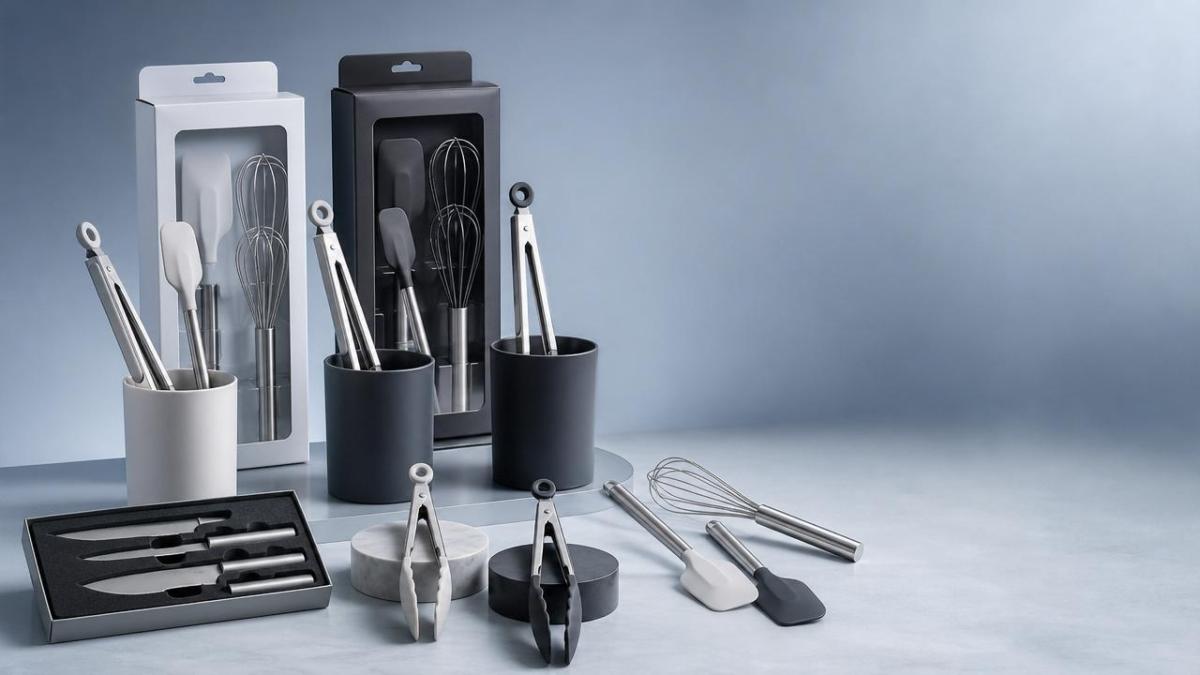
At a basic level, kitchen tools OEM means a manufacturer produces tools based on your specifications, packaging, branding, or product requirements. Branded supply usually means you buy finished products under the supplier’s existing brand, established design, or standard catalog. Both models are common in kitchen utensils, knives, cookware accessories, food prep tools, and restaurant back-of-house equipment.
What OEM typically includes
An OEM program can range from simple logo printing to full product development. In kitchen tools, this may include handle material changes, blade thickness adjustments, color matching, barcode labeling, retail-ready packaging, and carton configuration. Typical OEM lead times are often 30 to 60 days after sample approval, while new mold development may extend the cycle by another 20 to 45 days.
Common OEM customization points
- Material selection such as stainless steel grades, silicone, nylon, PP, or wood
- Size adjustments, for example from 8-inch to 12-inch utensils or chef tools
- Surface treatment including polish, brushed finish, coating, or anti-slip texture
- Packaging formats such as bulk packing, gift box, blister card, or e-commerce packs
- Compliance labeling for regional markets and food-contact declarations
What branded supply usually offers
Branded supply works well when speed, lower complexity, and proven sell-through are more important than exclusive product identity. Buyers can often choose from stocked or semi-stocked SKUs, reducing development work. For importers, distributors, or hospitality procurement teams, branded supply can shorten launch timing to 7 to 21 days for stock items, depending on order volume and export documentation.
The table below shows where kitchen tools OEM and branded supply differ in day-to-day procurement decisions.
The key takeaway is simple: kitchen tools OEM gives more control and stronger long-term brand assets, while branded supply reduces complexity and helps buyers move quickly. Neither model is universally better. The better fit depends on your channel, price positioning, and internal capability to manage product development and quality assurance.
Which Model Fits Different Business Lines
For enterprise buyers, product strategy should match the commercial logic of the business line. A hotel supply distributor, a private label retailer, and a foodservice importer do not need the same sourcing structure. The right answer often changes by channel, not by product category alone.
Private label retail and e-commerce
If your growth model depends on owning customer traffic, repeat purchases, and differentiated packaging, kitchen tools OEM is usually the stronger choice. Retail and e-commerce brands need visual distinction, bundle flexibility, and price architecture control. Even a 5% to 12% margin improvement can become significant when sales scale across 20 to 50 SKUs.
Foodservice distribution and project supply
If your customers are restaurants, central kitchens, or catering groups focused on fast replenishment, branded supply may be more practical. Standardized stock, consistent dimensions, and easier replacement are often more valuable than customization. In these channels, buyers usually prioritize 3 things: reliable delivery, stable quality across batches, and low operational friction.
Mixed-model importers
Many importers now use a hybrid model. They keep 60% to 80% of fast-moving kitchen basics under branded supply for stable turnover, while developing 20% to 40% of strategic SKUs through kitchen tools OEM. This approach reduces risk while still building exclusive items that improve customer retention and gross profit.
Channel-based fit checklist
- Use OEM if brand differentiation directly supports pricing power
- Use branded supply if delivery speed is a top KPI
- Use a hybrid model if the portfolio includes both commodity and premium SKUs
- Review SKU count, forecast accuracy, and working capital before deciding
The following table can help decision-makers map each sourcing model to common kitchen equipment business scenarios.
This comparison shows that sourcing model selection should follow market strategy. Businesses entering a new region often begin with branded supply for the first 1 or 2 purchasing cycles, then transition selected winners into kitchen tools OEM once demand patterns become clearer.
Key Decision Criteria for Enterprise Buyers
A sourcing decision is stronger when it is based on measurable criteria rather than preference. For kitchen equipment companies, 5 decision dimensions usually matter most: MOQ, tooling or development cost, quality consistency, replenishment speed, and commercial differentiation.
1. MOQ and inventory risk
Kitchen tools OEM generally requires larger order commitments. If a custom spatula, tong, or ladle set has an MOQ of 1,000 to 2,000 units per color, weak forecasting can quickly tie up cash. Branded supply reduces this risk, especially for buyers testing more than 10 SKUs at a time.
2. Development workload
OEM projects need sample approvals, artwork checks, packaging confirmation, and pre-production sign-off. A standard workflow may involve 5 to 8 checkpoints before mass production begins. Businesses without internal product managers or QA support should account for this management load when choosing kitchen tools OEM.
3. Quality control and consistency
Whether you choose OEM or branded supply, quality control should include material verification, dimensional checks, function testing, and packaging inspection. For tools used in commercial kitchens, buyers often define acceptance by defect thresholds, carton drop performance, and surface finish consistency across batches. A tolerance range such as ±1 mm or ±2% weight variation may be acceptable depending on product type.
4. Margin structure and customer perception
If your customers compare products mainly on price, branded supply may support faster turnover. If they respond to design, packaging, and brand narrative, kitchen tools OEM can create more pricing space. The difference is especially visible in gift-oriented kitchen accessories, chef tools, and curated e-commerce bundles.
5. Compliance and export readiness
Decision-makers should check food-contact material declarations, labeling rules, carton marks, and destination-specific packaging requirements early. A delay of even 7 to 10 days at the shipment stage can affect seasonal delivery windows. This is one reason many buyers start compliance review at the sample phase rather than waiting until production is complete.
How to Implement the Right Sourcing Model
Once the commercial direction is clear, execution becomes the next challenge. In practice, a good sourcing model is built through phased validation, not assumptions. This is especially important in kitchen equipment categories where product use conditions can vary from home kitchens to high-frequency restaurant environments.
A 4-step implementation path
- Define the channel objective: retail differentiation, foodservice efficiency, or market testing.
- Shortlist SKUs by sales velocity, replacement frequency, and customization need.
- Run sampling with 2 to 3 suppliers and compare material, finish, and packaging accuracy.
- Launch in phases, beginning with 5 to 10 core items before expanding the range.
When a hybrid strategy works best
A hybrid approach is often the most efficient for medium-sized importers and multi-channel distributors. Standard tools such as whisks, peelers, measuring spoons, or utility tongs can remain under branded supply. More visible or higher-margin items such as knife sets, premium silicone utensils, or display-oriented bundles can move into kitchen tools OEM once order patterns justify customization.
Supplier evaluation points before commitment
Before approving either model, review 6 operational points: production capacity, sample accuracy, packaging execution, communication speed, batch consistency, and problem resolution process. For repeat orders, ask how the supplier handles color variation, component substitution, and peak-season planning during 30-day to 90-day demand spikes.
Common mistakes to avoid
- Choosing OEM only for lower ex-factory cost without calculating inventory exposure
- Relying on branded supply for premium channels that need exclusive presentation
- Skipping pilot orders and moving directly to a full container program
- Ignoring packaging durability for e-commerce fulfillment and cross-border handling
For most enterprise buyers, the smartest move is not asking which model is better in general, but which model fits each SKU role, sales channel, and growth stage. A disciplined sourcing plan can improve forecast accuracy, reduce product overlap, and support stronger negotiations over the next 2 to 4 buying cycles.
Final Recommendation for Decision-Makers
Kitchen tools OEM is usually the right fit when your business needs differentiated products, stronger private label control, and better long-term margin potential. Branded supply is often the better option when speed, low complexity, and standard replacement matter most. In many kitchen equipment businesses, the best answer is a balanced sourcing portfolio rather than a single model.
If you are reviewing your product line for the next season, start by segmenting SKUs into 3 groups: high-volume basics, margin drivers, and market-test items. Then align each group with the most suitable sourcing path. That approach makes the decision more commercial, more measurable, and easier to scale.
If you need help evaluating kitchen tools OEM versus branded supply for your channel, product range, or sourcing plan, contact us to discuss your requirements, get a tailored recommendation, and explore more kitchen equipment solutions for your business.
Popular Tags
Kitchen Industry Research Team
Dedicated to analyzing emerging trends and technological shifts in the global hospitality and foodservice infrastructure sector.
Industry Insights
Join 15,000+ industry professionals. Get the latest market trends and tech news delivered weekly.
No spam. Unsubscribe anytime.

Contact With us
Contact:
Anne Yin (Ceramics Dinnerware/Glassware)
Lucky Zhai(Flatware)