
How to Choose a Kitchen Tools Distributor for Wholesale Quality, MOQ, and Lead Time
What really matters when choosing a kitchen tools distributor?
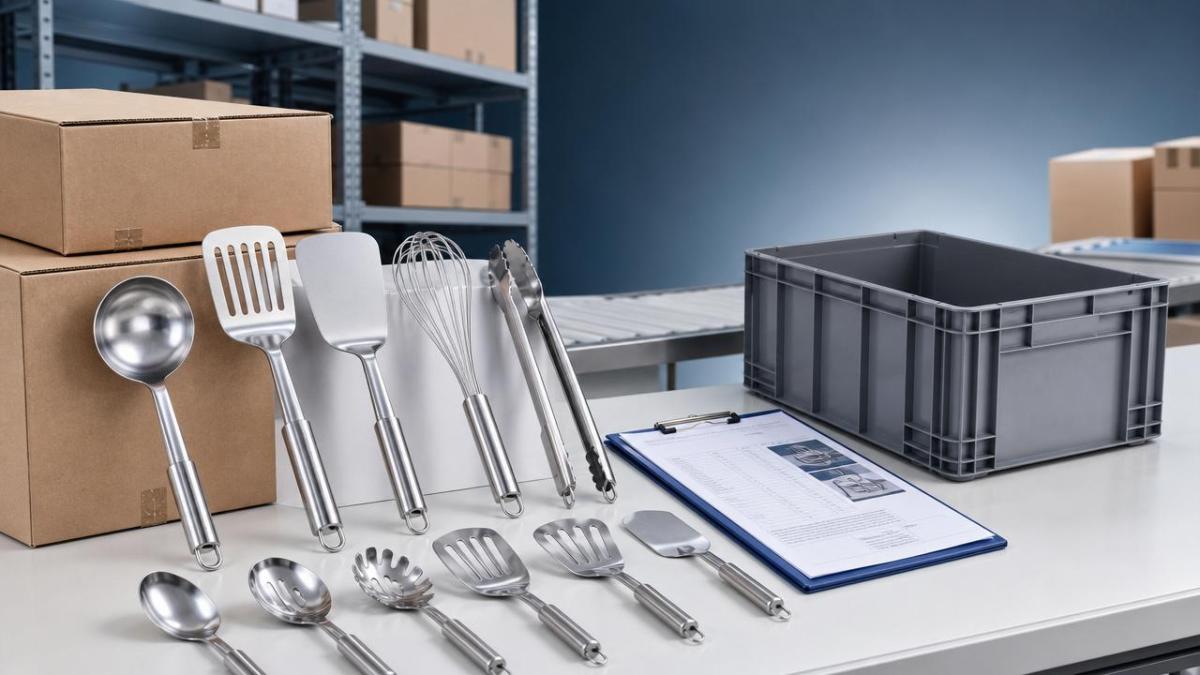
A kitchen tools distributor does more than move goods from factory to warehouse.
The right partner influences product consistency, stock planning, landed cost, and customer satisfaction.
That matters even more in a kitchen equipment market shaped by food safety rules, automation, and global sourcing pressure.
In practical terms, buyers usually compare three issues first: wholesale quality, MOQ, and lead time.
Those points look simple, but they are closely linked.
A low MOQ may come with unstable finishing.
A fast lead time may depend on limited material options.
A low quoted price may exclude testing, packaging strength, or replenishment support.
This is why selecting a kitchen tools distributor should start with operational fit, not only catalog range.
For restaurant supply, food processing support, hospitality use, and retail programs, the decision criteria are similar.
The distributor must match quality expectations with order flexibility and dependable shipping performance.
How can wholesale quality be verified beyond the sample?
A polished sample is useful, but it does not prove stable bulk performance.
The better question is whether the kitchen tools distributor controls repeatability across batches.
For kitchen tools, repeatability covers material thickness, edge finishing, handle assembly, coating durability, and packaging protection.
In foodservice and hospitality channels, even small quality shifts can create returns or negative reviews.
A more reliable evaluation method is to ask for production evidence, not just a showroom set.
- Recent batch inspection records for the same or similar kitchen tools.
- Material specifications, especially for stainless steel grades, plastics, and silicone parts.
- Food contact compliance documents required by destination markets.
- Drop test or carton strength data for export packaging.
- Photos or videos from active production lines and packing stations.
It also helps to compare the sample with a pilot order from actual production.
That small step often reveals color variance, logo accuracy, or assembly tolerance issues.
In an industry moving toward smarter and more efficient kitchen systems, traceability is becoming more valuable.
Even when buying basic utensils, the stronger kitchen tools distributor usually has clearer documentation and process visibility.
MOQ looks attractive on paper, but is it really workable?
MOQ should not be judged only by the number of units.
The real issue is whether the order structure supports inventory turnover and cash flow.
Some kitchen tools distributor offers seem flexible because the MOQ per item is low.
Later, buyers discover strict carton multiples, color restrictions, or high tooling thresholds for private labeling.
A workable MOQ usually balances four factors: SKU count, packaging format, customization level, and reorder frequency.
This becomes important when supplying mixed channels such as restaurants, online retail, or central kitchen operators.
A dependable kitchen tools distributor will explain where MOQ is fixed and where it can be negotiated.
If the answer stays vague, future replenishment may become expensive or slow.
How should lead time be compared when every supplier claims to be fast?
Lead time should be broken into stages.
A single promise like “30 days” does not show where delays are likely.
For kitchen tools wholesale, the more useful timeline includes sampling, confirmation, production, inspection, and booking.
This matters because shipping volatility still affects global kitchen equipment trade.
A kitchen tools distributor with realistic scheduling is often safer than one with the shortest quote.
More common problems appear before production starts.
Artwork approval drags on, packaging files are revised, or raw material availability changes.
That is why lead time should be checked against process discipline.
- Ask for standard lead time and peak season lead time.
- Confirm whether stock items and custom items use different queues.
- Check if inspection happens in-house or through a third party.
- Review how shipment delays are reported and escalated.
If kitchen tools support foodservice openings or seasonal retail launches, timing risk may cost more than unit price differences.
In that case, stable communication becomes part of lead time performance.
When comparing distributors, which trade-offs usually decide the outcome?
The final choice often comes down to trade-offs, not perfect scores.
One kitchen tools distributor may offer broad assortment and good price.
Another may offer tighter quality control and better replenishment speed.
The better fit depends on how the products are used.
For example, food processing and commercial kitchen programs usually value durability and compliance over packaging variety.
Retail and e-commerce programs may focus more on presentation, assortment depth, and barcode accuracy.
A simple comparison table can make these differences easier to judge.
In the current kitchen equipment industry, global suppliers also differ in technical support and category integration.
Some can coordinate utensils with small appliances, food prep tools, or packaging needs.
That may reduce sourcing complexity across growing product lines.
What mistakes create hidden cost after the order is placed?
The most expensive sourcing errors usually appear after approval, not before.
A kitchen tools distributor may look competitive until hidden cost starts to accumulate.
This can happen through repacking, unexpected testing, damaged cartons, or delayed replenishment.
Another common issue is choosing solely by ex-works price.
That ignores inspection fees, document handling, inland transport, and claim resolution time.
To reduce that risk, it helps to confirm these points before the first purchase order.
- How defects are defined, recorded, and credited.
- Who approves final packaging and labeling files.
- Whether replacement stock is available for urgent shortages.
- Which certifications are current and which require renewal.
- How often prices are reviewed for steel, plastic, or freight changes.
In actual sourcing projects, the strongest kitchen tools distributor is often the one with fewer surprises, not the cheapest opening quote.
That principle becomes more important as kitchen operations demand reliability, hygiene, and consistent supply.
So what is a smart next step before making the final decision?
A good final decision usually comes from a short, structured comparison process.
Start by listing required kitchen tools, target quality level, order frequency, and packaging needs.
Then score each kitchen tools distributor on wholesale consistency, MOQ flexibility, lead time control, and problem resolution.
If two options look similar, test them with a pilot order rather than a full rollout.
That step gives better evidence than long email discussions.
The kitchen equipment sector is becoming more connected, efficient, and quality-driven.
For that reason, distribution partners should be judged on operational reliability as much as product selection.
A careful review of specifications, order terms, and delivery discipline can reduce risk from the start.
From there, the next move is practical: clarify demand, compare evidence, and confirm the total cost of buying with confidence.
Popular Tags
Kitchen Industry Research Team
Dedicated to analyzing emerging trends and technological shifts in the global hospitality and foodservice infrastructure sector.
Industry Insights
Join 15,000+ industry professionals. Get the latest market trends and tech news delivered weekly.
No spam. Unsubscribe anytime.

Contact With us
Contact:
Anne Yin (Ceramics Dinnerware/Glassware)
Lucky Zhai(Flatware)