
How to Choose Eco-Friendly Restaurant Supplies Without Compromising Durability
Why does durability matter so much when buying eco-friendly restaurant supplies?
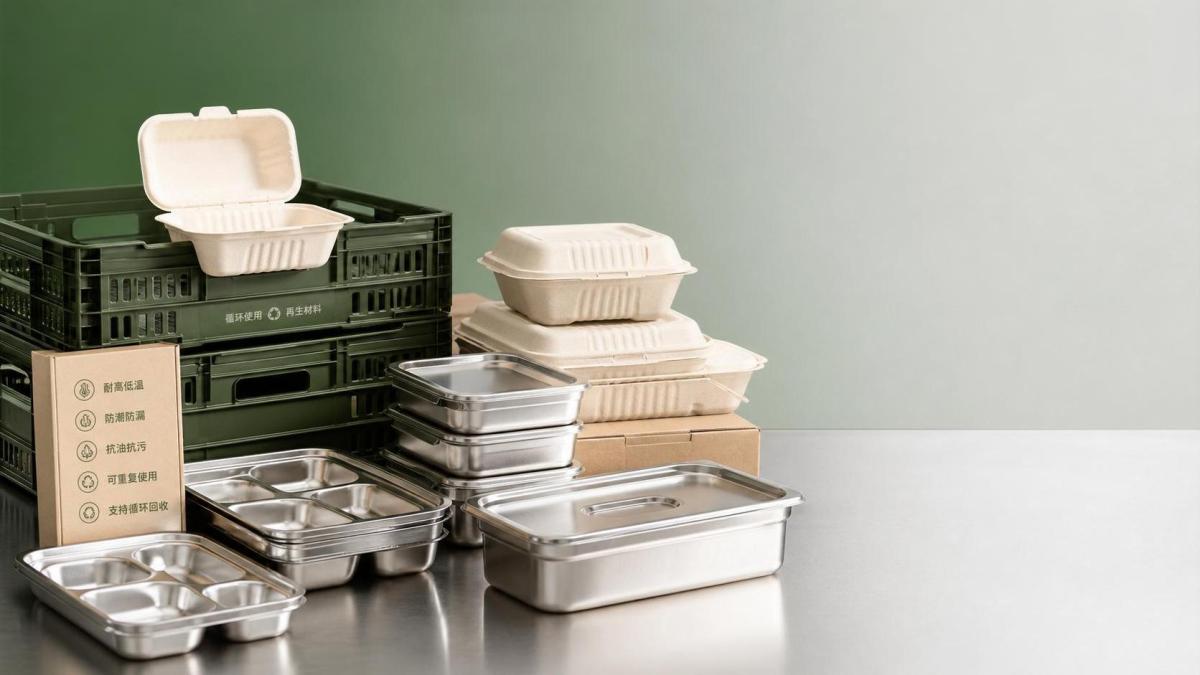
Eco-friendly restaurant supplies are no longer a niche purchase. They now sit inside broader decisions about food safety, operating cost, and brand standards.
That matters because restaurants, hotels, central kitchens, and food processing sites use supplies under pressure. Heat, moisture, grease, repeated washing, and constant handling expose weak materials quickly.
In practice, a product is not truly sustainable if it fails early. Reordering, replacing, and disposing of damaged items can erase the environmental benefit.
The kitchen equipment industry has been moving toward smarter, more energy-efficient systems. Supplies are following the same path, with stronger materials and better lifecycle design.
So the real question is not whether to buy eco-friendly restaurant supplies. It is how to choose versions that survive commercial use without inflating total cost.
What actually makes restaurant supplies “eco-friendly” in a commercial setting?
A common mistake is to judge only by a green label. Commercial buyers need a wider view.
Eco-friendly restaurant supplies usually combine several traits: recycled content, renewable raw materials, lower energy use in production, safe chemical profiles, and easier recycling or composting after use.
Still, not every “green” material fits every kitchen. Compostable tableware may work well for takeaway programs, but not for high-heat holding or oily meals.
More durable categories include reusable food containers, trays, utensils, prep tools, storage bins, and cleaning accessories made from stainless steel, reinforced bamboo fiber, recycled plastics, or heavy-duty molded pulp.
The better approach is to match the environmental claim to the use case. A sustainable item should fit the workflow, sanitation rules, and replacement cycle.
A quick way to screen claims
Before comparing prices, check whether the supplier can explain the material, the expected lifespan, and the disposal route in your market. If not, the claim may be too thin.
Which materials balance sustainability and toughness best?
There is no universal winner. The best eco-friendly restaurant supplies depend on whether the item is disposable, reusable, heated, washed, stacked, or moved frequently.
For long-life applications, stainless steel remains one of the strongest options. It is durable, hygienic, and well aligned with commercial kitchens and automated washing systems.
Recycled plastic can work well for storage, transport, and front-of-house service items. The key is impact resistance and resistance to cracking after repeated cleaning cycles.
Bamboo fiber and molded pulp are often selected for takeaway and light foodservice use. They support sustainability goals, but performance varies widely by thickness and coating.
Paper-based options look attractive on paper, yet moisture and oil resistance must be verified. Thin products can deform fast during peak service.
Material decisions should follow operating conditions
- High-heat prep and cooking areas usually favor stainless steel and heat-stable reusable products.
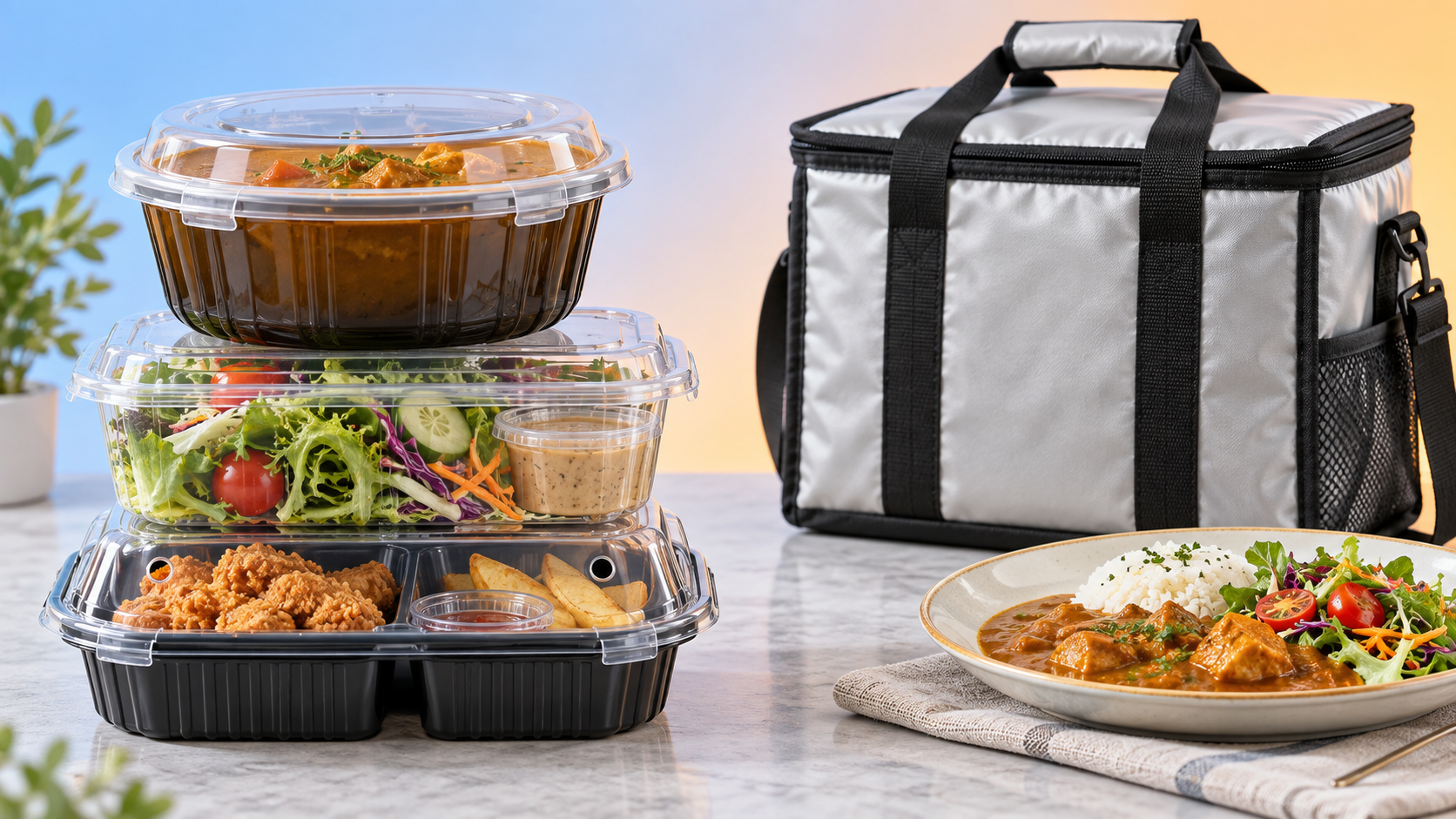
- Delivery and takeaway often need leak resistance, stack strength, and stable lids.
- Cold storage and transport need crack resistance and dimensional stability.
- Quick-service operations need fast replenishment and consistent quality across large volumes.
In other words, the strongest eco-friendly restaurant supplies are not defined by one material. They are defined by fit between material behavior and kitchen reality.
How can durability be evaluated before placing a large order?
The safest method is to test products under the same conditions they will face every day. Catalog claims help, but field performance matters more.
Start with a small trial. Use the supply during prep, service, cleaning, storage, and transport. Watch for bending, delamination, odor retention, lid failure, and surface wear.
Need to compare options quickly? Focus on these points rather than aesthetics alone.
- Heat tolerance under real menu conditions.
- Resistance to grease, acids, and moisture.
- Performance after repeated washing or sanitizing.
- Stacking strength during storage and delivery.
- Consistency across different production batches.
For operations using smart kitchen systems or digital inventory tools, failure rates can be tracked more precisely. That makes it easier to compare suppliers over time.
A low-cost item that fails after one shift is usually more expensive than a stronger alternative that lasts through its intended cycle.
Where do costs usually rise, even when the unit price looks lower?
This is where many buying decisions go off track. The unit price may look competitive, but total cost often hides elsewhere.
Eco-friendly restaurant supplies should be judged on total cost of use. That includes replacement frequency, storage efficiency, breakage, cleaning labor, freight, and waste handling.
Imported supplies may offer better pricing, especially from major manufacturing centers such as China, Germany, Italy, or Japan. Even so, logistics lead time and quality variation need attention.
In fast-moving foodservice markets, supply interruptions can cost more than a modest price difference. Reliable replenishment is part of durability from a purchasing perspective.
Typical hidden cost checks
How do you judge whether a supplier is reliable, not just sustainable on paper?
Supplier quality matters as much as product quality. In global kitchen equipment and supply chains, a good spec sheet is only the starting point.
Reliable suppliers usually provide traceable material information, food-contact documentation, production consistency, and practical lead-time commitments.
It also helps when the supplier understands commercial foodservice settings. A product built for household use may not survive a restaurant, hotel, or central kitchen environment.
More advanced suppliers now support digital ordering, specification management, and batch tracking. That aligns well with the wider shift toward smart and integrated kitchen operations.
During evaluation, ask for samples, test reports, and references from similar applications. When answers stay vague, risk usually rises.
- Request documented standards and food safety compliance.
- Check batch consistency across repeat shipments.
- Confirm lead times, minimum order quantities, and substitution rules.
- Review how claims are supported, not just how they are marketed.
What is the smartest next step when comparing eco-friendly restaurant supplies?
The most effective next step is to build a short evaluation matrix before expanding volume. Keep it practical and tied to operation-specific needs.
List the supplies by use case, such as prep, storage, takeaway, transport, or service. Then score each option for durability, food safety, disposal route, lead time, and total cost.
That process usually reveals a balanced answer. Some categories should shift to reusable long-life products. Others may justify compostable or recyclable single-use formats.
Eco-friendly restaurant supplies deliver the best value when environmental goals, operating realities, and supplier discipline move together.
A careful trial, a clear material review, and a realistic cost model will do more than any marketing claim. Those steps help protect both sustainability targets and daily kitchen performance.
From there, refine specifications, compare a small number of qualified suppliers, and track product performance over time. That is usually where stronger purchasing decisions start to compound.
Popular Tags
Kitchen Industry Research Team
Dedicated to analyzing emerging trends and technological shifts in the global hospitality and foodservice infrastructure sector.
Industry Insights
Join 15,000+ industry professionals. Get the latest market trends and tech news delivered weekly.
No spam. Unsubscribe anytime.
Hot Articles
 How to Choose a Leak-Proof Glass Storage Container for Meal Prep and Transport
- How to Size a Commercial Charbroiler for Peak-Hour Restaurant Output
- How to Specify Stainless Steel Kitchen Equipment for High-Volume Commercial Kitchens
- How to Choose Food Containers for Hot, Cold, and Leak-Prone Takeout Meals
Contact With us
Contact:
Anne Yin (Ceramics Dinnerware/Glassware)
Lucky Zhai(Flatware)