
When a dough divider machine creates more waste than value
A dough divider machine should improve speed and consistency, but when it increases trim loss, product variation, and labor costs, it can quickly become a liability. For bakeries and foodservice operations investing in kitchen preparation equipment, understanding why this happens—and how related tools like a dough sheeter machine, planetary mixer machine, or bakery proofer machine affect overall efficiency—is essential before making the next equipment decision.
This issue matters to more than artisan bakeries. Central kitchens, hotel pastry departments, frozen dough processors, and chain restaurant suppliers all depend on predictable portioning and repeatable throughput. When a dough divider machine underperforms, the damage appears in at least 4 areas: raw material waste, weight inconsistency, slower downstream handling, and avoidable maintenance cost.
For operators, the problem is practical: too much dusting flour, sticky dough, compressed structure, or constant rework. For procurement teams, the risk is financial: a machine with a lower purchase price can create a higher total cost within 6 to 12 months. For decision-makers, the larger question is whether the divider fits the full production line rather than whether it works in isolation.
Why a dough divider machine can reduce value instead of creating it
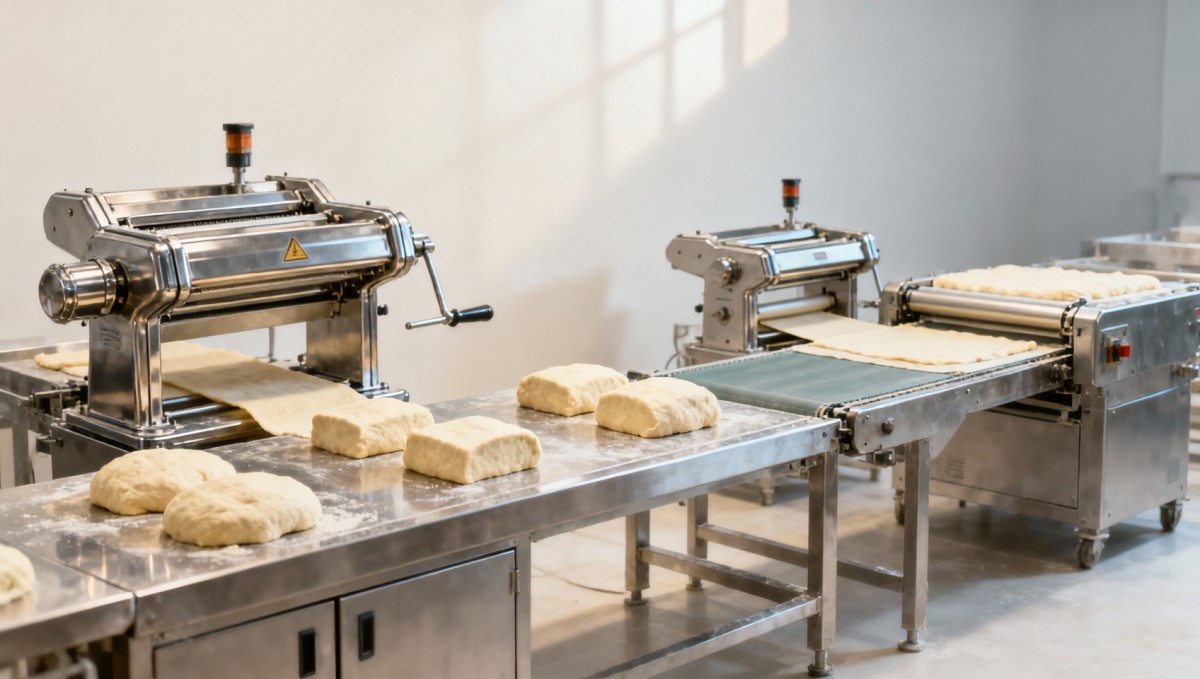
A dough divider machine typically promises faster scaling, lower reliance on manual weighing, and more uniform dough pieces. In a healthy process, weight deviation may stay within ±1% to ±3% depending on dough type, hydration, and divider design. But when settings, dough condition, or machine specification do not match production reality, losses can rise quickly.
One common cause is mismatch between dough characteristics and machine mechanism. High-hydration dough above 68% often behaves very differently from stiffer dough at 50% to 58%. A divider optimized for one category may smear, degas, or tear another. The result is not only trim waste but also product inconsistency after proofing and baking.
Another cause is throughput pressure. A bakery buying a machine rated for 800 to 1,200 pieces per hour may run it near the top of its cycle for long shifts of 8 to 10 hours. If feed pressure, hopper design, and discharge timing are not balanced, piece weights drift, dough sticks to contact surfaces, and the operator compensates with more flour, more scraping, and more intervention.
Wear is also underestimated. Divider knives, seals, pistons, conveyors, and dough-contact surfaces can gradually shift performance after 3 to 6 months of heavy use. Even a small mechanical deviation can translate into several kilograms of giveaway per batch across hundreds of cycles per week.
Hidden waste patterns that buyers often miss
The first hidden cost is giveaway. If the target dough piece is 250 g but actual average weight rises by only 5 g, that is a 2% over-portion. Across 2,000 pieces per day, the excess reaches 10 kg daily. In operations with tight flour, butter, or filling costs, this can outweigh the machine’s labor savings much faster than expected.
The second hidden cost is rework. Irregular pieces move poorly into a dough sheeter machine, create uneven fermentation in a bakery proofer machine, and increase corrective handling later in the line. A divider problem rarely stays at the divider; it often multiplies across 3 to 5 downstream steps.
The third hidden cost is sanitation and downtime. Dough sticking to internal chambers can extend end-of-shift cleaning from 20 minutes to 45 minutes. Over a 6-day production week, that lost time becomes a measurable labor burden.
Typical warning signs on the shop floor
- Weight variation repeatedly exceeds the internal control limit, such as ±3% on standard rolls or buns.
- Operators add dusting flour more than 2 to 3 times per batch to prevent sticking.
- Dough pieces show torn surfaces, compressed edges, or inconsistent shape before rounding or sheeting.
- Cleaning time rises above the planned sanitation window for 1 shift.
- Maintenance calls occur more than once per month for feed, cutting, or discharge issues.
How upstream and downstream equipment changes divider performance
A dough divider machine should never be evaluated alone. The real production result depends on the full preparation chain, especially mixing, resting, sheeting, proofing, and transfer. In many facilities, the divider is blamed for defects that actually begin with dough development in the planetary mixer machine or with unstable dough temperature before dividing.
For example, a planetary mixer machine that generates excess friction can raise dough temperature by 2°C to 4°C during mixing. That change may seem minor, but it can affect dough elasticity, stickiness, and gas retention. If dough enters the divider too warm, portions become harder to separate cleanly and require more manual correction.
Likewise, a dough sheeter machine can expose whether the divider is preserving dough structure. If divided pieces come out tight, torn, or uneven in density, the sheeter may produce uneven thickness and edge cracking. This is especially visible in laminated or semi-laminated applications where sheet tolerance may need to stay within roughly ±0.5 mm to ±1.0 mm.
The bakery proofer machine then amplifies all earlier variation. Dough pieces with inconsistent scaling or damaged gluten structure may proof at different rates over a 30 to 60 minute cycle. The visible effect is tray inconsistency, but the root cause may still sit at the dividing stage.
Line interaction map for common bakery setups
The following table shows how one machine’s operating condition can change divider output and total waste. This is useful for technical teams comparing equipment as a system instead of making a single-machine decision.
The key lesson is that divider performance is systemic. A buyer comparing only divider speed, hopper size, or unit price may miss the bigger efficiency picture. In many lines, improving mix control or rest time reduces waste more effectively than changing divider settings alone.
Questions to ask before blaming the divider
- Is dough temperature controlled within a practical target range for the formula?
- Does the dough rest long enough before dividing, especially for stronger or lower-hydration doughs?
- Is the target throughput realistic for the actual shift length and product mix?
- Are downstream machines exposing inconsistencies that started earlier in the process?
What procurement teams should evaluate before buying or replacing equipment
For procurement and management teams, the right question is not whether a dough divider machine can divide dough. Almost any machine can do that under ideal conditions. The real question is whether it can handle the operation’s dough range, production volume, sanitation routine, and labor skill level without creating hidden waste.
A practical evaluation should cover at least 6 dimensions: dough type, weight range, hourly output, cleaning difficulty, maintenance access, and integration with adjacent equipment. If one of these factors is unclear at purchase stage, the machine may look efficient on paper and costly in reality.
Weight range is especially important. A divider performing well at 80 g to 150 g may behave differently at 250 g to 500 g. Product mix matters too. Dividing pizza dough, bun dough, toast dough, and filled dough with one setup can require trade-offs that affect accuracy and operator time.
Buyers should also review cleaning architecture. If access panels, food-contact parts, or discharge areas are difficult to open and wash, sanitation labor can become a daily bottleneck. In facilities with 2 shifts or strict allergen controls, even an extra 15 minutes per cleaning cycle has significant cost impact.
A practical equipment selection checklist
The table below can help compare suppliers or internal upgrade options using operational factors instead of headline claims.
The strongest procurement decisions balance acquisition cost with total operating cost over 12 to 36 months. A machine that saves 1 operator hour per shift but adds 2% giveaway may not be an efficient investment. Side-by-side trials with actual dough formulas are often more useful than generic demonstration results.
Minimum questions for supplier discussions
- What dough types were used to validate performance, and how close are they to our recipes?
- What is the expected wear-part replacement interval under 1-shift and 2-shift use?
- How long does standard cleaning take, and which parts require daily removal?
- Can the machine feed smoothly into our dough sheeter machine or proofing workflow?
How to reduce waste without replacing the entire line
Not every underperforming dough divider machine needs immediate replacement. In many kitchens and bakery plants, waste can be reduced through process correction, operator retraining, and better coordination with nearby equipment. A disciplined improvement plan over 2 to 4 weeks can reveal whether the machine is truly unsuitable or simply poorly matched to current settings.
Start with measurement. Track target weight, actual average weight, variation range, trim percentage, cleaning time, and downtime frequency for at least 5 to 10 production days. Without this baseline, teams often react to visible defects while missing the most expensive loss point.
Next, verify dough consistency before feeding. A stable dough temperature window, controlled mixing time, and defined rest period often improve dividing performance immediately. In some operations, reducing feed variability can cut manual correction by 20% to 30% even before any mechanical adjustment is made.
Then inspect the mechanical side. Check blade condition, pressure settings, seals, discharge timing, and flouring level. A small wear issue can behave like a process problem. Planned inspections every 2 to 4 weeks are usually far less expensive than waiting for visible failure.
A step-by-step improvement workflow
- Record current performance for 1 full production cycle, including giveaway and rework volume.
- Standardize mixer output by confirming mixing time, dough temperature, and hydration tolerance.
- Adjust divider settings gradually rather than changing multiple variables in one shift.
- Test downstream response in the dough sheeter machine and bakery proofer machine.
- Review sanitation and maintenance logs after 7 to 14 days to confirm stability.
When replacement is the better choice
Replacement becomes more reasonable when the machine cannot handle the required dough range, repeatedly fails to meet acceptable weight control, or requires excessive operator intervention. If the process is stable but the divider still creates more than 2% to 3% giveaway, frequent downtime, or chronic product damage, the cost of keeping it may exceed the cost of upgrading.
It is also worth replacing when the broader line has evolved. A bakery that added a larger planetary mixer machine, faster transfer conveyor, or higher-capacity bakery proofer machine may have outgrown an older divider. In this case, the machine is not defective; it is simply no longer aligned with present production conditions.
FAQ for operators, buyers, and decision-makers
Many equipment reviews fail because they focus only on catalog specifications. The questions below reflect what real users and procurement teams need to confirm before choosing, tuning, or replacing a dough divider machine in a commercial kitchen or bakery setting.
How much weight variation is usually acceptable?
The acceptable range depends on product value and production method, but many operations try to keep variation within ±1% to ±3% for standard rolls, buns, and similar dough pieces. Premium or tightly costed products may require tighter control, while very soft or specialty doughs may tolerate a wider band if downstream quality remains stable.
Can a dough divider machine handle all dough types in one facility?
Not always. A single machine may handle several categories, but high-hydration artisan dough, enriched sweet dough, pizza dough, and stiff bread dough can behave very differently. If your site produces 3 or more distinct dough families, request trials using your actual recipes rather than assuming universal compatibility.
How often should maintenance be planned?
Basic inspection should happen daily, especially for residue buildup, blade condition, and discharge cleanliness. A more detailed preventive review every 2 to 4 weeks is common in regular commercial use. High-volume sites running 2 shifts may need shorter intervals, especially for wear parts and sealing components.
What matters more: machine speed or line balance?
Line balance matters more. A high-speed dough divider machine creates little value if the planetary mixer machine cannot feed consistently, the dough sheeter machine cannot absorb the output smoothly, or the bakery proofer machine exposes variation later. Stable flow usually delivers better economics than peak speed.
A dough divider machine creates value only when it fits the dough, the operators, and the full production line. If it increases giveaway, rework, cleaning time, or proofing inconsistency, the real issue may lie in equipment fit, process control, or integration with adjacent machines rather than in dividing alone.
For bakeries, foodservice groups, central kitchens, and food processing operations, a smarter equipment decision starts with measurable production data, realistic trials, and a line-level view that includes the dough sheeter machine, planetary mixer machine, and bakery proofer machine. If you are reviewing a new purchase or troubleshooting current performance, contact us to discuss your process, compare configurations, and get a more practical equipment solution.
Popular Tags
Kitchen Industry Research Team
Dedicated to analyzing emerging trends and technological shifts in the global hospitality and foodservice infrastructure sector.
Industry Insights
Join 15,000+ industry professionals. Get the latest market trends and tech news delivered weekly.
No spam. Unsubscribe anytime.

Contact With us
Contact:
Anne Yin (Ceramics Dinnerware/Glassware)
Lucky Zhai(Flatware)