
Why energy-efficient restaurant kitchen equipment often costs more upfront — and when it pays off
Energy-efficient restaurant kitchen equipment often carries a higher upfront cost—but is it worth it? As operators across restaurants, hotels, schools, and catering businesses browse the restaurant kitchen equipment catalog, they’re increasingly weighing long-term savings against initial investment. From fireproof restaurant kitchen equipment to space-saving restaurant kitchen layouts and smart restaurant kitchen solutions, energy efficiency now intersects with safety, hygiene, and operational scalability. Whether you’re a procurement professional sourcing restaurant kitchen equipment wholesale, a decision-maker evaluating hygienic restaurant kitchen design, or an exporter aligning with global demand for energy efficient restaurant kitchen systems—this article breaks down when—and how—efficiency pays off.
Why Energy-Efficient Kitchen Equipment Commands a Premium Price
The higher sticker price of energy-efficient commercial kitchen equipment stems from tangible engineering and material investments—not marketing markup. Modern high-efficiency ovens, combi-steamers, refrigeration units, and dishwashers integrate advanced heat recovery systems, variable-speed compressors, precision insulation (R-value ≥ 8.5), and IoT-enabled load optimization algorithms. For example, ENERGY STAR®-certified commercial dishwashers use ≤ 0.85 gallons per rack—versus 1.3–1.8 gallons in standard models—requiring redesigned pump manifolds, stainless steel thermal jackets, and real-time water temperature calibration sensors.
Manufacturers also incur elevated R&D, certification, and compliance costs. Meeting UL 96A (commercial cooking equipment), NSF/ANSI 7 (food equipment), and EU Ecodesign Directive Tier 2 standards demands iterative thermal modeling, third-party lab validation cycles (typically 4–6 weeks per model), and component-level traceability. These processes increase time-to-market by 3–5 months versus conventional designs—and are factored into unit pricing.
Moreover, supply chain dynamics contribute. High-efficiency compressors (e.g., Danfoss Turbocor) and low-GWP refrigerants (R-290, R-513A) carry 12–18% higher procurement costs than legacy alternatives. When scaled across a full kitchen lineup—including blast chillers, induction cooktops, and vacuum sealers—the cumulative premium typically ranges from 15% to 32% over baseline equipment packages.
This table reflects industry-wide benchmarks across 2023–2024 product launches from major OEMs including Rational, Hobart, True Manufacturing, and Fujimak. The premium correlates directly with measurable reductions in power draw, water consumption, and peak thermal load—key drivers for ROI calculation.
When Efficiency Translates Into Real Payback
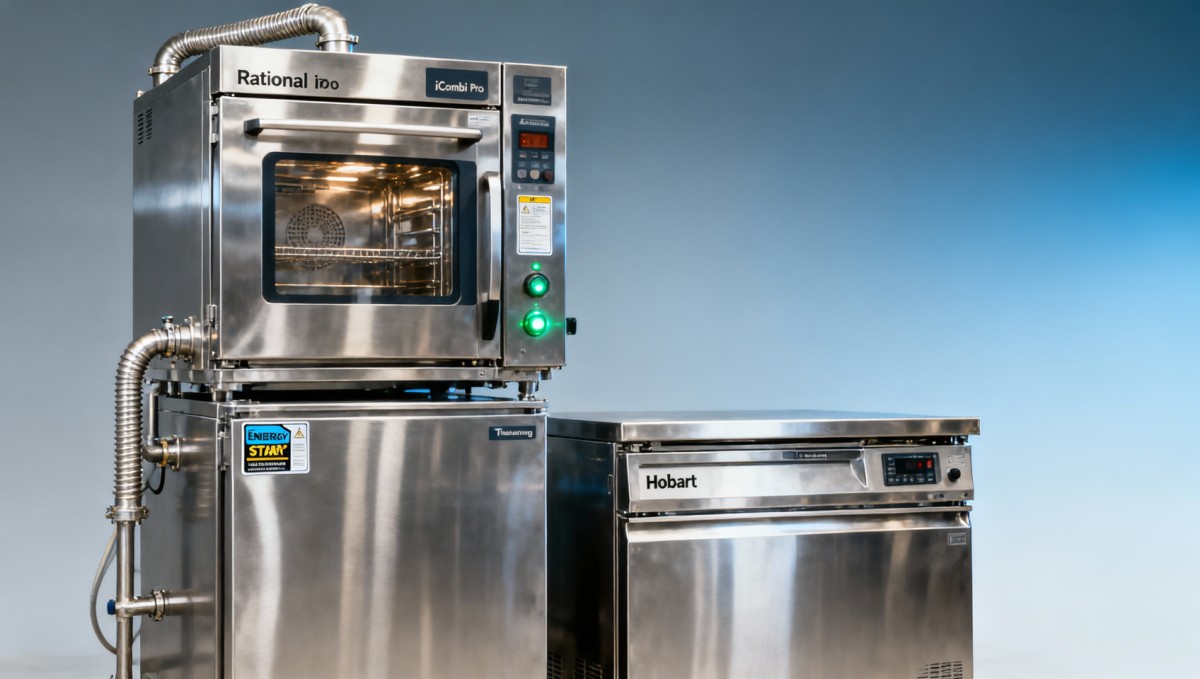
Payback periods for energy-efficient kitchen equipment vary significantly by usage intensity, utility rates, and local incentive programs—but follow predictable patterns. In high-volume operations (≥ 200 covers/day), payback typically occurs within 18–36 months. A full-service hotel kitchen running 16 hours daily may recoup its $42,000 efficiency upgrade in just 22 months via combined electricity, gas, and water savings averaging $1,920/month.
Critical thresholds determine viability. Equipment used ≥ 8 hours/day sees ROI acceleration of 35–50% compared to intermittent-use settings. Likewise, facilities in regions with commercial electricity rates above $0.14/kWh—or natural gas above $1.25/therm—achieve faster breakeven. U.S. operators benefit from federal 179D tax deductions (up to $5.00/sq ft) and state-level rebates averaging $2,200–$8,600 per qualifying unit.
Beyond direct utility savings, secondary paybacks include extended equipment lifespan (high-efficiency compressors last 20–25% longer due to reduced thermal cycling), lower HVAC load (cutting cooling demand by up to 30% in summer), and reduced maintenance frequency—e.g., induction cooktops require zero burner cleaning versus gas units needing biweekly degreasing.
- Gas-fired combi-ovens with heat recovery cut flue gas losses from 45% to ≤ 12%, reducing annual gas use by 1,800–2,400 therms.
- Variable-frequency drive (VFD) ventilation hoods reduce exhaust fan runtime by 40–60%, lowering makeup air heating/cooling costs.
- Smart refrigeration systems with adaptive defrost scheduling extend compressor life by 3–5 years vs. fixed-timer models.
Procurement Criteria That Separate True Efficiency From Marketing Claims
Not all “energy-saving” labels reflect verifiable performance. Procurement professionals must validate claims using standardized metrics—not vendor brochures. Key verification steps include requesting AHRI-certified performance data (not internal test reports), verifying ENERGY STAR® listing status on energystar.gov, and cross-checking refrigerant GWP values against EPA SNAP Program approvals.
Four non-negotiable procurement checkpoints:
- Third-party certification: UL, NSF, CE, or CSA marks confirming compliance with energy and safety standards—not just “tested to” statements.
- Load profile alignment: Equipment rated at 100% capacity must match actual peak demand (e.g., a 300-lb/h blast chiller shouldn’t be oversized for a 120-lb/h operation).
- Serviceability documentation: Full schematics, firmware update logs, and diagnostic port access—critical for maintaining efficiency over time.
- Warranty terms: Minimum 3-year comprehensive coverage on compressors, controls, and thermal components—not just 1-year parts-only policies.
These criteria help procurement teams avoid “greenwashing” traps and ensure purchased equipment delivers verified, maintainable efficiency—not short-term optics.
Strategic Implementation: Maximizing ROI Across Your Kitchen Ecosystem
Efficiency gains compound when deployed holistically—not piecemeal. A phased rollout prioritizes high-impact, high-utilization assets first: refrigeration (35–40% of kitchen energy use), then cooking (25–30%), then dishwashing (15–20%). Integrating equipment with centralized monitoring platforms (e.g., EcoStruxure Food & Beverage or Siemens Desigo CC) enables real-time load balancing—shifting blast chilling to off-peak hours or modulating hood exhaust based on actual vapor generation.
Training is equally critical. Staff must understand optimal loading patterns (e.g., not opening blast chiller doors during rapid pull-down), maintenance triggers (cleaning condenser coils every 90 days), and behavioral adjustments (using “eco-mode” on combi-ovens for rethermalization). Facilities reporting ≥ 90% staff adherence to efficiency protocols achieve 22% faster ROI than those without structured training.
Finally, lifecycle planning matters. Specify equipment with modular components (replaceable control boards, swappable compressor kits) and documented end-of-life recycling pathways. This reduces total cost of ownership by 12–17% over 10 years versus sealed, proprietary units.
Final Recommendation: Who Should Invest—and When
Energy-efficient kitchen equipment delivers strongest value for operators with predictable, sustained volume—especially those operating under tight margin constraints or facing rising utility tariffs. It’s essential for new builds seeking LEED or BREEAM certification, central kitchens supplying multiple outlets, and export-focused manufacturers targeting EU, Canada, or Japan, where regulatory energy limits tighten annually.
Conversely, seasonal or pop-up concepts with <12-month operational horizons may prioritize lower upfront cost—unless local incentives cover >40% of the premium. For existing kitchens, retrofit feasibility hinges on electrical service capacity (e.g., induction cooktops require 208V/3-phase circuits) and ventilation infrastructure compatibility.
Ultimately, energy efficiency isn’t just about watts saved—it’s about resilience, compliance readiness, and future-proofed operations. When aligned with your volume profile, utility environment, and strategic goals, the premium transforms from cost into capital.
Ready to evaluate your specific kitchen’s efficiency potential? Contact our engineering team for a no-cost energy audit and customized ROI projection—covering equipment selection, utility incentive mapping, and phased implementation planning.
Popular Tags
Kitchen Industry Research Team
Dedicated to analyzing emerging trends and technological shifts in the global hospitality and foodservice infrastructure sector.
Industry Insights
Join 15,000+ industry professionals. Get the latest market trends and tech news delivered weekly.
No spam. Unsubscribe anytime.
Hot Articles
 China's Shipbuilding Industry Q1 Orders Up 195.2%, Boosting Specialized Kitchen Equipment Containers
- France Unveils 2026 China Strategy with Smart Kitchen as Cultural Export Priority
- China-Europe Freight Trains Surpass 130,000 Runs; New Cold-Chain Route to Hamburg and Lyon
- Guangdong's Q1 Kitchen Appliance Exports Turn Positive, Smart Integrated Ranges Surge 41%

Contact With us
Contact:
Anne Yin (Ceramics Dinnerware/Glassware)
Lucky Zhai(Flatware)