
Commercial gas range sizing mistakes that raise energy bills
Choosing the wrong Commercial Gas Range size can quietly drive up utility costs, reduce kitchen efficiency, and strain your operating budget. For financial decision-makers, sizing mistakes are not just technical issues—they directly affect ROI, workflow, and long-term energy spending. This article highlights the most common sizing errors and how smarter equipment planning can help control costs while supporting reliable commercial kitchen performance.
Why does Commercial Gas Range sizing affect energy costs so much?
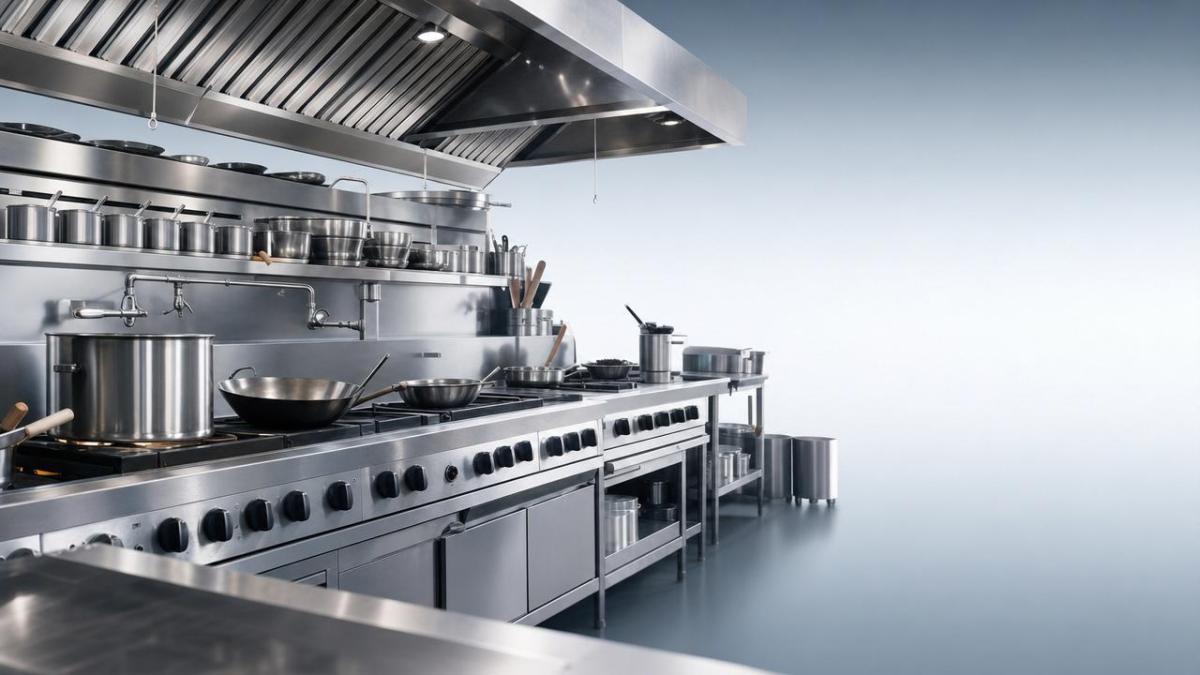
In commercial kitchens, size is not only a physical measurement. It determines burner count, gas input, heat output, ventilation demand, staffing patterns, and how well the cooking line matches actual production volume. A Commercial Gas Range that is too large can waste fuel every shift. One that is too small often causes overload, longer cook times, and operational bottlenecks that also increase utility and labor costs.
For finance approvers, the mistake usually begins when a range is evaluated only by purchase price or nominal capacity. In reality, the total cost of ownership includes gas consumption, hood load, maintenance frequency, menu fit, replacement cycles, and the indirect cost of slower service. In restaurants, hotels, central kitchens, and food processing support areas, incorrect sizing can ripple through the entire workflow.
This matters even more in a kitchen equipment market that is moving toward energy efficiency, digital management, and integrated systems. Today’s procurement decisions are expected to support food safety, productivity, utility control, and long-term asset planning at the same time. That is why Commercial Gas Range sizing should be treated as a financial strategy, not just an equipment specification.
- Oversized units consume more gas and often require larger ventilation support even when production demand is moderate.
- Undersized units create peak-hour delays, repeated batch cooking, and unnecessary overtime costs.
- Poor line matching leads to idle burners in some zones and overloaded burners in others, which reduces thermal efficiency.
- Improper sizing can also limit future menu expansion, forcing early replacement or add-on equipment purchases.
The most common Commercial Gas Range sizing mistakes buyers make
Many purchasing teams assume that a bigger Commercial Gas Range offers more flexibility. In some kitchens, that is true. But flexibility without utilization often becomes waste. The more common reality is that oversized equipment runs below optimal load while still consuming energy and ventilation capacity.
1. Buying for peak demand only
A range selected only for the busiest hour of the week may stay underused for the remaining operating hours. Financially, that means paying daily for capacity that is rarely monetized. A better approach is to evaluate average output, peak duration, and whether peak demand can be balanced with prep scheduling or complementary equipment.
2. Ignoring menu-specific heat requirements
Not every burner station needs the same input. Stir-fry, stock, sauté, boiling, finishing, and holding all place different demands on the range. If the configuration does not reflect actual menu behavior, operators may use high-output burners for low-load tasks, raising fuel spend without increasing revenue.
3. Confusing kitchen footprint with production need
Some buyers fill available line space because it exists. But empty line space is not a valid sizing method. The right Commercial Gas Range should fit process flow, not simply occupy the wall. Overfilling the line can create access issues, cleaning difficulty, and higher hood loads.
4. Overlooking utility and ventilation interaction
A larger gas range can trigger higher extraction requirements and more conditioned air replacement. The direct gas bill is only part of the picture. The hidden cost can be the HVAC burden created by excess heat. This is especially relevant in hotels, institutional kitchens, and large-volume foodservice sites where ventilation cost is material.
5. Treating all shifts as identical
Breakfast, lunch, dinner, and prep shifts often have different cooking patterns. If a Commercial Gas Range is sized around one service model, it may perform inefficiently during the others. Multi-shift analysis usually leads to a more balanced specification and better asset utilization.
How sizing errors show up in your budget
Finance teams often see the symptoms before they see the cause. Rising utility costs, inconsistent labor productivity, and frequent complaints from operations may all trace back to an incorrectly sized Commercial Gas Range. The table below summarizes how typical sizing mistakes convert into measurable business impact.
The important takeaway is that energy cost inflation is often a systems problem. A Commercial Gas Range that appears affordable at tender stage may become expensive after installation if the kitchen line, hood capacity, and real cooking profile were not evaluated together.
Which Commercial Gas Range size fits different foodservice scenarios?
There is no universal best size. The right Commercial Gas Range depends on production rhythm, menu complexity, service style, and kitchen layout. This is why scenario-based procurement is more reliable than buying by price bracket alone.
The following table offers a practical framework for matching range size logic to common commercial kitchen environments. It is not a substitute for engineering review, but it helps finance and procurement teams ask better questions earlier in the process.
For many businesses, the better financial decision is not the biggest Commercial Gas Range available. It is the one that supports the most profitable output pattern with the least wasted heat, space, and labor.
What should financial approvers ask before approving a Commercial Gas Range?
A strong approval process can prevent expensive oversights. Finance leaders do not need to become kitchen engineers, but they should require a structured case for size selection. Good suppliers and project teams should be able to answer the following questions clearly.
- What is the expected meal volume by shift, and what percentage of burner stations will be used during normal versus peak periods?
- How does this Commercial Gas Range align with the menu mix, including high-heat and low-heat applications?
- What is the total gas input, and how will it affect ventilation, make-up air, and cooling load?
- Can the line be optimized by combining the range with other equipment such as fryers, griddles, ovens, or combi systems instead of oversizing the range itself?
- What is the estimated payback difference between the proposed size and a smaller or modular alternative?
- Are installation constraints, gas supply conditions, and local code requirements already reviewed?
A practical approval checklist
- Request a line layout review instead of approving the unit in isolation.
- Ask for a utilization assumption, not just a burner count.
- Compare initial purchase cost with expected annual energy and maintenance cost.
- Check whether modular expansion is possible if output grows later.
- Verify whether the proposed Commercial Gas Range supports compliance, cleaning access, and operator safety.
Commercial Gas Range vs alternative cooking configurations: where can costs be reduced?
Sometimes the question is not just what size Commercial Gas Range to buy, but whether the range should carry the entire cooking burden. In modern kitchen design, combining specialized equipment can reduce utility use and improve line efficiency. This is especially relevant in facilities adopting smart and integrated kitchen systems.
When alternatives make financial sense
If a kitchen performs high volumes of one cooking method, a dedicated appliance may be more efficient than expanding the gas range. For example, griddles, stock pot units, or combi equipment can absorb specialized loads that would otherwise force a larger range specification.
That does not mean the Commercial Gas Range becomes less important. It means the range should be sized as part of an integrated production system. This approach supports the wider industry shift toward automation, energy efficiency, and digital kitchen planning.
For approval teams, the key is to compare systems rather than individual appliances. The cheapest range on paper may not be the lowest-cost kitchen solution over five years.
Standards, compliance, and planning details that should not be skipped
A Commercial Gas Range must fit not only the menu and budget, but also local installation and safety requirements. While exact regulations vary by market, commercial buyers should confirm that equipment selection is consistent with applicable gas appliance rules, ventilation design requirements, and foodservice safety practices.
Key points to review
- Gas type compatibility and site supply conditions, including pressure and connection planning.
- Ventilation and exhaust coordination so that the selected Commercial Gas Range does not overload the hood design.
- Cleaning access, aisle spacing, and service clearances for safe daily operation and maintenance.
- Material and construction suitability for foodservice hygiene expectations and heavy-duty use.
- Documentation for procurement files, such as technical sheets, installation requirements, and after-sales support scope.
Skipping these checks can delay opening schedules, trigger retrofit expense, or create approval friction between procurement, operations, and facility teams. In global sourcing environments, where products may come from major manufacturing centers such as China, Germany, Italy, or Japan, alignment between specification and local compliance becomes even more important.
FAQ: what buyers ask about Commercial Gas Range sizing
How do I know if a Commercial Gas Range is oversized?
A common sign is low burner utilization outside short peak periods. If only part of the range is used during most shifts, yet gas and ventilation costs stay high, the unit may be oversized. Reviewing actual menu production by time block usually reveals whether the installed capacity is aligned with demand.
Is a larger Commercial Gas Range always safer for future growth?
Not always. Future growth matters, but overbuying can lock in higher operating costs from day one. A better strategy is to allow reasonable headroom while preserving modular expansion options. This reduces immediate waste and keeps capital deployment more flexible.
What matters more: burner count or total gas input?
Both matter, but neither should be reviewed alone. Burner count affects workflow and station allocation. Total gas input affects utility cost and ventilation load. The most useful analysis combines both with actual cooking tasks, service pace, and line layout.
Can a better layout reduce the need for a larger Commercial Gas Range?
Yes. In many kitchens, better sequencing between prep, cooking, holding, and finishing can reduce congestion and improve throughput without increasing range size. This is one reason integrated kitchen planning often delivers stronger returns than isolated appliance purchasing.
Why choose us for Commercial Gas Range sizing support?
In the kitchen equipment industry, the best results come from matching equipment decisions to production reality, compliance needs, and long-term operating cost. We support buyers across restaurant, hotel, central kitchen, and food processing applications with practical guidance focused on efficient, scalable, and commercially sound solutions.
If you are evaluating a Commercial Gas Range, you can contact us to discuss parameter confirmation, kitchen line matching, product selection, estimated delivery timing, customization options, certification-related questions, sample support, and quotation planning. If your team is comparing several layouts or considering alternatives to an oversized range, we can also help structure a more cost-aware equipment plan before approval.
A better sizing decision does more than cut energy bills. It improves kitchen flow, protects capital efficiency, and supports a more sustainable foodservice operation. For finance approvers, that makes Commercial Gas Range planning a worthwhile conversation early in the procurement process.
Popular Tags
Kitchen Industry Research Team
Dedicated to analyzing emerging trends and technological shifts in the global hospitality and foodservice infrastructure sector.
Industry Insights
Join 15,000+ industry professionals. Get the latest market trends and tech news delivered weekly.
No spam. Unsubscribe anytime.
Hot Articles
 ASEAN FTA Upgrade Enters Text Verification Phase; Smart Kitchen Controls Added to Zero-Tariff List
- Electronics Manufacturing Leads with 13.6% Output Growth; Kitchen Appliance Chip Supply Stabilizes
- OpenCLAW-like Agent Deployment Risk Management Guidelines Released
- Green Power Stocks Rally; Overseas Buyers Prioritize Green Electricity Usage

Contact With us
Contact:
Anne Yin (Ceramics Dinnerware/Glassware)
Lucky Zhai(Flatware)