
Commercial kitchen tools: repairable designs save more later
Choosing commercial kitchen tools with repairable designs helps restaurants, caterers, and processors lower long-term costs, reduce downtime, and extend equipment life. For buyers comparing kitchen tools wholesale options, kitchen tools price list details, and restaurant supplies cost, durable kitchen tools and stainless steel kitchen tools offer better value over time. This article explains why repairability matters for commercial kitchens, catering operations, and professional foodservice use.
In foodservice and food processing environments, tools are exposed to heat, moisture, detergents, impact, and repeated daily use. A ladle, tong, slicer accessory, hand tool, or prep station component may be used 50 to 300 times per shift. When a low-cost item fails and cannot be repaired, replacement costs multiply across departments, sites, and seasons.
This matters not only to operators but also to procurement teams and business leaders. A repairable design supports lower total cost of ownership, easier spare parts planning, and more predictable maintenance cycles. It also aligns with current industry priorities: operational continuity, hygiene control, sustainability, and smarter investment decisions across commercial kitchen equipment portfolios.
Why repairable commercial kitchen tools matter in daily operations
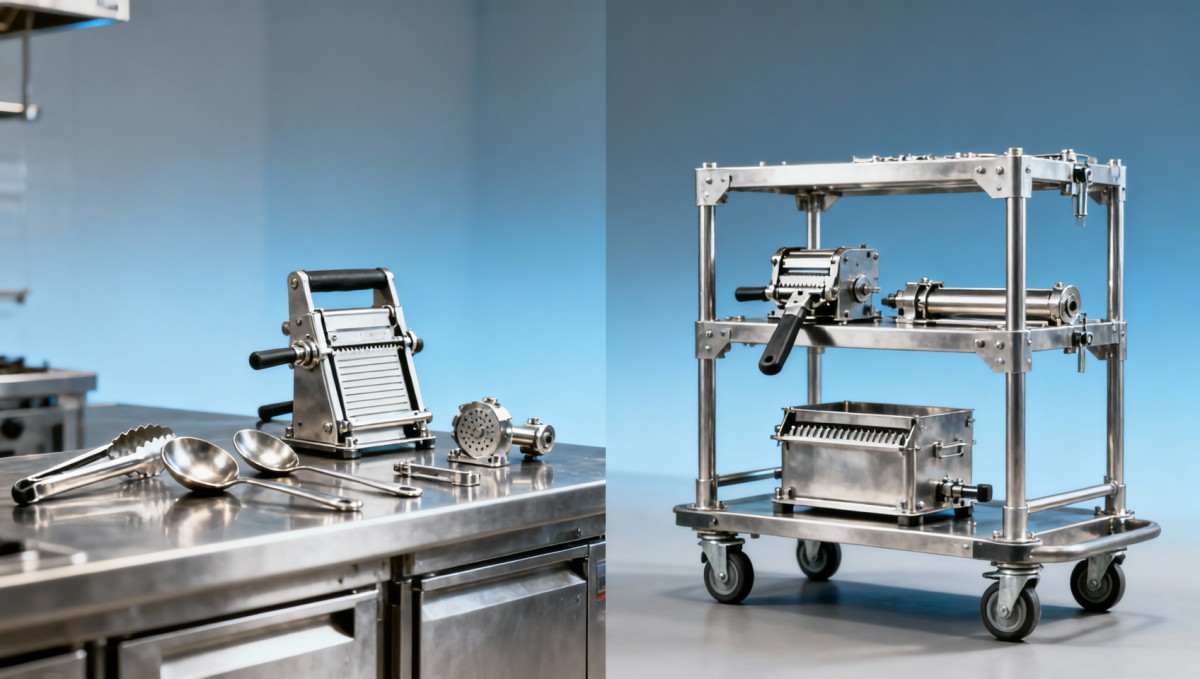
Repairability is the practical ability to restore a tool to safe working condition through replaceable parts, fasteners, modular assemblies, or service access. In commercial kitchens, that concept applies to more than powered equipment. It includes manual kitchen tools, stainless steel kitchen tools, cutting assemblies, handles, hinges, seals, detachable grips, and wear components that can be changed instead of discarding the full item.
For a restaurant group managing 2 to 10 outlets, even small failures create measurable disruption. If prep tools are unavailable for 4 to 6 hours during a lunch-and-dinner cycle, labor efficiency drops and substitute purchases often happen at premium prices. In central kitchens and processing sites, downtime can affect batch planning, sanitation scheduling, and delivery commitments within the same 24-hour window.
Repairable designs reduce waste by extending service life from a typical 12–18 month replacement cycle to 24–36 months or longer, depending on usage intensity and cleaning practices. That does not mean every tool should always be repaired. It means buyers should identify which tools have predictable wear points and select versions designed for practical maintenance.
Operational pain points solved by repairable designs
The most common pain points include cracked handles, loose rivets, bent springs, dull replaceable edges, degraded seals, and corrosion at joints. In many low-cost products, these failures cannot be addressed because the tool uses sealed construction, weak joining methods, or nonstandard parts. That leads to repeated repurchasing and inconsistent tool performance across shifts.
By contrast, a repair-friendly tool allows quick intervention in 10–30 minutes, especially when spare parts are stocked on-site. For foodservice operators, this means less emergency purchasing, fewer workarounds, and better staff confidence. For purchasing teams, it supports standardized sourcing and easier kitchen tools wholesale planning over 6- or 12-month periods.
Key signs of a repairable tool
- Visible mechanical fasteners rather than fully sealed bonding where maintenance is needed.
- Replaceable wear parts such as blades, seals, grips, springs, or caster components.
- Stainless steel body structures with detachable subassemblies for cleaning and service.
- Clear spare parts availability for at least 12–24 months after purchase.
- Basic service instructions that kitchen maintenance staff can follow safely.
Cost comparison: upfront price versus total lifecycle value
A low purchase price can look attractive on a kitchen tools price list, but it rarely shows the full cost picture. For commercial kitchens, the better metric is lifecycle value: acquisition cost, service labor, replacement frequency, downtime impact, and inventory burden. Durable kitchen tools with serviceable parts often cost 10% to 25% more upfront, yet can produce lower annual spend.
Consider a simple comparison across high-use tools. A non-repairable item replaced 3 times in 24 months may still look cheaper unit by unit, but once freight, rush orders, disposal, retraining, and stock inconsistency are added, the total can exceed the cost of a repairable product by a meaningful margin. This is especially true for chain restaurants and catering firms handling peak volume periods.
The table below shows a practical decision model that procurement teams can adapt when reviewing restaurant supplies cost and commercial kitchen tool replacement budgets.
The key takeaway is that unit price alone is a weak buying metric. Buyers should compare cost over 12, 24, and 36 months, especially for tools used in prep, line service, transport, and washing zones. In many kitchens, the break-even point for repairable products appears after the second failure event, not the first purchase.
What decision-makers should calculate
- Annual usage volume per site, such as 20, 50, or 100 units.
- Average failure interval, for example every 4–8 months in heavy use.
- Repair time versus full replacement lead time, often 1 day versus 3–14 days.
- Indirect cost of staff delays, menu impact, or hygiene disruption.
This approach creates a stronger procurement case than simply selecting the cheapest line on a price sheet. It also helps standardize tool selection across restaurants, hotels, and food production teams that need reliable output every day.
How to evaluate repairable designs when sourcing kitchen tools wholesale
When buyers review kitchen tools wholesale offers, repairability should be checked in a structured way. The most useful evaluation method combines material quality, construction access, parts support, cleaning compatibility, and expected service intensity. This is relevant whether the buyer is sourcing for one commercial kitchen or for a multi-site foodservice network.
Stainless steel kitchen tools remain a preferred choice because they combine corrosion resistance, cleanability, and long-term structural stability. However, material alone is not enough. A stainless steel tool with a weak joint or sealed non-serviceable component may still become disposable. Buyers should look at how the tool is assembled, not just what it is made from.
The following table can be used as a practical supplier evaluation checklist during quotation review, sample testing, or pre-contract comparison.
This checklist helps procurement teams separate true long-life products from tools that merely appear robust at first glance. It is also useful for operators who need proof that maintenance can be handled without excessive downtime or specialist intervention.
Questions to ask suppliers before ordering
- Which parts are expected to wear first within 6–12 months of normal use?
- Can those parts be ordered individually, and what is the usual lead time?
- Are cleaning chemicals or dishwasher cycles likely to affect joints, grips, or seals?
- Is there a recommended inspection interval, such as weekly or monthly?
- Can sample units be tested under actual kitchen workflow before bulk purchase?
Common sourcing mistake
A frequent mistake is buying mixed tools from several suppliers based only on promotional pricing. That often creates inconsistent spare parts, uneven user experience, and fragmented maintenance records. A more effective strategy is to standardize 70% to 80% of core-use tools and keep alternative suppliers only for specialty applications.
Implementation, maintenance, and service planning for longer tool life
Even the best repairable commercial kitchen tools will underperform without a basic maintenance system. Many failures blamed on product quality are actually caused by poor washing practices, impact storage, delayed inspections, or incorrect disassembly. A simple tool management routine can extend useful life by several months and reduce sudden breakdowns during peak production periods.
For most kitchens, implementation does not need to be complex. A 4-step process is usually enough: identify high-use tools, define wear points, stock critical spare parts, and assign inspection responsibility. In smaller sites, the chef or kitchen supervisor may own this process. In larger hotel or processing facilities, maintenance and procurement teams can share the responsibility.
A practical maintenance workflow
- Classify tools by use intensity: low, medium, and high-frequency handling.
- Inspect high-frequency items every 7 days and medium-frequency items every 30 days.
- Record visible wear, missing fasteners, looseness, edge quality, or wheel performance.
- Replace standard wear parts before failure stops production.
- Review replacement and repair data every quarter to refine future purchasing.
For kitchens running 2 shifts per day or processing large meal volumes, a small spare parts kit often provides strong value. Typical contents may include springs, blade sets, screws, handles, wheels, and food-safe seals. The goal is not to hold excessive inventory, but to cover the top 5 to 10 recurring failure points that cause service interruption.
Cleaning also affects repairability. If tools are exposed to aggressive chemicals, very high wash temperatures, or prolonged wet storage, joints and replaceable components can degrade early. Operators should match cleaning chemistry and temperature ranges to the supplier’s guidance, especially when tools combine steel with polymer grips or elastic sealing parts.
Typical maintenance thresholds to monitor
- Handle movement or looseness detected by hand during weekly checks.
- Blade sharpness deterioration that increases prep time by more than 10%.
- Rust spots, pitting, or surface damage appearing after repeated wash cycles.
- Wheel or hinge resistance causing unsafe force or awkward operator posture.
This planning approach supports both operational continuity and workforce safety. It also provides clearer evidence when procurement managers review future supplier performance and negotiate better terms for kitchen tools wholesale contracts.
Common buying mistakes, real-world fit, and FAQ for decision-makers
Not every repairable tool is the right choice for every business. A cloud kitchen with fast menu turnover, a hotel banquet operation, and a food processing line all have different requirements. Buyers should align repairability with use frequency, labor skill, sanitation demands, and replacement urgency. In some low-use cases, simple replacement may still be economical. In high-use settings, serviceability usually brings stronger long-term value.
Another mistake is treating all tools as equal assets. In reality, there are at least 3 sourcing categories: disposable low-value items, maintainable high-turnover tools, and service-critical assets connected to workflow continuity. The second and third groups deserve the most attention when reviewing restaurant supplies cost and lifecycle planning.
Which operations benefit most from repairable tool designs?
Restaurants with high daily cover counts, caterers serving events on tight schedules, central kitchens managing standardized output, and food processors running repetitive prep tasks all benefit strongly. If a tool is used every day, across multiple staff members, and directly affects speed or hygiene, repairability becomes a strategic purchasing factor rather than a minor product feature.
How long should spare parts support remain available?
A practical target for commercial kitchen tools is 12–24 months of parts availability after purchase, with routine response times of 24–72 hours. For higher-value tools or specialized assemblies, a longer support window may be appropriate. Buyers should confirm this before placing volume orders, especially when importing products across regions.
What should procurement teams include in supplier comparison?
Beyond unit price, compare four points: construction method, spare parts list, support lead time, and cleaning durability. If possible, run a 2–4 week sample trial in the actual kitchen environment. This reveals whether grips loosen, moving parts resist cleaning, or staff misuse causes preventable wear.
Final selection checklist
- Choose stainless steel kitchen tools for high-moisture and high-wash environments.
- Prioritize tools with standard replaceable components over sealed designs.
- Match maintenance complexity to staff skill and available service time.
- Review 12-, 24-, and 36-month ownership costs, not only purchase price.
- Standardize core tools to simplify training, spare parts, and replenishment.
Repairable designs are a practical way to improve value in commercial kitchens, not just a technical preference. They help operators reduce downtime, help buyers control long-term cost, and help decision-makers build more resilient foodservice operations. If you are comparing durable kitchen tools, planning a kitchen tools wholesale purchase, or reviewing restaurant supplies cost, now is the right time to assess repairability as a core buying standard. Contact us to discuss product details, request a tailored sourcing plan, or explore more commercial kitchen solutions for your operation.
- commercial kitchen equipment
- stainless steel kitchen
- central kitchen
- kitchen tools
- restaurant supplies
- kitchen solutions
- Slicer
- Food Processor
- kitchen equipment
- restaurant supplies cost
- commercial kitchen tools
- stainless steel kitchen tools
- durable kitchen tools
- kitchen tools price list
- kitchen tools wholesale
Popular Tags
Kitchen Industry Research Team
Dedicated to analyzing emerging trends and technological shifts in the global hospitality and foodservice infrastructure sector.
Industry Insights
Join 15,000+ industry professionals. Get the latest market trends and tech news delivered weekly.
No spam. Unsubscribe anytime.



Contact With us
Contact:
Anne Yin (Ceramics Dinnerware/Glassware)
Lucky Zhai(Flatware)