
Ergonomic kitchen tools can still cause wrist strain
Ergonomic kitchen tools are designed to improve comfort, yet poor design, improper grip, or repetitive use can still lead to wrist strain. For buyers comparing kitchen tools wholesale options, kitchen tools price list details, or durable kitchen tools for catering, baking, and home use, understanding real ergonomic performance is essential. This article explores how ergonomic kitchen tools affect daily operations and what users, purchasers, and decision-makers should evaluate before choosing professional kitchen tools.
In commercial kitchens, central food preparation facilities, bakeries, and even high-use household environments, wrist strain is not a minor discomfort. It can reduce output speed, increase operator fatigue within 2–4 hours of repetitive work, and affect consistency in cutting, peeling, whisking, scooping, and portioning tasks. For procurement teams, the issue is equally practical: a tool described as ergonomic on a catalog page may still underperform in real production conditions.
This matters across the kitchen equipment industry because buyers are no longer evaluating tools on price alone. They are balancing durability, cleaning requirements, operator safety, productivity, and replacement cycles that often range from 6 months to 3 years depending on workload. A realistic approach to ergonomic kitchen tools helps information researchers, end users, purchasing managers, and business decision-makers choose products that reduce strain without sacrificing efficiency.
Why ergonomic kitchen tools can still cause wrist strain
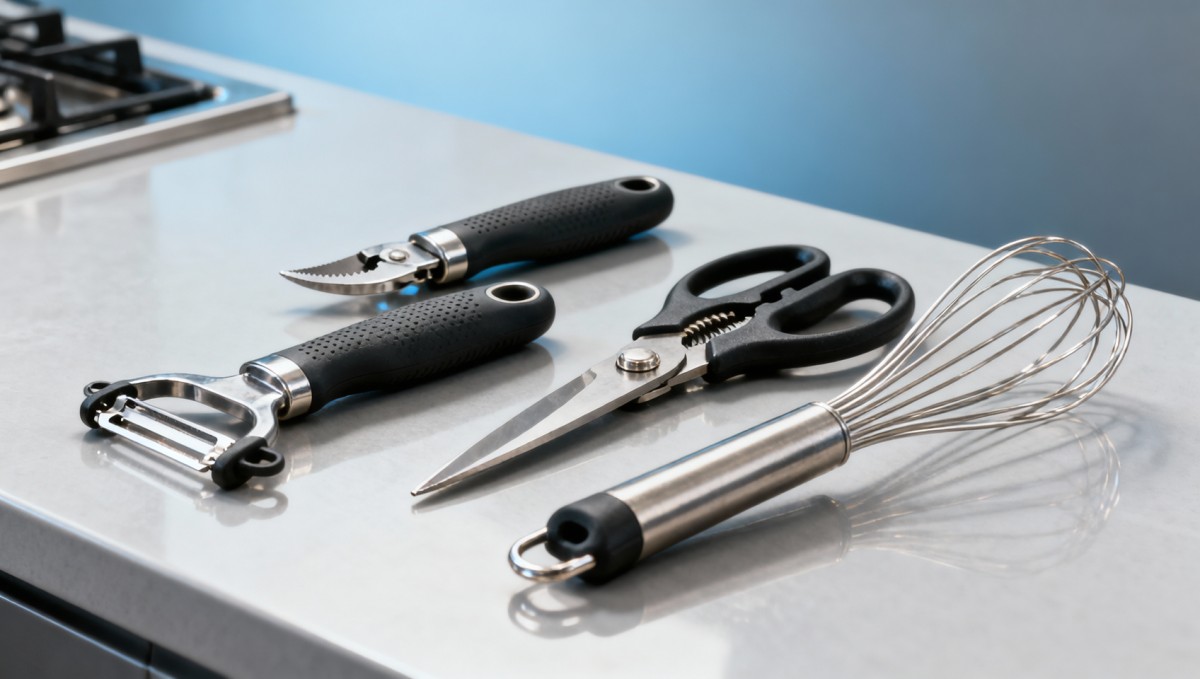
A tool may look ergonomic because it has a soft handle, a curved grip, or a larger profile, but wrist strain depends on more than appearance. The real issue is the interaction between handle geometry, wrist angle, force requirement, repetition frequency, and task duration. In many kitchens, the same tool is used 200–1,000 times per shift, so even a small design flaw can become a major operational problem.
The gap between ergonomic labeling and ergonomic performance
A common mistake is assuming that padded handles automatically reduce strain. In practice, if the grip diameter is too large for smaller hands or too narrow for gloved hands, the operator must compensate with extra force. This often increases forearm tension and pushes the wrist into ulnar or radial deviation, especially during repetitive prep tasks such as peeling vegetables, opening cans, slicing garnishes, or scraping mixing bowls.
Another issue is resistance. A garlic press, manual can opener, or stiff kitchen shears can still overload the wrist if the hinge requires excessive pressure. Even a 10%–15% increase in applied force becomes significant when repeated hundreds of times. For catering teams working high-volume service windows, this difference can affect both pace and staff comfort before the mid-shift break.
Task-specific strain factors
- Twisting tasks, such as opening jars or rotating scoops, place stress on the wrist when handle friction is low.
- Pinch-grip tasks, such as plating tweezers or small paring tools, can fatigue the hand within 30–60 minutes of continuous use.
- Heavy downward tasks, including chopping or pressing, increase load when the handle does not align with the forearm.
- Wet-use tasks in dish areas or prep zones reduce grip stability and force users to tighten their hold.
Tool mismatch is another overlooked factor. One “ergonomic” design may work well for a right-handed prep worker but poorly for a left-handed operator, a baker wearing cut-resistant gloves, or a hotel kitchen team switching between dry and wet ingredients. In mixed-use environments, ergonomic kitchen tools should be evaluated by task category, user profile, and shift length rather than by product description alone.
The table below shows why ergonomic claims should be tested against practical operating conditions rather than packaging language.
The main conclusion is simple: ergonomic kitchen tools do not eliminate risk by default. They perform well only when handle shape, required force, hand fit, and the intended kitchen workflow are aligned. That is why buyers should ask for task-based samples, not just a kitchen tools price list.
Operational impact in restaurants, catering, food processing, and home use
Wrist strain affects different environments in different ways. In a restaurant line, discomfort can slow service during peak periods of 60–180 minutes. In catering production, repetitive preparation over 4–8 hours can lead to cumulative fatigue. In food processing settings, standardized motions repeated over multiple shifts create a stronger need for consistent tool design. Even in home kitchens, frequent baking or batch cooking can expose poor ergonomic performance.
How the problem shows up in daily work
For operators, the earliest signs are often subtle: tingling after prep work, reduced grip strength, awkward wrist angles, slower recovery between shifts, or the habit of switching hands to manage fatigue. These signs often appear before a formal complaint is raised. In practical terms, they also influence output quality. A strained wrist can reduce cutting accuracy, portion consistency, and safe control when handling sharp tools.
For procurement teams, the impact extends beyond user comfort. If a low-cost “ergonomic” utensil requires replacement every 3–6 months in a high-turnover kitchen, total ownership cost rises. The same applies when operators reject the tool, continue using older equipment, or request multiple alternatives. Purchasing decisions should therefore consider usage intensity, breakage rate, cleaning resistance, and acceptance by at least 2–3 user profiles.
Typical risk patterns by application
In baking, repetitive scraping, whisking, piping, and dough handling often create sustained wrist flexion. In catering, portion scoops, peelers, tongs, and can openers are common fatigue points. In household kitchens, the issue is less about volume and more about poor fit, especially when consumers buy attractive tools with limited mechanical efficiency. In all three settings, handle comfort alone is not enough.
The comparison below helps buyers link operating environment to strain risk and purchasing priorities.
This comparison shows that the same professional kitchen tools should not be specified identically across every channel. Wholesale buyers serving restaurants, bakeries, and household retail may need 2–4 ergonomic design variations instead of one universal option.
- Restaurants usually need tools optimized for speed, wash-down frequency, and quick hand transitions.
- Catering teams often prioritize robust handles and lower force requirements over compact aesthetics.
- Food processing support zones need predictable performance with gloves and strict sanitation routines.
- Retail home use benefits from simpler handling, safer edges, and easier storage.
In short, wrist strain is not only a health issue; it is a productivity, maintenance, and procurement issue. That makes ergonomic evaluation relevant from frontline operations to enterprise-level sourcing strategies.
What buyers should evaluate before choosing professional kitchen tools
When reviewing kitchen tools wholesale options, buyers should move beyond promotional terms and create a shortlist based on measurable criteria. A useful evaluation process usually includes 5 core dimensions: grip fit, force demand, material durability, sanitation suitability, and user acceptance. For volume procurement, sample testing over 3–7 operating days is far more reliable than a showroom impression.
Key technical and practical checkpoints
First, assess handle dimensions and shape. A grip that works with a bare hand may become unstable with nitrile, latex, or cut-resistant gloves. Second, test force requirement under realistic conditions, such as peeling cold produce, opening large cans, or portioning thick mixtures. Third, check whether the tool allows a neutral wrist angle during the most repeated motion, not just at rest.
Material selection is also critical. Stainless steel, reinforced polymers, silicone overmolding, and composite grips all behave differently under heat, detergent exposure, and repeated dishwashing cycles. In many professional kitchens, utensils are cleaned dozens of times per week. A grip that softens, cracks, or becomes slippery after 60–90 wash cycles will quickly lose its ergonomic value.
A practical procurement checklist
- Test each tool with at least 2 hand sizes and both gloved and ungloved use.
- Observe operator posture for a minimum of 15–20 minutes per repetitive task.
- Compare force demand across 3 sample products, not just one benchmark.
- Review cleaning durability after repeated washing, sanitizing, and drying.
- Confirm whether the tool remains effective in wet, greasy, or high-speed conditions.
Price remains important, but it should be framed correctly. A lower unit price may be attractive on a kitchen tools price list, yet poor ergonomic adoption can increase hidden costs through earlier replacement, inconsistent use, or worker dissatisfaction. For B2B buyers, the better question is not “Which tool is cheapest?” but “Which tool delivers stable performance over the expected service cycle?”
The table below provides a structured way to compare ergonomic kitchen tools during sourcing.
A structured comparison like this helps procurement teams justify decisions internally. It also supports communication with suppliers, especially when requesting modifications in handle texture, grip diameter, or tool balance for a specific user group.
Implementation, maintenance, and common selection mistakes
Even a well-designed ergonomic tool can fail if implementation is weak. Many companies introduce new kitchen tools without user orientation, task mapping, or replacement planning. As a result, the tool may be used for the wrong application, cleaned with aggressive methods that degrade the grip, or mixed into existing stations without operator feedback. Good selection should be supported by a simple rollout process.
A practical rollout path for buyers and kitchen managers
- Identify 3–5 high-repetition tasks where wrist discomfort is most likely, such as peeling, scooping, cutting, or opening containers.
- Run a short pilot with limited quantities for 7–14 days across different users and shifts.
- Collect feedback on grip comfort, speed, cleaning, and durability rather than comfort alone.
- Standardize the selected tools by station, function, and cleaning method.
- Review replacement timing every 6–12 months based on actual wear and user acceptance.
Maintenance also influences wrist safety. A blade that dulls quickly forces higher cutting pressure. A hinge that stiffens after washing raises squeeze force. A silicone layer that becomes slick with oil reduces control. In other words, ergonomic performance is not fixed at the moment of purchase; it changes over the service life of the tool. That is why durable kitchen tools for catering and bakery use should be evaluated for mechanical retention as well as initial comfort.
Common mistakes in selection and use
- Choosing by appearance only and ignoring force demand during actual food preparation.
- Buying one handle style for all users despite differences in hand size, glove use, or task type.
- Overlooking cleaning impact, especially in high-temperature or chemical sanitation routines.
- Using an ergonomic label as a substitute for a real sample trial.
- Failing to replace worn tools that now require 20%–30% more effort than when new.
For enterprise decision-makers, this is where kitchen equipment strategy meets labor efficiency. Smart kitchen investments often focus on automation and digital systems, but manual tools still shape everyday workflow. Improving a small category such as peelers, openers, scoops, or mixing utensils can deliver a visible reduction in operator fatigue across a full week of production.
FAQ for sourcing and operations
How should buyers test ergonomic kitchen tools before bulk orders?
A useful approach is to test 2–3 competing samples in real tasks for 7–14 days. Include different users, at least one wet-use scenario, and a repetitive cycle of 50–100 actions where relevant. Record not only comfort, but also speed, cleaning response, and visible wear.
Are ergonomic kitchen tools mainly for commercial kitchens?
No. They are valuable in restaurants, hotels, bakeries, central kitchens, food processing support areas, and home kitchens. The difference is that commercial settings usually require higher durability, faster cleaning recovery, and more consistent performance across long shifts of 4–8 hours.
What matters more: soft grip or low operating force?
Low operating force is often more important. A soft grip can reduce local pressure, but if the tool still needs excessive squeezing, twisting, or downward force, wrist strain remains. The best ergonomic kitchen tools combine stable grip, neutral alignment, and efficient mechanical action.
Ergonomic kitchen tools can reduce fatigue, improve handling, and support safer operations, but only when the design matches the real task, the real user, and the real cleaning environment. For information researchers, this means looking past marketing labels. For operators, it means choosing tools that support stable wrist posture over repeated cycles. For procurement teams and decision-makers, it means comparing total usability, durability, and replacement performance instead of unit price alone.
If you are reviewing professional kitchen tools for restaurants, catering, baking, food processing support, or retail distribution, a structured evaluation can reduce purchasing risk and improve long-term value. Contact us to discuss product details, request a tailored selection plan, or learn more about practical kitchen equipment solutions for your operating environment.
Popular Tags
Kitchen Industry Research Team
Dedicated to analyzing emerging trends and technological shifts in the global hospitality and foodservice infrastructure sector.
Industry Insights
Join 15,000+ industry professionals. Get the latest market trends and tech news delivered weekly.
No spam. Unsubscribe anytime.
Contact With us
Contact:
Anne Yin (Ceramics Dinnerware/Glassware)
Lucky Zhai(Flatware)