
What this year's kitchen trade shows reveal about demand
This year’s kitchen trade shows offer a clear view of where buyer demand is heading. From smart automation and energy-efficient systems to integrated food processing solutions, the kitchen trade market is signaling stronger interest in productivity, safety, and long-term operating value. For business evaluators, these shifts provide practical clues for assessing supplier competitiveness, product direction, and emerging opportunities across commercial and industrial kitchen equipment.
For readers evaluating investments, partnerships, or sourcing strategies, the main takeaway is straightforward: demand is becoming more selective. Buyers are no longer impressed by equipment upgrades alone. They are looking for solutions that reduce labor pressure, improve consistency, lower energy costs, support compliance, and integrate more easily into broader kitchen operations. In other words, kitchen trade shows are revealing not just what is new, but what is now commercially necessary.
What the kitchen trade market is really signaling this year
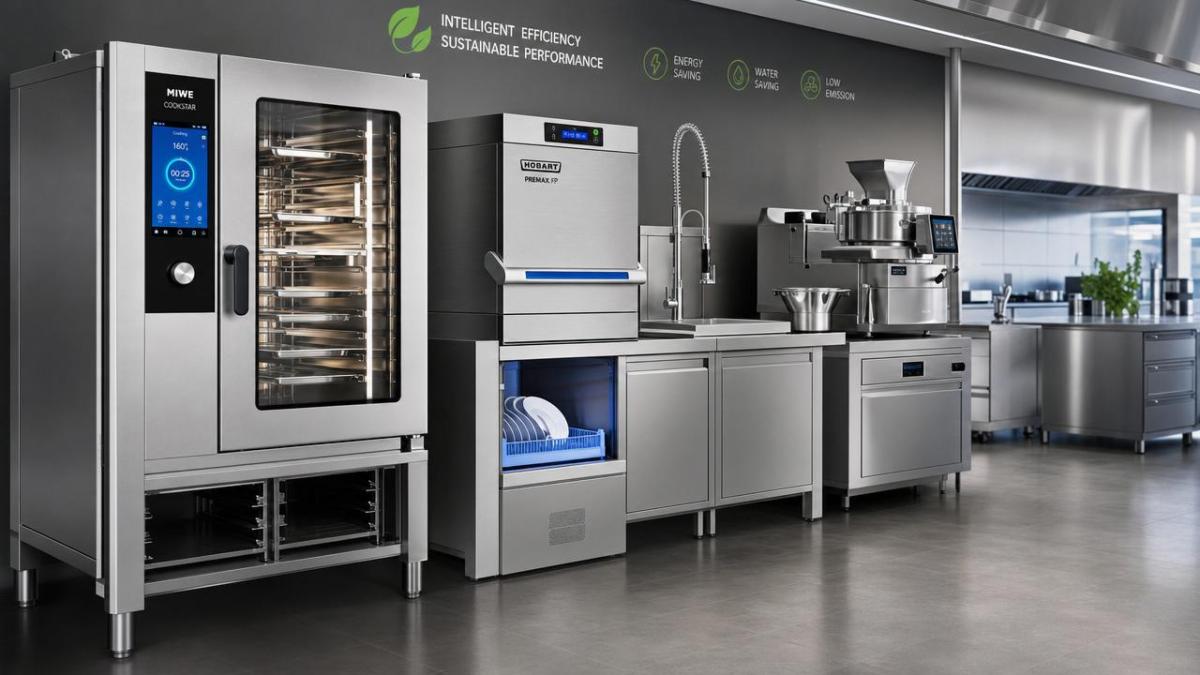
The strongest signal from this year’s events is that demand is shifting from feature-based purchasing to outcome-based purchasing. Across commercial kitchens, food processing environments, and hospitality operations, buyers increasingly want proof that equipment can improve throughput, reduce downtime, save utilities, and support staff with simpler workflows. This is an important change for business evaluators because it affects how products should be compared and how supplier value should be measured.
In the past, new models could attract attention through capacity, appearance, or isolated technical improvements. Today, buyers ask more practical questions. Can the equipment operate reliably in high-volume environments? Does it reduce dependence on hard-to-find skilled labor? Will it fit existing systems without creating expensive retraining or infrastructure changes? Those are the demand signals that matter most in the current kitchen trade landscape.
Trade shows also show a widening gap between products designed for demonstration and products designed for adoption. Many innovations look impressive on a show floor, but only a smaller group addresses the real constraints of operators, processors, hotel groups, and chain restaurants. For evaluation teams, this means the show environment should be treated as an evidence-gathering opportunity, not just a trend showcase.
Why automation is attracting stronger buyer interest
Automation was one of the clearest themes visible across this year’s kitchen trade events. This does not only refer to fully robotic cooking systems. It also includes programmable ovens, intelligent fryers, automated prep equipment, portion control systems, sensor-based monitoring, and semi-automated food processing lines. What matters is that buyers now see automation as a practical response to labor instability and output inconsistency.
For business evaluators, the value of automation should be assessed in operational terms. A system that lowers training time, reduces batch errors, shortens prep cycles, or limits waste may have stronger commercial value than a more advanced system that is expensive to maintain or difficult to implement. The most attractive products are often not the most futuristic ones, but those that can be deployed quickly and produce measurable savings within a reasonable payback period.
Another signal from the market is that buyers are becoming more open to modular automation. Instead of replacing entire kitchen environments, many operators prefer equipment that can automate one high-friction step at a time. This lowers capital risk and gives them room to expand later. Suppliers that offer staged adoption paths may therefore gain more traction than those pushing all-in-one transformation narratives.
Energy efficiency is no longer just a sustainability message
Energy-efficient equipment has been discussed for years, but this year’s kitchen trade activity suggests that the motivation is becoming more financial than promotional. Buyers are under pressure from higher utility costs, margin compression, and increasing reporting expectations around sustainability. As a result, energy performance is being reviewed not as a secondary advantage, but as part of the core investment case.
Commercial dishwashing systems, induction cooking platforms, refrigeration units, ventilation technologies, and heat recovery solutions drew attention because they can affect operating costs over many years. For evaluators, this means product comparisons should include total cost of ownership rather than purchase price alone. An equipment line with higher upfront cost may still be more competitive if it meaningfully lowers electricity, water, maintenance, or replacement expenses.
This trend also changes the type of proof buyers expect. General claims about efficiency are less persuasive than test data, certifications, case examples, and clearly modeled savings based on usage scenarios. At trade shows, suppliers able to present this kind of commercial evidence often stand out more than those relying on broad green messaging. In the kitchen trade market, sustainability and cost control are becoming more tightly connected.
Integrated systems are gaining ground over standalone equipment
Another strong demand pattern is the movement toward integrated kitchen systems. Buyers increasingly prefer solutions that work together across cooking, holding, cleaning, refrigeration, monitoring, and food processing. This is especially relevant for chain operations, central kitchens, hotels, and industrial foodservice environments where consistency and management visibility matter as much as raw equipment performance.
Integration can take different forms. In some cases, it means equipment that shares data through a common platform. In others, it means a coordinated equipment package designed to improve layout efficiency, labor flow, hygiene control, or energy use. The commercial logic is clear: the value of one machine is higher when it improves the performance of the wider system.
For business evaluation, this trend creates a new decision lens. Instead of asking whether a single product is competitive on its own, buyers increasingly ask whether the supplier can support system-level results. This favors companies with stronger engineering support, software compatibility, project management capabilities, and after-sales service networks. In many cases, these factors become decisive in large-volume or multi-site purchasing decisions.
Food safety and compliance remain foundational buying drivers
While automation and energy efficiency attract attention, food safety remains one of the most stable drivers of equipment demand. Trade show activity this year reinforced that buyers still prioritize hygienic design, easier cleaning, temperature control accuracy, contamination prevention, and traceability support. These features may not always generate headlines, but they strongly influence purchasing confidence.
For evaluators, food safety should not be treated as a checklist item only. It is also a risk and liability issue. Equipment that supports compliance more effectively can reduce operational disruption, lower audit pressure, and protect brand reputation. In sectors such as central kitchens, institutional catering, and food processing, this can directly affect long-term supplier selection.
The stronger suppliers are those that combine compliance support with operating efficiency. For example, easy-clean surfaces, automated sanitation cycles, remote monitoring alerts, and more precise thermal controls can improve both safety outcomes and labor productivity. This is exactly the kind of dual-value proposition that many buyers now seek in the kitchen trade environment.
How business evaluators should interpret supplier competitiveness
Trade shows often create a crowded field of similar-looking claims, so business evaluators need a structured way to distinguish marketing from market readiness. One useful starting point is to review supplier competitiveness across five dimensions: product fit, proof of performance, scalability, service capability, and strategic direction.
Product fit asks whether the offering solves a current customer problem in a realistic operating context. Proof of performance includes demonstrations, pilot results, certifications, customer references, and total cost data. Scalability looks at whether the supplier can handle growth across regions, volume levels, or account sizes. Service capability covers installation, training, maintenance, spare parts, and response times. Strategic direction concerns whether the supplier is aligned with where demand is moving, not just where it has been.
This framework matters because many kitchen equipment companies can present innovation, but fewer can deliver reliable adoption at scale. For a business evaluator reviewing acquisition targets, sourcing candidates, distributors, or strategic partners, the best opportunities often sit where product-market fit and operational delivery capability intersect.
Which buyer questions matter most after the show floor excitement fades
Once the event is over, the most useful evaluation work begins. Buyers and assessors should move beyond booth impressions and ask a tighter set of commercial questions. What measurable customer pain point does this product address? How large is the addressable segment? Is the value proposition easy for the buyer to understand and justify internally? How dependent is the solution on technician support, software integration, or custom installation?
It is also important to examine adoption friction. Some products generate strong show interest but face slow real-world uptake because they require layout redesign, behavior change, or major capital approval. Others fit naturally into replacement cycles or can be introduced in one station at a time, which makes them easier to sell. In the kitchen trade market, lower-friction products often convert faster even when they appear less dramatic.
Another important issue is resilience. Evaluators should look at supply chain exposure, manufacturing location strategy, component availability, and warranty confidence. In a global industry where delivery delays and service interruptions can harm customer relationships, operational resilience is part of product competitiveness.
Where the best opportunities may be emerging
Several opportunity zones appear especially promising based on this year’s kitchen trade signals. The first is smart commercial equipment that improves consistency without overwhelming operators with complexity. This includes connected ovens, programmable cooking systems, and monitoring-enabled refrigeration or holding units that support labor-light operations.
The second is energy-saving infrastructure and replacement equipment, especially where buyers can justify upgrades through operating cost reduction. The third is integrated solutions for central kitchens, chain foodservice, and food processing facilities where buyers want standardization, data visibility, and system coordination. The fourth is hygienic and easy-maintenance equipment that helps operations manage compliance and staffing pressure at the same time.
Emerging markets also deserve attention. As foodservice sectors expand in developing regions, demand is rising for kitchen equipment that balances affordability, durability, and efficiency. Suppliers that can adapt product lines for different infrastructure conditions, labor environments, and budget levels may find strong growth potential. For evaluators, this suggests opportunity is not limited to premium innovation. Well-positioned mid-market solutions can also be highly attractive.
What this means for decision-makers in the kitchen trade sector
The larger conclusion is that demand is becoming more disciplined, more operationally focused, and more evidence-driven. Buyers want equipment that supports business performance, not just kitchen modernization. This changes how products should be marketed, how suppliers should be assessed, and how strategic investments should be prioritized.
For business evaluators, this year’s trade shows provide a useful read on market direction. The winning suppliers are likely to be those that combine practical automation, energy efficiency, food safety support, and system integration with strong service execution. The products most likely to gain traction are those that solve immediate operational pain while also fitting broader long-term trends in digitalization and sustainability.
In short, kitchen trade activity this year reveals a market that is still growing, but growing more selectively. The real opportunity lies in identifying which innovations translate into credible customer value. Those signals are now visible for anyone willing to look beyond the display floor and focus on how demand is actually being shaped.
Popular Tags
Kitchen Industry Research Team
Dedicated to analyzing emerging trends and technological shifts in the global hospitality and foodservice infrastructure sector.
Industry Insights
Join 15,000+ industry professionals. Get the latest market trends and tech news delivered weekly.
No spam. Unsubscribe anytime.
Hot Articles
 ASEAN FTA Upgrade Enters Text Verification Phase; Smart Kitchen Controls Added to Zero-Tariff List
- Electronics Manufacturing Leads with 13.6% Output Growth; Kitchen Appliance Chip Supply Stabilizes
- OpenCLAW-like Agent Deployment Risk Management Guidelines Released
- Green Power Stocks Rally; Overseas Buyers Prioritize Green Electricity Usage

Contact With us
Contact:
Anne Yin (Ceramics Dinnerware/Glassware)
Lucky Zhai(Flatware)