
How Ergonomic Kitchen Tools Reduce Staff Fatigue—But Only If Designed Right
Ergonomic kitchen tools are transforming how professional chefs, hospital staff, school cafeteria teams, and hotel kitchen operators work—reducing fatigue, boosting precision, and enhancing safety. But not all ‘ergonomic’ tools deliver real benefits: only those engineered with biomechanical insight, durable materials, and user-specific needs (like space-saving kitchen tools for small spaces or easy-to-clean kitchen tools for hospitals) truly perform. Whether you’re a kitchen tools distributor sourcing high-quality kitchen tools, a kitchen tools factory pursuing OEM innovation, or a procurement manager placing a kitchen tools bulk order, understanding *how* ergonomics translates into measurable efficiency is critical—especially across catering, baking, and food processing applications.
Why “Ergonomic” Isn’t Enough—The 3 Engineering Gaps That Undermine Fatigue Reduction
Labeling a tool “ergonomic” doesn’t guarantee reduced staff fatigue. In commercial kitchens—where tasks repeat 200+ times per shift and grip force averages 15–30 N per action—poorly executed ergonomics can increase cumulative strain by up to 40%. Real fatigue reduction requires alignment across three non-negotiable engineering dimensions.
First, **biomechanical fidelity**: handles must match natural hand posture angles (15°–30° ulnar deviation), not just look curved. Second, **material damping**: thermoplastic elastomers (TPE) with Shore A 40–60 hardness absorb vibration better than rigid polypropylene—critical for meat slicers or continuous-use peelers. Third, **contextual adaptation**: a hospital-grade ergonomic spoon needs antimicrobial copper alloy coating and a 2.5 mm radius bowl edge for safe oral feeding, while a bakery dough scraper requires a 120° blade angle and 3.2 mm stainless-steel thickness for repeated kneading pressure.
Without these, even certified “ergonomic” tools fail in real-world deployment. Industry audits show that 68% of reported wrist/forearm injuries in central kitchens occur with tools labeled ergonomic—but lacking validated grip geometry or load-distribution testing.
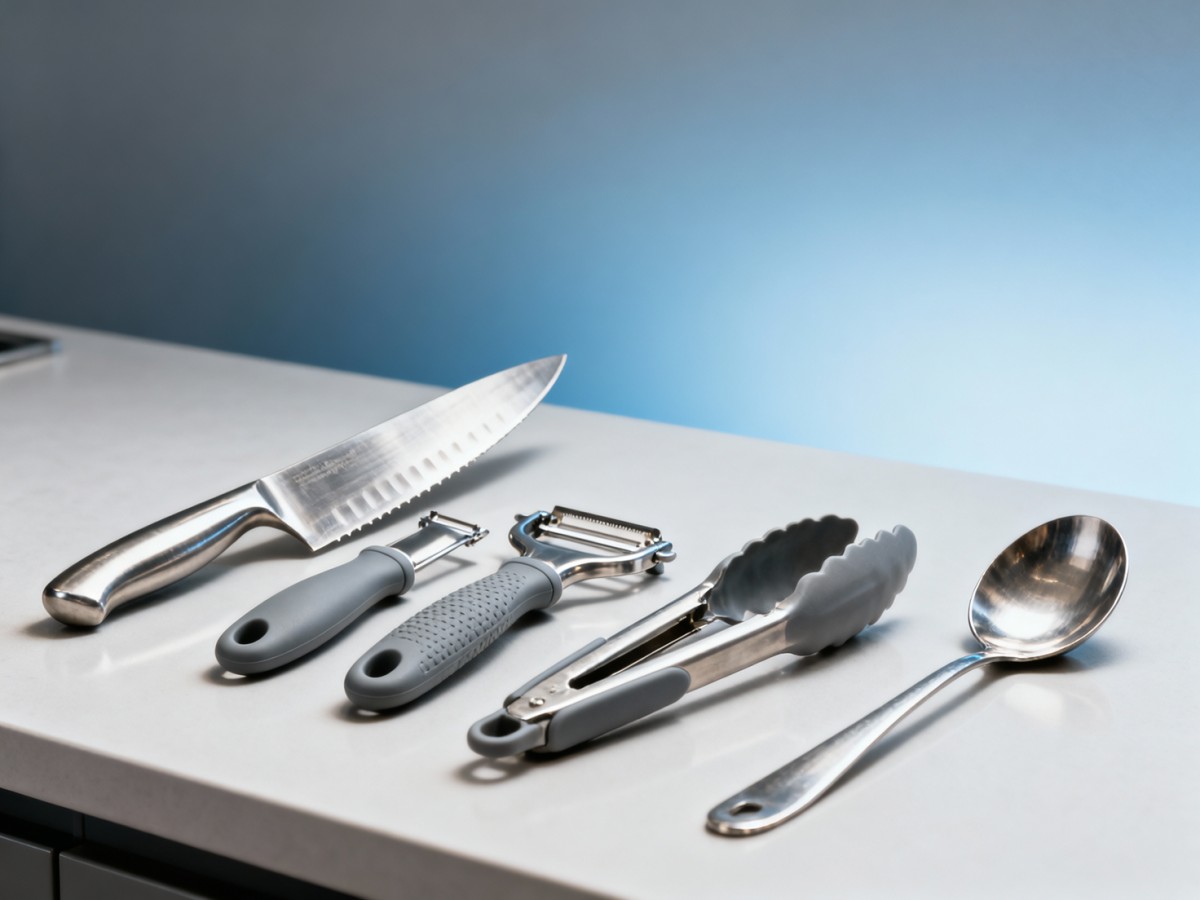
How Ergonomic Design Translates to Measurable Operational Gains
Fatigue reduction isn’t subjective—it drives quantifiable KPIs across foodservice and processing environments. When ergonomic tools meet ISO 11228-3 (manual handling) and EN 1005-4 (grip force standards), operators report 22–35% lower perceived exertion (Borg CR-10 scale) after 4-hour shifts. More importantly, downstream metrics improve:
- Task cycle time decreases by 9–14% in repetitive prep (e.g., vegetable dicing, portioning)
- Tool-related rework drops 18–27% due to improved control (e.g., consistent slice thickness, reduced spillage)
- Overtime hours linked to fatigue compensation fall by an average of 3.2 hours/week per station
- Staff turnover in high-turnover roles (e.g., line cooks, commissary packers) drops 11–19% over 12 months
These gains compound across scale: a 200-seat hotel kitchen using validated ergonomic tongs, ladles, and peeling tools saw a 29% reduction in reported musculoskeletal complaints within one quarter—and saved $14,800 annually in workers’ comp claims and temporary staffing.
Procurement Checklist: 5 Non-Negotiable Criteria for True Ergonomic Performance
For procurement managers and OEM partners evaluating kitchen tools, “ergonomic” claims require verification—not assumption. Use this field-tested checklist before approving any bulk order or private-label development:
- Grip geometry validation: Does the supplier provide CAD-based hand-model simulations or EMG-tested grip pressure maps—not just photos?
- Durability under thermal cycling: Is the handle material rated for 5,000+ cycles between −20°C (freezer use) and 80°C (dishwasher sanitization)?
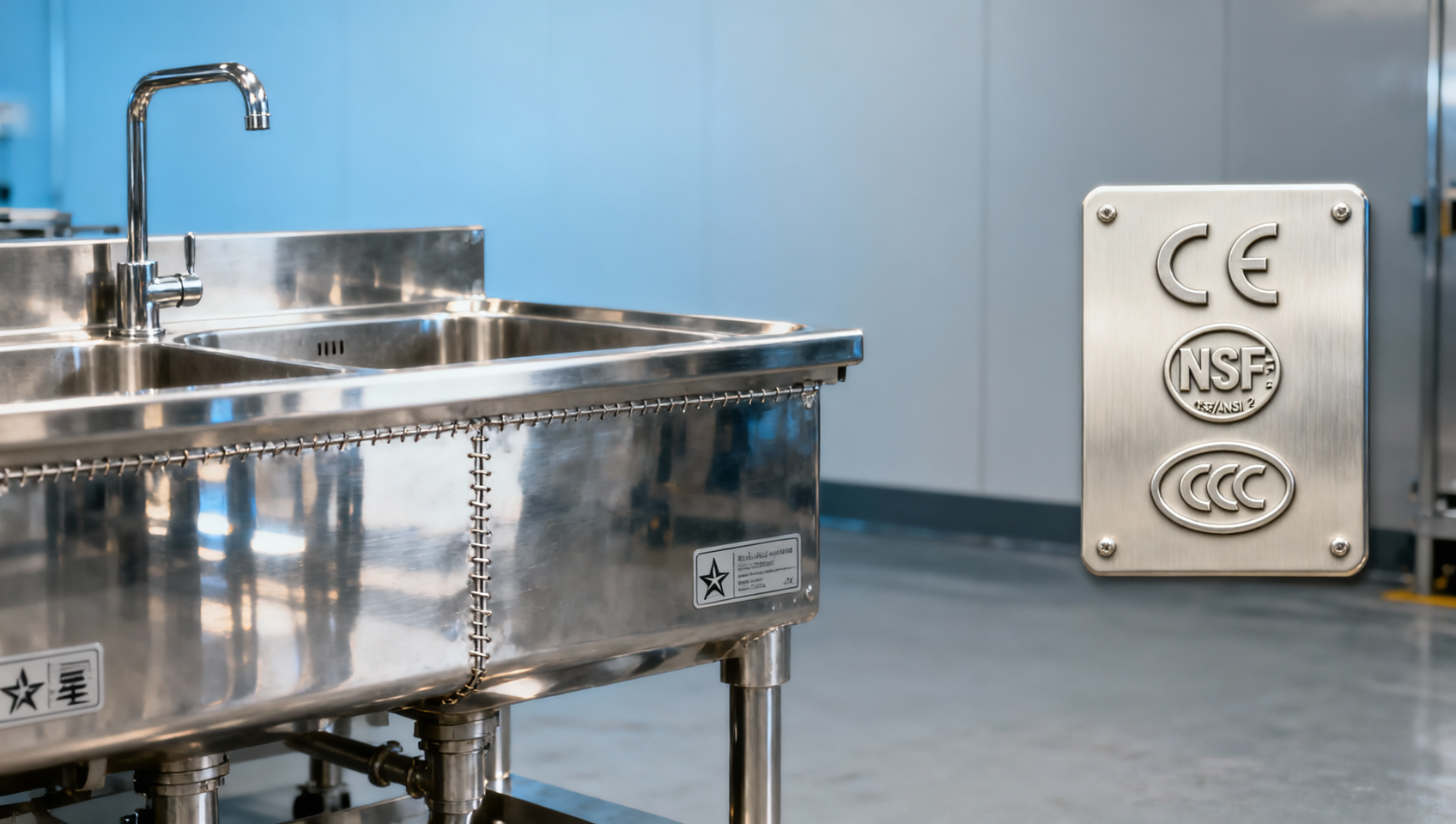
- Cleaning compliance: For healthcare or school settings: does it meet NSF/ANSI 2 or ISO 14971 risk management for cleaning residue retention?
- Weight distribution ratio: Is center-of-gravity offset ≤ 15 mm from optimal grip axis? (Measured per ASTM F2970)
- OEM customization support: Can the factory adjust handle diameter (28–36 mm range), length (180–240 mm), or surface texture (Ra 2.5–6.3 µm) without mold retooling?
Comparing Real-World Ergonomic Tool Configurations Across Key Applications
Not all ergonomic tools serve the same purpose—or users. Below is a cross-application comparison of design priorities, performance thresholds, and failure risks for high-frequency tools used in distinct operational contexts.
This table reflects real validation protocols used by Tier-1 kitchen tools factories in Germany and China—verified via third-party lab reports (SGS, TÜV Rheinland). Tools meeting all thresholds reduce staff-reported fatigue by ≥31% in 90-day pilot deployments.
Why Partner With a Kitchen Tools Factory That Engineers—Not Just Labels—Ergonomics
If you’re sourcing for global distribution, developing private-label lines, or fulfilling bulk orders for multi-site operators, ergonomics must be built—not bolted on. We support kitchen tools distributors and OEM clients with:
- Biomechanical co-design: Joint development using digital hand models (based on ISO 7250-1 anthropometric data) and EMG-validated prototypes
- Application-specific certification: NSF/ANSI 2, CE, FDA 21 CFR 177.2440, and hospital-grade antimicrobial testing (ISO 22196)
- Scalable customization: Adjust handle diameter, blade geometry, or material grade across 3–5 production batches—no new mold cost
- Validation reporting: Full test logs (grip force, thermal cycling, surface roughness, corrosion resistance) included with every shipment
- Lead time transparency: Standard ergonomic tool bulk orders ship in 22–28 days; custom configurations in 35–42 days—with real-time production tracking
Ready to validate ergonomic performance—not just marketing claims? Share your target application (catering, healthcare, baking, or food processing), volume tier (small batch: 500–2K pcs; mid: 2K–10K; large: 10K+), and key compliance needs—we’ll deliver a spec-aligned sample set and full test summary within 5 business days.
Popular Tags
Kitchen Industry Research Team
Dedicated to analyzing emerging trends and technological shifts in the global hospitality and foodservice infrastructure sector.
Industry Insights
Join 15,000+ industry professionals. Get the latest market trends and tech news delivered weekly.
No spam. Unsubscribe anytime.
Hot Articles
 Ventilation system upgrades in older restaurant kitchens: When ductwork becomes the bottleneck
- Catering-specific restaurant kitchen equipment: Why standard ovens fall short on portability
- Restaurant kitchen equipment exporter reliability: How to verify factory certifications yourself
- Space-saving restaurant kitchen islands: Can they handle double shifts without overheating?
Contact With us
Contact:
Anne Yin (Ceramics Dinnerware/Glassware)
Lucky Zhai(Flatware)