
How Does Automation Improve Glass Sugar Jar Output?
Automation is transforming the production of glass sugar jar products by improving speed, consistency, and quality control. For buyers and operators comparing items like glass cookie jar, glass nut jar, and glass flour container solutions, understanding automated manufacturing is essential. This article explores how automation helps manufacturers reduce defects, increase output, and meet growing demand in the competitive kitchen equipment and food storage market.
Why are automated lines changing glass sugar jar manufacturing?
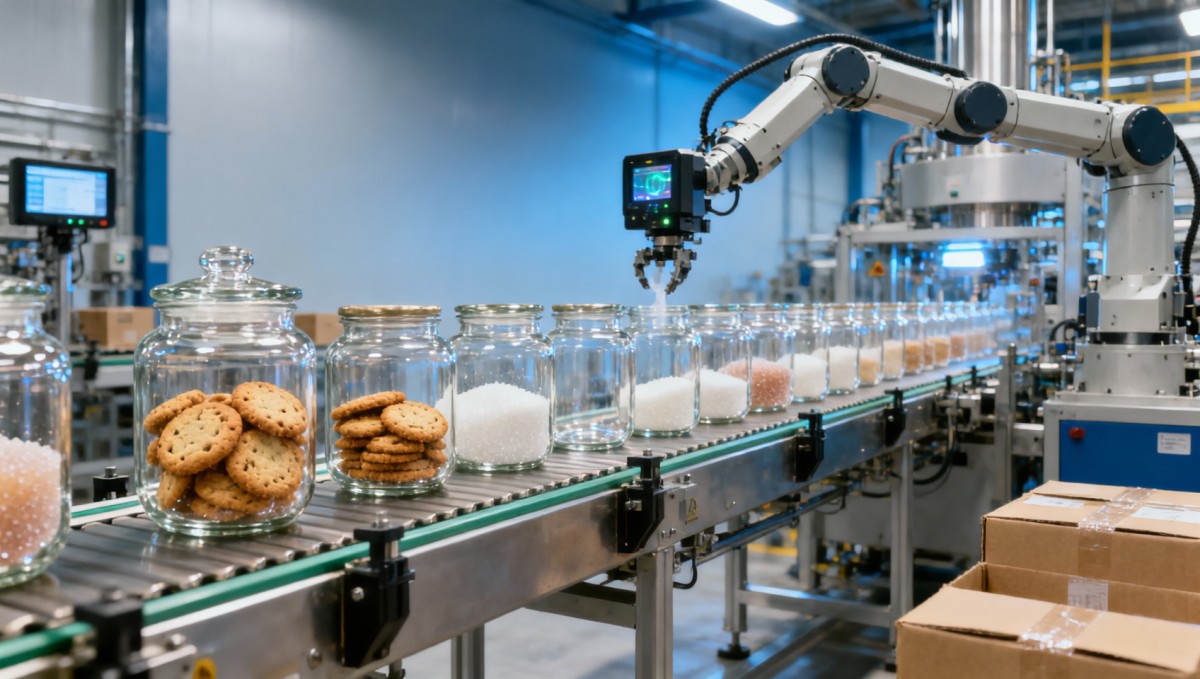
In the kitchen equipment and food storage sector, demand is no longer limited to simple glass containers. Buyers now expect stable dimensions, clean sealing performance, uniform appearance, and delivery schedules that fit restaurant, hotel, retail, and food processing operations. Automated production helps glass sugar jar manufacturers respond to these expectations with repeatable processes instead of heavy dependence on manual handling.
A typical automated production flow for a glass sugar jar includes 4 core stages: forming, annealing, inspection, and packing. In more advanced factories, these stages are linked with conveyors, optical inspection, robotic pick-and-place systems, and digital production monitoring. This reduces variation between batches and supports medium-volume to large-volume orders more effectively than semi-manual lines.
For operators, automation reduces repetitive manual tasks and improves workplace consistency. For procurement teams, it provides a better basis for evaluating supplier capability. For decision-makers, it supports lower defect-related costs over a 6–12 month procurement cycle, especially when sourcing matching product families such as glass cookie jar, glass nut jar, and glass flour container series.
This matters because kitchen storage products often serve both functional and visual roles. In hospitality and foodservice environments, even small differences in lid fit, jar body roundness, or label area can affect shelf presentation and user satisfaction. Automated manufacturing helps control these details within common production tolerances and repeatable inspection routines.
What problems does automation solve first?
The first improvement is output stability. Manual production may fluctuate across shifts, while automated lines can keep more consistent cycle times during 8-hour, 12-hour, or multi-shift operation. The second is defect control. Automated inspection can identify common issues such as bubbles affecting appearance, mouth finish inconsistency, wall thickness variation, or packing damage before shipment.
The third improvement is traceability. When factories connect inspection points with digital records, they can review batch conditions, machine settings, and packaging performance more easily. This is useful for B2B buyers managing repeated orders, seasonal demand, and product standardization across several SKUs.
Key automation benefits at a glance
- More predictable output during continuous production runs, especially for standard jar capacities and recurring orders.
- Better lid and mouth compatibility control, which is critical for food storage performance and user convenience.
- Reduced manual contact during inspection and packing, supporting cleaner handling practices in food-related supply chains.
- Improved consistency across product families, including glass sugar jar, glass cookie jar, and related kitchen storage containers.
How does automation improve output, quality, and daily production control?
When buyers ask how automation improves glass sugar jar output, they usually mean more than unit quantity. Output in B2B purchasing includes usable yield, defect rate, rework frequency, packing efficiency, and on-time shipment readiness. A line producing many jars is not truly efficient if a large share fails sealing, appearance, or dimensional checks. Automation improves total usable output by reducing these hidden losses.
In glass container manufacturing, one major factor is temperature and process stability. While exact settings depend on furnace design, jar size, and glass composition, automated systems help maintain repeatable forming conditions and transfer timing. Even small improvements in cycle consistency can reduce dimensional variation across a batch, which becomes important when matching jars with bamboo, metal, or plastic lids.
Another important factor is inspection speed. Manual sampling may only check selected units every 30–60 minutes, while automated optical systems can assess a much higher proportion of production in real time or near real time. This shortens the response window when a forming or finishing issue begins to appear, reducing the number of affected cartons.
For packing departments, automation also improves output by organizing orientation, spacing, and transfer to cartons or pallets. This matters for export orders where breakage risk can increase during inland transport, container loading, and international shipping. More stable packing reduces claims, replacement needs, and downstream supply delays.
Operational areas where automation creates measurable value
The table below shows where automated manufacturing typically improves glass sugar jar production compared with manual or semi-manual methods. These are practical evaluation points for sourcing teams rather than fixed performance claims, because actual results vary by line configuration, maintenance discipline, and product design complexity.
For kitchen equipment and food storage buyers, the main lesson is simple: automation does not only increase speed. It increases the proportion of saleable glass sugar jar units that meet packaging, sealing, and appearance expectations. That is why automated capability should be part of supplier qualification, especially for monthly or quarterly replenishment programs.
Where automation matters most for different jar types
Not all products face the same production challenges. A wide-mouth glass cookie jar may prioritize body uniformity and shelf appeal, while a glass flour container may need closer control over lid fit and stackable packaging. A glass sugar jar often sits between the two, combining appearance needs with frequent opening, closing, and kitchen countertop use.
In practical sourcing, buyers should review at least 3 quality dimensions: mouth finish precision, wall consistency, and pack-out protection. These points influence how the jar performs in homes, cafés, bakeries, hotel breakfast stations, and retail storage ranges.
Which applications benefit most from automated glass sugar jar production?
Automated production is especially valuable when a product must serve several channels at once. A supplier may need to produce the same glass sugar jar design for household retail, hotel room service, café condiment stations, and packaged storage sets. In such cases, consistent dimensions and repeatable decoration or labeling zones become more important than simple output volume.
The kitchen equipment industry increasingly overlaps with food safety and operational efficiency goals. Commercial users want jars that are easy to refill, clean, and identify during high-frequency use. Food processing and packaging buyers may need wider tolerance control because the jars will be filled, packed, and transported in larger quantities. Automation supports these requirements through standardization and reduced handling variation.
Procurement teams should also consider demand rhythm. Small-batch customized programs may tolerate longer setup changes, but standard export orders often require more predictable lead times, usually in the range of 2–6 weeks depending on tooling readiness, decoration scope, and packaging method. Automated lines generally help suppliers manage recurring volumes more reliably within these windows.
The following table helps compare where automated glass sugar jar output creates the clearest value across common B2B and retail-oriented applications.
This comparison shows that automated output becomes more valuable as volume, SKU consistency, and fulfillment pressure increase. If your business serves several markets at once, a supplier with organized automated production is often better prepared to handle specification control across different jar families.
Application-specific selection points
- For household retail programs, check whether the supplier can maintain consistent color tone, mouth shape, and label-friendly surfaces across 3–5 repeat production lots.
- For hospitality use, ask about compatibility between jar body and lid materials, especially when frequent daily opening is expected.
- For foodservice or ingredient storage, review packing method, carton drop resistance approach, and pallet planning for domestic or export transit.
- For mixed-product sourcing, confirm whether the same supplier can support glass sugar jar, glass cookie jar, and glass flour container combinations with consistent packing standards.
What should buyers evaluate before choosing an automated glass jar supplier?
A strong automated line is useful only if it matches your product requirements and purchasing model. Procurement teams should assess more than machine presence. The real question is whether the supplier can convert automation into stable quality, practical lead times, and manageable communication during development and repeat ordering.
Start with product definition. Clarify jar capacity range, mouth diameter, lid type, packaging format, and target use environment. A glass sugar jar for household countertops may prioritize appearance and easy opening, while a foodservice storage container may emphasize stackability, repeated handling, and carton efficiency. These choices affect tooling, inspection priorities, and pack-out design.
Next, review production and quality communication. A capable supplier should be able to explain sample timelines, common tolerance considerations, inspection checkpoints, and packaging methods. In many practical projects, sampling may take 7–15 days for standard items and longer for customized lids, logos, or structure changes. Clear milestone planning reduces purchasing risk.
Finally, consider compliance and market fit. If the jars are intended for food-contact applications, buyers should discuss relevant material and food-contact expectations in the destination market. Specific requirements vary by country and application, so early clarification avoids delays near shipment.
A practical supplier evaluation checklist
The table below can be used by sourcing managers, importers, and brand owners to compare automated glass sugar jar suppliers on 5 key dimensions. It is especially helpful during RFQ review or pre-order qualification.
Using this checklist helps buyers separate real process capability from generic sales language. It also supports more accurate cost comparison, because a lower initial quote may hide higher breakage risk, inconsistent lid fit, or longer reorder cycles.
Common mistakes in procurement decisions
Mistake 1: Focusing only on unit price
A glass sugar jar with a slightly lower ex-works price may become more expensive if packing is weak or repeat order consistency is poor. Total cost includes damage, replacement handling, complaint management, and internal quality review time.
Mistake 2: Ignoring matching components
Many buyers approve the jar body sample but do not test lid fit across multiple units. For practical use, it is better to review sample sets rather than single samples, especially if the product is part of a wider kitchen storage collection.
Mistake 3: Underestimating logistics requirements
Glass products need packaging designed for the route, not only for warehouse storage. Carton design, dividers, pallet layout, and container handling all affect final delivered quality. Automated packing support can reduce variation here.
FAQ: what do buyers and operators ask most about automated glass sugar jar production?
The questions below reflect common concerns from product researchers, line operators, purchasing staff, and business decision-makers. They focus on selection, implementation, and practical supply-chain impact rather than theory alone.
Does automation always mean faster delivery?
Not always. Automation usually improves repeat-order efficiency and output consistency, but final delivery still depends on mold readiness, decoration requirements, lid sourcing, and packaging complexity. For standard designs, lead times may be shorter and more predictable. For customized programs, automation helps stabilize production after approval rather than removing all development time.
Is automated production more suitable for large orders only?
Large-volume orders benefit most, but mid-volume programs also gain value when repeatability matters. If you reorder every month, every quarter, or across several SKUs, an automated supplier can support consistency better than a workshop-style model. The advantage becomes clearer when you need matching glass sugar jar, glass cookie jar, and glass flour container series.
What quality points should operators check after receiving jars?
At minimum, operators should review 4 items: body cracks or edge damage, lid fit, base stability, and carton condition. For foodservice use, it is also useful to test opening comfort and refill convenience. A quick incoming inspection on several cartons can help identify transit or lot-related issues before the jars enter active use.
Can automation support food-contact compliance discussions?
Automation itself is not a certification, but it can support cleaner process control, batch traceability, and more stable material handling. Buyers should still confirm market-specific food-contact expectations, especially when lids, seals, coatings, or printed decorations are involved. Early confirmation saves time during approval and import preparation.
Why choose us for glass sugar jar sourcing and project support?
In the evolving kitchen equipment industry, buyers need more than a container supplier. They need a partner that understands food storage applications, packaging protection, product-family consistency, and the shift toward automation, intelligent production, and reliable international supply. That is especially important when your project covers multiple kitchen storage items and different sales channels at the same time.
We support practical B2B evaluation across product definition, supplier matching, and order planning. If you are comparing glass sugar jar options with glass cookie jar, glass nut jar, or glass flour container products, we can help clarify which specifications matter most for your market, packaging method, and order volume. This reduces trial-and-error during sourcing.
You can contact us for 6 specific topics: capacity and dimension confirmation, lid compatibility review, packaging method discussion, sample arrangement, lead time planning, and quotation comparison. If your project includes customization, we can also discuss logo application, gift-box or retail-ready packing, and multi-SKU coordination for kitchen storage collections.
If you are planning a new sourcing round, send your target capacity, lid style, estimated order quantity, destination market, and packaging expectations. We can help you evaluate suitable glass sugar jar solutions, discuss production and delivery windows, and prepare a more efficient procurement path for your business.
Popular Tags
Kitchen Industry Research Team
Dedicated to analyzing emerging trends and technological shifts in the global hospitality and foodservice infrastructure sector.
Industry Insights
Join 15,000+ industry professionals. Get the latest market trends and tech news delivered weekly.
No spam. Unsubscribe anytime.

Contact With us
Contact:
Anne Yin (Ceramics Dinnerware/Glassware)
Lucky Zhai(Flatware)