
Glass canning jars and lid compatibility issues to watch
Choosing the right glass canning jar is only half the job—lid compatibility can make or break safe storage. From thread styles to sealing performance, small mismatches often lead to leaks, spoilage, or frustration. This guide highlights the most common compatibility issues to watch so consumers can store food with greater confidence, safety, and convenience.
Why do lid compatibility issues matter so much with a glass canning jar?
Many consumers assume that if a lid appears to fit a glass canning jar, it should work. In reality, visual fit and functional fit are not the same. A lid may screw on, yet fail to create a dependable seal. That difference matters whether you are storing homemade jam, dry grains, pickled vegetables, sauces, spices, or leftovers in the refrigerator.
The main purpose of a canning lid system is to protect food quality by limiting air entry, leaks, moisture transfer, and contamination. When the wrong lid is paired with a glass canning jar, the result can be product waste, unpleasant odors, reduced shelf life, and in some cases food safety concerns. This is especially important for home canning, where proper sealing is part of the preservation process rather than only a convenience feature.
In household kitchens, compatibility also affects ease of use. A mismatched lid can cross-thread, become difficult to remove, rust too quickly, or fail after repeated washing. For budget-conscious consumers, replacing spoiled ingredients and unusable accessories costs more over time than choosing the correct jar-and-lid combination from the start.
What parts of a glass canning jar and lid system must match?
A glass canning jar closure system is more than a single cap. Several elements must work together. First is the jar mouth size, commonly regular mouth or wide mouth. Second is the thread finish, meaning the shape and spacing of the threaded area where the closure attaches. Third is the sealing surface, the flat rim where the gasket or sealing compound makes contact. Fourth is the lid design itself, which may be a two-piece canning lid, a one-piece twist lid, or a reusable lid with separate gasket components.
Consumers often focus only on diameter. Diameter is important, but it is not the whole story. Two closures with similar sizes may still perform differently because their thread profile, gasket thickness, or metal depth varies. Even among jars sold for kitchen storage, some are designed for decorative use, pantry use, freezer use, or true home canning. A glass canning jar intended only for dry storage may not be suitable for heat processing with standard canning lids.
If you want reliable results, check the jar manufacturer’s recommendations, not just the product appearance. Look for information about compatible lid types, intended temperature range, and whether the jar is made for water bath canning, pressure canning, refrigerator storage, or dry-goods organization.
How do regular mouth, wide mouth, and thread style differences affect compatibility?
This is one of the most common causes of frustration. A regular-mouth glass canning jar generally uses a smaller opening, while a wide-mouth version has a larger opening for easier filling and cleaning. Lids and bands for one size do not interchange with the other. Even if a lid seems close, forcing it will damage the threads or prevent sealing.
Thread style creates another layer of complexity. Some jars follow highly standardized canning dimensions, while others are produced for general food packaging or decorative use. Imported jars, vintage jars, and private-label storage jars may not align perfectly with mainstream replacement lids. Slight differences in neck finish can cause loose attachment, uneven pressure, or sealing failure.
For everyday consumers, the safest habit is simple: match the replacement lid to the exact mouth size and intended jar family. If you mix brands, verify compatibility before filling the jar with food. This is especially important when buying bulk jars online, where product photos may not clearly show the closure specifications.
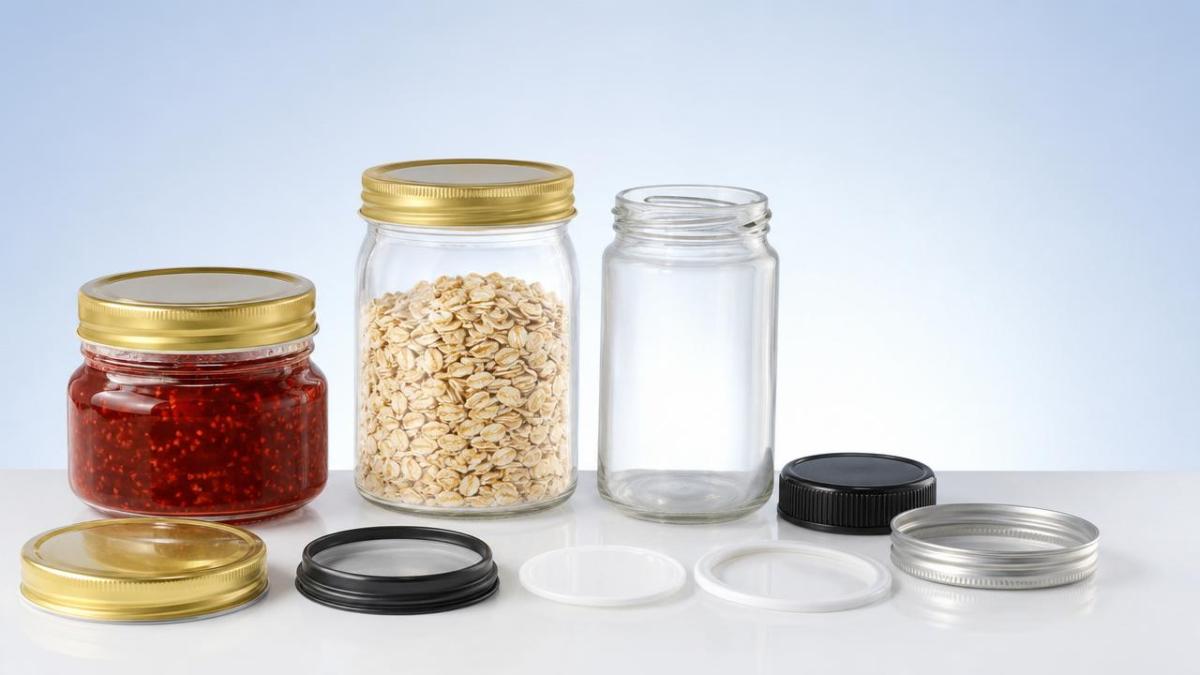
Quick compatibility guide for consumers
Can you mix jar brands and lid brands safely?
Sometimes yes, but not automatically. Many consumers reuse a glass canning jar from one brand and buy replacement lids from another, especially when trying to save money or use what is available locally. In some cases, standardized sizes work well together. In other cases, small differences lead to inconsistent performance.
Brand mixing becomes riskier when the jar is old, imported, decorative, or not clearly labeled for canning. A lid may tighten enough to feel secure for pantry storage but still fail under hot filling or processing conditions. Reusable silicone-gasket systems can also vary in compression behavior depending on rim thickness and band tension.
If your goal is dry storage for rice, beans, coffee, flour, or snacks, you may have more flexibility, provided the fit is stable and clean. If your goal is home preservation of acidic foods, pickles, tomato sauce, or fruit spreads, caution is much more important. In those cases, treat compatibility as a performance issue, not a guess.
A good consumer rule is to test an empty setup first. Wash the glass canning jar, inspect the rim, apply the lid properly, and check whether it seats evenly, tightens smoothly, and remains stable after standing upright and inverted briefly when appropriate for the storage purpose. For heat-based canning, always follow reliable food preservation guidance rather than improvising with uncertain components.
What are the most common warning signs that a lid does not truly fit?
Several warning signs appear before a complete failure. One is cross-threading, where the lid feels crooked or resists normal turning. Another is uneven contact, where one side tightens while the opposite side remains loose. A third sign is wobbling after closure, suggesting the lid is not engaging the jar finish consistently.
You should also be cautious if the lid requires excessive force, because forcing a closure can chip the rim, distort the lid, or damage the sealing compound. After storage, look for seepage, sticky residue, unusual odor, trapped bubbles where they should not be, or a seal that loosens by itself. In metal lids, early rust near the sealing area may indicate moisture retention or poor protective coating quality.
For a glass canning jar used in the refrigerator, a poor fit often shows up as drips, absorbed odors, or faster-than-expected drying of food. In pantry storage, signs include clumping from humidity exposure or stale flavor. In canning applications, a failed seal may be visible as a lid that does not stay depressed after cooling, though exact behavior depends on the lid design.
Any of these signs should prompt replacement rather than continued use. It is rarely worth risking food quality to save a single lid.
Are reusable lids, one-piece lids, and two-piece canning lids interchangeable for every glass canning jar?
No, and this is where many misunderstandings happen. Two-piece metal canning lids are widely used for traditional home canning. They include a flat lid with sealing compound and a separate screw band. One-piece lids are more common in general food packaging and pantry storage. Reusable lids may include plastic or metal parts with separate gaskets and can be practical for dry storage or repeated refrigeration cycles.
Each system places pressure on the sealing surface in a different way. A glass canning jar that works well with a standard two-piece system may not perform the same with a one-piece lid from another supplier. Likewise, some reusable systems are designed only for storage and not for all preservation methods. Consumers should avoid assuming that “reusable” means “universal.”
Material choice matters too. Metal lids may provide a familiar canning seal but can corrode over time. Plastic lids are convenient for refrigerator use and dry goods, yet they may not tolerate the same heat conditions. Silicone gaskets can improve repeat use, but only if thickness and rim contact are properly matched. Always align the lid type with the actual use case rather than buying on appearance alone.
What mistakes do consumers make when buying a glass canning jar online or in stores?
A frequent mistake is focusing on jar shape and style while overlooking closure specifications. Decorative quilted jars, vintage-look jars, or multipurpose storage jars can be attractive, but not all are designed for true canning or repeated sealing cycles. Another mistake is assuming all replacement lids sold under “mason jar” language will fit every glass canning jar on the market.
Consumers also overlook product descriptions that mention intended use. Terms such as “for dry storage,” “for craft use,” or “not for pressure canning” are important. In stores, packaging may show fruit or preserved foods even when the closure is mainly meant for short-term storage. Online, customer reviews can help, but they should not replace dimensional and usage details from the seller or manufacturer.
Another common issue is buying mixed bundles without confirming replacement availability. If a glass canning jar uses an uncommon lid size, long-term convenience becomes a problem. Before purchase, ask whether replacement lids, bands, and gaskets are easy to source. A jar is only practical if its closure system remains available after the original set wears out.
Pre-purchase checklist
Before choosing a glass canning jar, confirm these points: mouth size, closure type, recommended use, temperature tolerance, replacement lid availability, and whether the rim is intended for repeated preservation use. This small checklist reduces returns, waste, and food-storage disappointment.
How can you test compatibility and extend the life of your jar-and-lid system?
Start with inspection. Check the glass canning jar rim for chips, fine cracks, or roughness. Even a minor defect can break the seal. Clean both jar and lid thoroughly and dry them well before storage use. When attaching the lid, tighten according to the closure type—too loose may leak, but too tight can compress or deform the sealing element prematurely.
For pantry and refrigerator storage, perform a practical test with water first if you are uncertain. Fill the jar, close it, and observe for drips, uneven seating, or spontaneous loosening over several hours. For dry goods, monitor freshness and moisture resistance over the first week. If the contents soften, stale quickly, or clump, the seal may be underperforming.
To extend service life, avoid stacking lids carelessly, hand-wash delicate sealing parts when possible, and replace gaskets that have hardened, cracked, or absorbed odors. Store spare lids in a dry area to limit rust and warping. If a glass canning jar is used frequently, keeping a few compatible backup lids on hand prevents last-minute substitutions that may not fit properly.
What should you confirm before choosing, replacing, or discussing a specific storage solution?
The safest approach is to define your real use first. Are you storing dry ingredients, refrigerating leftovers, gifting preserves, organizing spices, or doing home canning? The answer changes which glass canning jar and lid system makes sense. Then confirm mouth size, lid type, replacement supply, material durability, and whether the product is intended for food preservation or only general storage.
If you need further confirmation about a specific option, it helps to ask practical questions: What exact lid sizes fit this jar? Is it suitable for hot-fill, refrigerator, freezer, or pantry use? Are replacement lids sold separately? Is the closure reusable, and under what conditions? Does the manufacturer provide guidance on sealing performance and care? These questions make it easier to compare products confidently and avoid costly trial and error.
In the end, choosing a glass canning jar is not only about appearance or capacity. Lid compatibility determines whether the jar will actually protect your food, save money, and deliver convenience over time. When consumers verify fit, function, and intended use before buying, they create a safer and more reliable kitchen storage routine.
Popular Tags
Kitchen Industry Research Team
Dedicated to analyzing emerging trends and technological shifts in the global hospitality and foodservice infrastructure sector.
Industry Insights
Join 15,000+ industry professionals. Get the latest market trends and tech news delivered weekly.
No spam. Unsubscribe anytime.
Hot Articles
 ASEAN FTA Upgrade Enters Text Verification Phase; Smart Kitchen Controls Added to Zero-Tariff List
- Electronics Manufacturing Leads with 13.6% Output Growth; Kitchen Appliance Chip Supply Stabilizes
- OpenCLAW-like Agent Deployment Risk Management Guidelines Released
- Green Power Stocks Rally; Overseas Buyers Prioritize Green Electricity Usage

Contact With us
Contact:
Anne Yin (Ceramics Dinnerware/Glassware)
Lucky Zhai(Flatware)