
What hotels expect from restaurant supplies beyond appearance
For hotel procurement and evaluation teams, restaurant supplies for hotels must deliver far more than visual appeal. Beyond style, buyers increasingly assess durability, hygiene, energy efficiency, workflow compatibility, and long-term operating value. As foodservice standards rise and smart kitchen solutions advance, choosing the right supplies has become a strategic decision that directly affects service quality, cost control, and brand performance.
Understanding what restaurant supplies for hotels really include
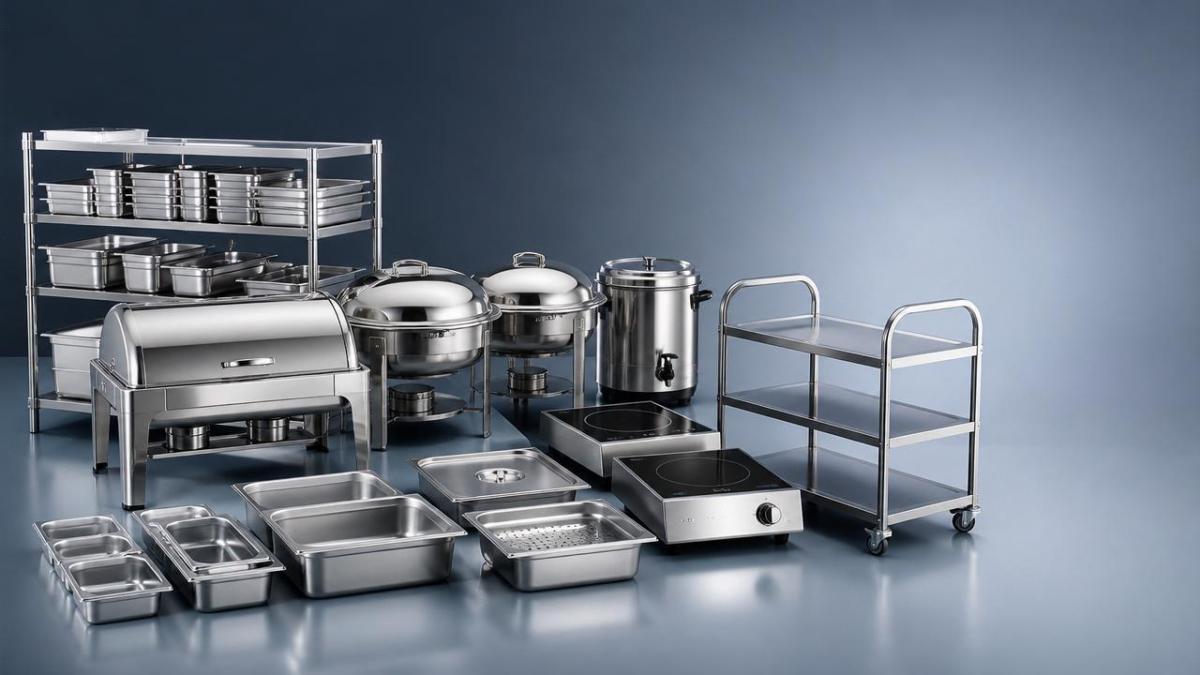
In the hotel environment, restaurant supplies for hotels cover a much broader range than table presentation items alone. The category typically includes cookware, food preparation tools, storage systems, refrigeration support products, buffet equipment, serving ware, sanitation tools, kitchen smallwares, utility carts, and selected commercial kitchen equipment that supports food production and service. For business evaluation personnel, the central issue is not whether a product looks premium on day one, but whether it supports operational continuity across months and years of use.
Hotels operate in a more complex service setting than many standalone restaurants. They may serve breakfast buffets, room service, banquets, conference catering, executive lounges, and all-day dining from interconnected back-of-house systems. Because of that complexity, restaurant supplies for hotels must perform consistently in multiple service formats. A tray, trolley, food pan, induction unit, storage rack, or beverage dispenser may move between departments and service schedules in the same day. Appearance remains important for guest-facing items, but it is only one layer of a larger decision framework.
Why the industry looks beyond appearance
The global kitchen equipment industry has changed rapidly as food safety expectations, labor costs, energy prices, and digital management practices continue to rise. Hotels are no longer evaluating supplies as isolated products. They are assessing how each item contributes to efficiency, hygiene, uptime, and brand consistency. This shift explains why restaurant supplies for hotels are now reviewed through a more operational and financial lens.
At the same time, advances in automation, intelligent kitchen systems, and energy-efficient equipment are changing purchasing priorities. A hotel may still value elegant buffet presentation or refined tabletop coordination, yet the more strategic question is whether supplies integrate with modern kitchen workflows. Products that reduce cleaning time, simplify storage, limit waste, improve food holding conditions, or connect with digital controls often create more value than visually impressive items that fail under real service pressure.
For evaluation teams, this means looking at total business performance. Strong restaurant supplies for hotels support service reliability, regulatory compliance, labor productivity, and sustainable operations. In many cases, the right supply decision improves not only the dining experience but also maintenance planning, replacement cycles, and overall foodservice profitability.
Core evaluation factors that matter more than surface design
Appearance plays a role in guest perception, especially in restaurants, lounges, and banquet areas. However, for procurement and assessment teams, surface design should be balanced against deeper performance criteria. The most effective restaurant supplies for hotels usually stand out in the following areas.
Durability under intensive use
Hotel foodservice operations often run from early morning to late night, with high-volume washing, transport, stacking, heating, cooling, and repeated handling. Supplies must resist warping, cracking, corrosion, denting, and handle failure. Materials such as commercial-grade stainless steel, reinforced polymers, and heat-resistant components are often preferred because they lower replacement frequency and reduce service disruption.
Hygiene and food safety performance
Smooth surfaces, easy-clean corners, food-safe materials, and compatibility with sanitation protocols are critical. Restaurant supplies for hotels should support rapid cleaning and reduce contamination risk. In buffet and banquet environments, equipment that maintains food temperature stability and separates raw from ready-to-serve workflows is especially valuable.
Operational compatibility
A supply item may perform well on its own but fail within the larger kitchen system. Evaluation teams need to confirm compatibility with existing racks, counters, storage zones, dishwashing systems, and service logistics. Standardized dimensions, stackability, modular fit, and mobility are often more important than decorative finishing.
Energy and resource efficiency
In the broader kitchen equipment sector, energy-efficient solutions are becoming central to cost control and sustainability goals. Heated display units, induction service pieces, refrigeration support products, and dishwashing-related accessories should be reviewed for their impact on electricity, water, and labor use. Efficient restaurant supplies for hotels contribute to both environmental targets and long-term operating savings.
Maintenance and lifecycle value
A lower upfront price can become expensive if a product requires frequent repairs, hard-to-source parts, or early replacement. Business evaluators increasingly focus on lifecycle cost: purchase price, maintenance effort, downtime risk, expected service life, and replacement planning. This is particularly relevant for hotel groups seeking standardization across properties.
Industry overview table: what hotels typically assess
The table below summarizes how restaurant supplies for hotels are commonly reviewed in operational settings. It helps connect product categories with the evaluation logic used by procurement and business assessment teams.
Business value across different hotel service scenarios
The value of restaurant supplies for hotels becomes clearer when viewed by operational scenario. Different departments prioritize different outcomes, but all benefit from reliable, well-matched supplies.
All-day dining restaurants
These outlets need supplies that handle repeated service cycles and menu variation. Prep tools, holding systems, and service pieces must support speed without sacrificing consistency. Products that shorten setup and cleaning times can directly improve labor efficiency.
Breakfast buffet operations
Buffet service is highly visible and highly repetitive. Here, restaurant supplies for hotels must maintain appearance while also protecting food quality and simplifying replenishment. Heated servers, beverage stations, cereal dispensers, GN pans, and display platforms should be easy to sanitize and quick to reset before the next service window.
Banquet and event catering
Banquet operations depend on scale, coordination, and transport resilience. Chafing dishes, insulated carriers, utility carts, plating tools, and storage racks must support fast movement from production to service. In this environment, durability and standardization often matter more than decorative uniqueness.
Room service and premium guest delivery
This scenario requires a balance between aesthetics and practical performance. Trays, thermal covers, beverage accessories, and mobile service units must present well in the guest room while retaining temperature and handling elevator movement, corridor transport, and repeated washing.
How smart kitchen trends are reshaping supply expectations
The kitchen equipment industry is moving toward automation, intelligent controls, and integrated systems, and this affects expectations for restaurant supplies for hotels as well. Supplies are increasingly selected not only for independent performance but for their role in connected workflows. For example, modular holding equipment may be chosen because it works with digital temperature monitoring, while preparation tools may be standardized to fit automated production zones or centralized kitchen systems.
This shift is particularly relevant for hotel groups with multiple properties. Central procurement strategies now often prefer products that can be replicated across locations, reducing training complexity and simplifying replacement planning. As digital kitchen management expands, supplies that support traceability, process consistency, and efficient resource use become more attractive than products selected primarily for short-term visual effect.
Practical assessment points for evaluation teams
For business assessment personnel, the best approach is to evaluate restaurant supplies for hotels through a structured framework. This helps avoid overemphasis on showroom appearance and keeps the decision aligned with real operating needs.
Useful assessment points include material grade, ease of cleaning, repairability, spare part availability, operator safety, dimensional standardization, expected replacement cycle, and energy impact where relevant. It is also wise to gather input from chefs, stewarding managers, banquet teams, engineers, and front-of-house supervisors. Supplies that look ideal in a catalog may reveal hidden weaknesses when tested against real workflows.
Another important practice is scenario-based evaluation. Rather than asking whether a product is attractive, teams should ask whether it performs during peak breakfast periods, large events, high-turnover buffet service, or late-night room service. This practical perspective often leads to more balanced and defensible purchasing decisions.
Common signs of strong long-term fit
In most cases, restaurant supplies for hotels show strong long-term value when they meet several conditions at once: they fit existing operational systems, maintain hygiene standards with minimal effort, withstand repeated use, reduce waste or labor burden, and support a consistent guest experience. Strong products do not force staff to work around them. Instead, they make service more stable, safer, and easier to manage.
This is why supply selection should be treated as part of broader kitchen strategy. In a market shaped by rising service expectations and rapid equipment innovation, hotels gain more from functional performance and lifecycle reliability than from surface-level visual appeal alone.
Conclusion and next-step guidance
The market for restaurant supplies for hotels is becoming more technical, more operationally focused, and more closely connected to smart kitchen development. For procurement and evaluation teams, the key lesson is clear: appearance matters, but only as one part of a broader value equation. Durable materials, hygienic design, workflow compatibility, energy efficiency, and lifecycle cost are now central to sound decision-making.
When hotels assess supplies with these priorities in mind, they are better positioned to improve foodservice quality, manage costs, and support long-term brand standards. If your team is reviewing current supply categories, the most effective next step is to map each product group against actual service demands, maintenance realities, and future kitchen development plans. That approach turns restaurant supplies for hotels from a visual purchase into a strategic operational asset.
Popular Tags
Kitchen Industry Research Team
Dedicated to analyzing emerging trends and technological shifts in the global hospitality and foodservice infrastructure sector.
Industry Insights
Join 15,000+ industry professionals. Get the latest market trends and tech news delivered weekly.
No spam. Unsubscribe anytime.
Hot Articles
 ASEAN FTA Upgrade Enters Text Verification Phase; Smart Kitchen Controls Added to Zero-Tariff List
- Electronics Manufacturing Leads with 13.6% Output Growth; Kitchen Appliance Chip Supply Stabilizes
- OpenCLAW-like Agent Deployment Risk Management Guidelines Released
- Green Power Stocks Rally; Overseas Buyers Prioritize Green Electricity Usage

Contact With us
Contact:
Anne Yin (Ceramics Dinnerware/Glassware)
Lucky Zhai(Flatware)