
Hotel kitchenkitchen design mistakes that hurt daily workflow
Even a well-funded hotel project can lose efficiency if hotel kitchenkitchen design decisions ignore real operational flow. For project managers and engineering leads, small layout mistakes often lead to bottlenecks, higher labor costs, safety risks, and equipment underperformance. This article highlights the most common design errors that disrupt daily workflow and explains how smarter planning can improve productivity, compliance, and long-term kitchen performance.
For most searchers using this topic, the real question is not simply what makes a kitchen look modern or technically complete. The real concern is which design mistakes create hidden operational losses after opening day, and how to prevent those mistakes during planning, procurement, and installation. In hotel projects, that concern is especially important because kitchen performance affects room service, banquet operations, all-day dining, specialty outlets, hygiene control, and staffing efficiency at the same time.
For project managers and engineering leaders, the best way to assess a hotel kitchenkitchen design is to ask a practical question: will the layout support uninterrupted daily movement of people, food, equipment, waste, and information under peak operating conditions? If the answer is unclear, the design still carries risk. The most expensive mistakes are often not dramatic technical failures. They are workflow errors built into the plan from the beginning.
Why workflow mistakes in hotel kitchenkitchen design become expensive after handover
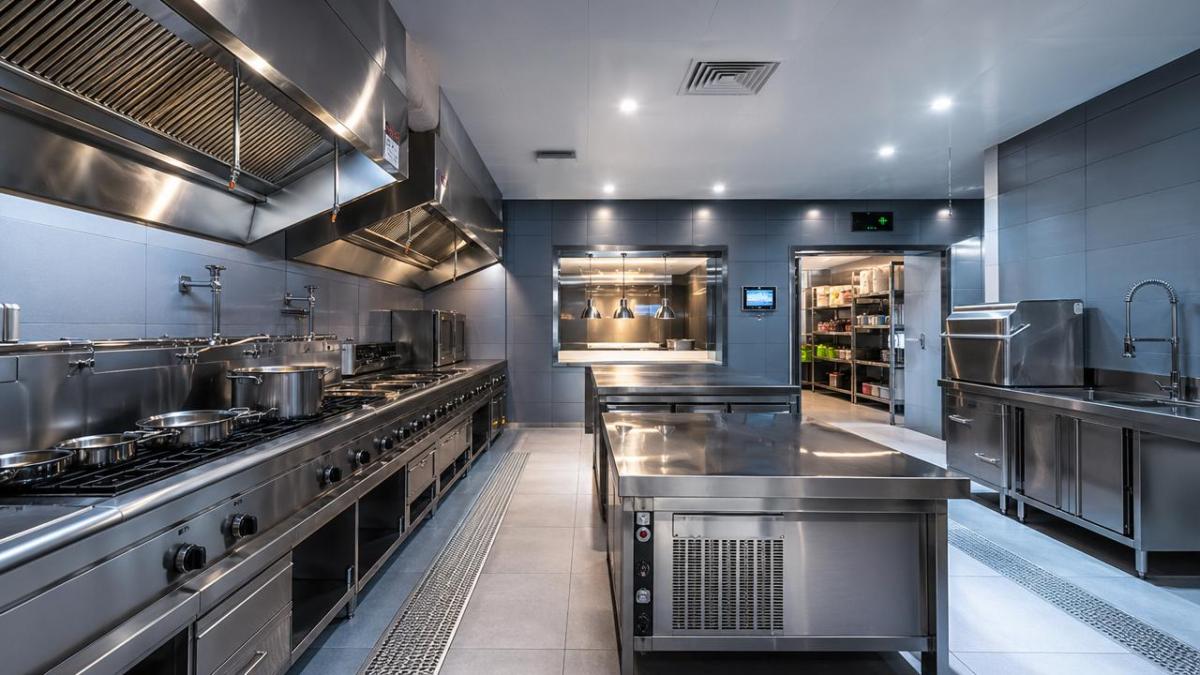
Hotel kitchens are different from many standalone restaurant kitchens because they typically serve multiple functions at once. A single back-of-house system may support breakfast buffets, banquet preparation, staff meals, fine dining, room service, pastry, cold preparation, dishwashing, and receiving. If circulation paths overlap or stations are poorly sequenced, the result is daily friction across departments rather than one isolated inconvenience.
That friction quickly turns into measurable cost. Staff walk farther than necessary. Supervisors spend more time solving avoidable conflicts. Food can wait too long between preparation and service. Cleaning becomes harder. Energy use rises when equipment is oversized or placed without regard to production patterns. In some cases, code compliance may still be achieved on paper, yet the kitchen remains inefficient in real operation.
This is why workflow should be treated as a project performance issue, not only a chef preference issue. Good hotel kitchenkitchen design protects throughput, labor productivity, sanitation standards, maintenance access, and service consistency. Bad design weakens all of them simultaneously, and correcting the layout after opening is often far more expensive than addressing the problem during design development.
Design mistake 1: planning around equipment lists instead of process flow
One of the most common failures in commercial kitchen projects is starting with equipment selection before mapping actual production flow. Teams may finalize lineups of ovens, ranges, prep tables, refrigeration, and washing systems based on brand standards or supplier recommendations, but fail to organize them around how ingredients and staff move through the operation from receiving to storage, prep, cooking, plating, dispatch, return, and cleaning.
When process flow is ignored, the kitchen may contain all required equipment and still work poorly. Staff cross paths constantly. Raw and cooked food routes overlap. Preparation areas become disconnected from service lines. Banquet production competes with à la carte cooking for the same circulation lanes. The problem is not a missing appliance but an incorrect sequence.
For project teams, the solution is to validate workflow before locking the equipment plan. Map major operational streams separately: receiving, cold storage, dry storage, butchery, vegetable prep, hot production, pastry, plating, service dispatch, warewashing, and waste removal. Then test those streams against peak periods, not average days. A kitchen that works only under light volume is not a successful design.
Design mistake 2: underestimating the complexity of multi-outlet hotel operations
Many hotel kitchen layouts fail because they are designed like a single restaurant with a slightly larger production area. In reality, hotel foodservice often includes several business models operating together. Breakfast service has a different rhythm from banquet plating. Room service requires fast dispatch and holding strategy. Specialty dining may need separate mise en place and finishing zones. Staff canteens add another production layer.
If these functions are forced into a shared layout without clear zoning, the kitchen becomes unstable during simultaneous demand. Teams then compensate with more labor, temporary holding tables, ad hoc storage, and workarounds that reduce hygiene and efficiency. These are not signs of a busy successful kitchen. They are signs that the original zoning did not match the service model.
Project managers should require operating scenarios during design review. Ask how the kitchen performs when breakfast breakdown overlaps banquet prep, when room service orders increase during a conference event, or when pastry production must continue while hot lines are at full capacity. Scenario-based review reveals whether the hotel kitchenkitchen design truly supports the property’s business mix.
Design mistake 3: creating too much cross-traffic between clean and dirty zones
Cross-traffic is one of the most damaging workflow errors because it affects speed, safety, and sanitation at the same time. Dirty dish returns crossing plated food routes, waste movement passing through prep areas, or staff entering production zones through dishwashing corridors all create operational conflict. In busy hotels, these interactions become constant rather than occasional.
The issue is especially serious in banquet and all-day dining operations, where warewashing volumes can be very high. If soiled returns are not separated from clean dispatch and final plating, service delays and contamination risk both increase. Staff frustration also rises because movement feels obstructed throughout the shift.
The better approach is to create clearly separated flows for inbound goods, production movement, service output, dish return, and waste. Even where space is limited, directional logic can still be improved through pass counters, dedicated return routes, partitioning, and strategic placement of washing areas. Project leaders should treat circulation diagrams as essential decision tools, not as optional presentation graphics.
Design mistake 4: giving insufficient space to prep, staging, and temporary holding
In many projects, visible cooking equipment gets priority while less visible support areas are compressed. This often happens because combi ovens, ranges, fryers, and display stations are easier to justify during stakeholder review than staging tables or intermediate holding zones. But daily workflow depends heavily on those support spaces.
Without enough prep and staging capacity, staff use any available surface for temporary work. Ingredients accumulate in circulation areas. Finished items wait in the wrong places. Trolleys block aisles. Banquet plating becomes chaotic. Refrigerated undercounter units are overloaded because there is no well-planned short-term holding strategy near key stations.
For hotel projects, staging should be planned as a functional asset, not leftover space. Consider pre-service assembly, batch cooking transfer, tray setup, room service dispatch, and banquet line support. A productive kitchen is not just where food is cooked. It is where product can move smoothly between preparation, finishing, and service without creating congestion.
Design mistake 5: poor coordination between kitchen layout and building systems
A strong operational layout can still fail if MEP coordination is weak. Ventilation, drainage, grease management, power loading, water supply, gas routing, cooling loads, and maintenance access all influence how kitchen equipment performs in real conditions. In hotel projects, kitchen design errors often appear when culinary planning and engineering coordination happen in parallel but not in true integration.
Examples are common: heat-generating equipment placed in ways that overload local ventilation, floor drains located away from wash-intensive zones, service clearances too tight for maintenance, refrigeration exposed to hot line discharge, or ceiling and hood geometry that limits future flexibility. These mistakes reduce equipment life and create avoidable downtime.
Engineering leads should push for joint review between kitchen planners, MEP consultants, operators, and equipment suppliers before issue-for-construction release. A kitchen should not only fit spatially; it must also function thermally, hygienically, and serviceably. Good hotel kitchenkitchen design is always multidisciplinary.
Design mistake 6: ignoring ergonomics and labor reality
Workflow does not depend only on layout diagrams. It depends on how people physically perform repeated tasks under pressure. Stations that require excessive bending, carrying, turning, or walking may appear acceptable in a plan but become labor drains in operation. In hotels facing labor shortages or high turnover, this problem becomes even more costly.
Poor ergonomics slow output and increase fatigue. Fatigued teams make more mistakes, communicate less effectively, and are more likely to compromise food safety and cleaning discipline during peak periods. Over time, these conditions also affect retention and training cost, especially in kitchens that rely on standardized production quality across shifts.
Project teams should evaluate aisle widths, reach distances, bench heights, loading access, trolley movement, door swing conflicts, and the number of touches required to move product through each station. A design that reduces unnecessary movement can improve productivity without adding headcount. That is a major business benefit for hotel operators.
Design mistake 7: failing to plan for cleaning, maintenance, and long-term adaptability
Another frequent error is designing only for opening day operations. Kitchens must also be cleaned deeply, repaired safely, and adapted over time. If equipment is packed too tightly, if access panels are blocked, or if wall and floor junctions are difficult to sanitize, operational quality declines quickly after launch. What looked efficient during fit-out becomes burdensome in daily use.
Hotels are particularly exposed to this issue because uptime expectations are high. A failed dishwashing line, inaccessible grease trap, or hard-to-service refrigeration bank can disrupt multiple outlets at once. Similarly, if menu changes or occupancy shifts require modified production patterns, a rigid layout may no longer support the property efficiently.
To reduce this risk, build maintenance and flexibility into the design review. Check service clearances, cleaning access, modularity, utility connection logic, and spare capacity where future expansion is plausible. The best projects do not simply install more equipment. They create systems that remain usable and efficient as operations evolve.
How project managers can evaluate a kitchen design before approving it
For decision-makers, evaluation should go beyond visual review and code compliance. A practical approval process should test whether the layout supports the hotel’s operational model, labor plan, hygiene protocol, and service peaks. This is where many hidden problems can still be caught before procurement or installation locks them in.
Start with five questions. First, are raw, cooked, clean, dirty, and waste flows clearly separated? Second, can the kitchen support simultaneous service demands across outlets? Third, are prep, staging, holding, and dispatch areas sized for peak use rather than idealized use? Fourth, do building systems fully support equipment performance and maintenance? Fifth, can the layout adapt to volume changes and menu development?
It is also valuable to conduct a walk-through simulation using real tasks. Follow a receiving team unloading produce, a cook moving from prep to hot line, a banquet team plating at scale, a stewarding team handling dish return, and a maintenance technician accessing core equipment. If those tasks feel awkward on paper, they will feel worse in operation.
What a better workflow-focused design delivers in business terms
When hotel kitchenkitchen design is built around workflow, the benefits extend beyond smoother staff movement. The property usually sees better labor efficiency, faster service response, more consistent food quality, stronger hygiene control, and fewer operational interruptions. Those gains matter directly to hotel profitability and guest satisfaction.
Better workflow also improves equipment return on investment. Machines perform more effectively when they are correctly placed within the production sequence and supported by suitable utilities, ventilation, and maintenance access. This reduces misuse, overload, and breakdown risk. In other words, design quality protects capital investment as much as it supports daily service.
For project managers, that makes workflow-based planning a strategic discipline rather than a technical detail. It helps align architecture, engineering, procurement, culinary operations, and ownership expectations into one performance-oriented outcome. In complex hospitality projects, that alignment is often what separates a kitchen that merely opens from one that operates well for years.
Conclusion: the best hotel kitchens are designed for movement, not just equipment placement
The main takeaway is simple: most costly kitchen problems begin long before the first meal service. They begin when layout decisions are made without enough attention to real daily movement, peak demand overlap, sanitation separation, support space, and engineering coordination. In hotel projects, these mistakes rarely stay isolated. They affect labor, speed, safety, compliance, and guest experience together.
For engineering leads and project managers, the most valuable mindset is to judge every design choice by operational consequence. Do people move efficiently? Do products flow logically? Are clean and dirty routes protected? Can the system be maintained and adapted? If those questions are answered early, the hotel kitchenkitchen design is far more likely to deliver long-term value.
A successful hotel kitchen is not defined by how much equipment it contains or how impressive it looks in a plan set. It is defined by whether teams can work through every shift with less friction, less waste, and better control. That is the standard worth using before final approval.
Popular Tags
Kitchen Industry Research Team
Dedicated to analyzing emerging trends and technological shifts in the global hospitality and foodservice infrastructure sector.
Industry Insights
Join 15,000+ industry professionals. Get the latest market trends and tech news delivered weekly.
No spam. Unsubscribe anytime.
Contact With us
Contact:
Anne Yin (Ceramics Dinnerware/Glassware)
Lucky Zhai(Flatware)