
Professional Kitchen Tools Explained: Which Types Improve Speed and Consistency?
Professional Kitchen Tools and Why They Matter
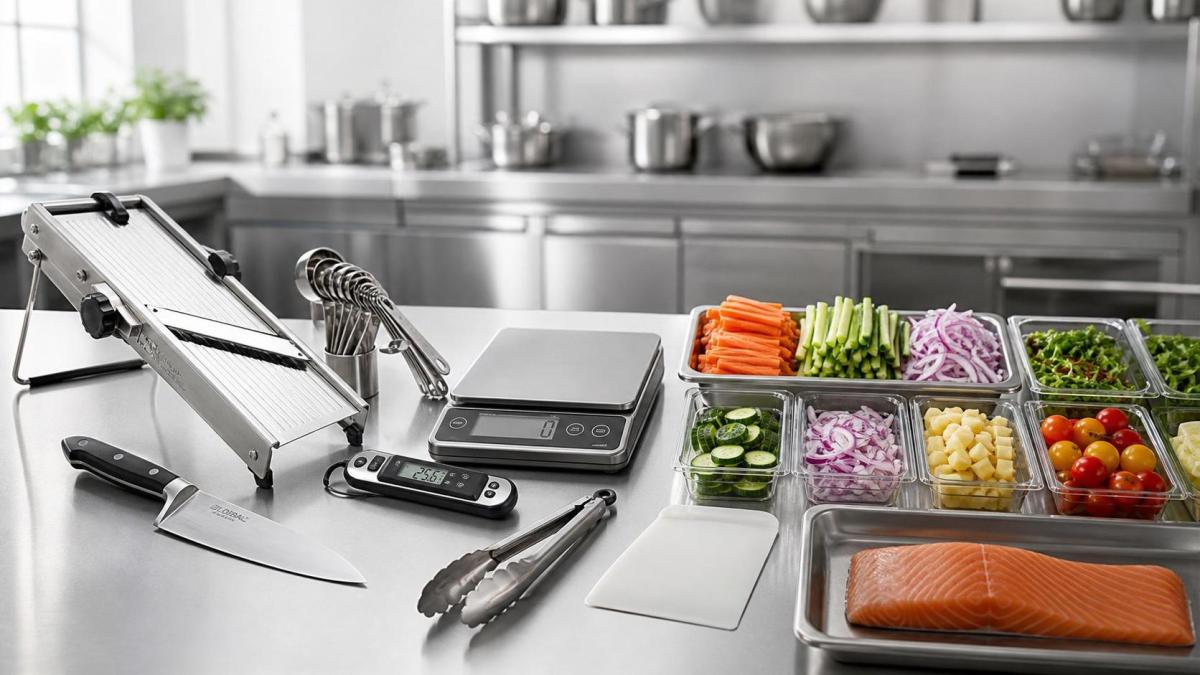
Choosing the right professional kitchen tools shapes speed, output quality, and daily control across busy kitchens.
That matters in restaurants, hotels, central kitchens, and food processing lines.
When tool selection is weak, teams compensate with extra labor, slower prep, and uneven results.
When selection is precise, professional kitchen tools improve throughput, hygiene, and repeatability.
In practical terms, the best tools reduce motion waste, shorten training time, and protect product standards.
This is especially relevant as kitchen equipment moves toward automation, smart monitoring, and energy efficiency.
Still, not every upgrade needs a large machine investment.
Often, well-matched professional kitchen tools deliver quick gains with lower cost and faster implementation.
The real question is not simply which tools are popular.
It is which types improve speed and consistency for the exact workflow being evaluated.
Core Types of Professional Kitchen Tools
Professional kitchen tools support different stages of preparation, cooking, holding, and finishing.
A useful evaluation starts by grouping them by function, not by brand alone.
Cutting and Portioning Tools
Knives, slicers, peelers, graters, and portion cutters are basic but performance-critical professional kitchen tools.
They affect prep speed, waste ratio, and portion uniformity.
Sharpness retention matters because edge loss quickly slows repetitive tasks.
Ergonomic handles also matter because fatigue changes cutting accuracy over long shifts.
Measuring and Control Tools
Scales, timers, thermometers, probes, and measuring cups improve repeatable output.
These professional kitchen tools are essential when recipes must stay stable across shifts or sites.
They also support food safety by confirming time and temperature control points.
Mixing and Handling Tools
Whisks, spatulas, tongs, ladles, scoops, and scrapers influence handling speed and product integrity.
The wrong size or shape creates extra movement and inconsistent transfer volumes.
The right set improves rhythm at each station and keeps service smoother.
Which Professional Kitchen Tools Improve Speed Most
Speed gains rarely come from one tool alone.
They come from removing small delays across the workflow.
In most operations, several categories create the strongest improvement.
- Pre-portioned scoops reduce serving hesitation and help standardize output.
- Mandolines and manual slicers accelerate vegetable prep with less variation.
- Color-coded tongs and spatulas reduce tool searching and cross-use mistakes.
- Digital thermometers shorten checking time and improve cooking decisions.
- Bench scrapers and transfer tools minimize cleanup delays during batch prep.
From recent market changes, faster kitchens are favoring tools that support repeat actions.
That includes tools designed for quick cleaning, intuitive grip, and easier station organization.
A clearer signal is the shift toward workflow-compatible tool systems.
In other words, professional kitchen tools work best when storage, use, and sanitation are considered together.
Which Professional Kitchen Tools Improve Consistency Best
Consistency is often harder to maintain than speed.
It depends on controlled measurements, predictable handling, and minimal operator variation.
For that reason, some professional kitchen tools have unusually high evaluation value.
Precision Tools
Digital scales and calibrated thermometers are two of the strongest consistency tools available.
They reduce guesswork in baking, sauce production, protein cooking, and batch preparation.
Portion Control Tools
Disher scoops, measured ladles, and standard molds stabilize serving size and plate appearance.
That directly supports food cost control and customer expectation management.
Guided Prep Tools
Jigs, guides, and uniform cutting tools are valuable where appearance must stay highly consistent.
This is common in chain restaurants, commissary kitchens, and packaged food production.
That also means professional kitchen tools should be judged by output stability, not just speed claims.
How to Evaluate Professional Kitchen Tools in Real Operations
A strong evaluation process connects tool design with business reality.
That means comparing tool performance against labor pressure, hygiene rules, and menu demands.
In actual business settings, the workflow fit test is often underestimated.
A premium tool still underperforms if it slows cleaning, storage, or handoff between stations.
Common Risks When Selecting Professional Kitchen Tools
The most common buying mistake is focusing only on unit price.
Lower-cost professional kitchen tools can increase replacement rates, training errors, and sanitation issues.
Another risk is buying tools without matching them to output volume.
A tool that works in a small café may fail in a high-volume hotel kitchen.
There is also growing attention on cross-contamination control.
That pushes demand for color coding, easy-clean surfaces, and material traceability.
- Avoid mixed tool standards across locations without a defined reason.
- Avoid complex shapes that trap residue and slow sanitation.
- Avoid oversized tool sets with low actual usage frequency.
- Avoid weak supplier support for replacement and calibration needs.
Seen this way, professional kitchen tools are operational assets, not simple accessories.
A Practical Selection Approach for Better Results
A practical selection process starts with task mapping.
List high-frequency actions, pain points, sanitation risks, and quality failure points.
Then rank professional kitchen tools by business impact instead of catalog category.
- Identify the prep or service step causing the most delay.
- Measure whether the issue is speed, variation, hygiene, or fatigue.
- Select tools that solve one priority problem clearly.
- Run a short pilot under real workload conditions.
- Review cleaning time, output consistency, and operator feedback.
- Standardize only after performance is proven.
This approach is especially useful as smart kitchen and automated food preparation systems expand.
Even in more digital kitchens, manual professional kitchen tools still shape core execution quality.
The strongest results usually come from combining efficient tools with clear process design.
If the goal is better speed and consistency, start with the most repeated task.
Then choose professional kitchen tools that make that task easier, cleaner, and more repeatable every day.
Popular Tags
Kitchen Industry Research Team
Dedicated to analyzing emerging trends and technological shifts in the global hospitality and foodservice infrastructure sector.
Industry Insights
Join 15,000+ industry professionals. Get the latest market trends and tech news delivered weekly.
No spam. Unsubscribe anytime.

Contact With us
Contact:
Anne Yin (Ceramics Dinnerware/Glassware)
Lucky Zhai(Flatware)