
Common Food Slicer Machine Problems and How to Fix Uneven Cuts and Jamming
Why uneven cuts and jamming matter in real kitchen operations
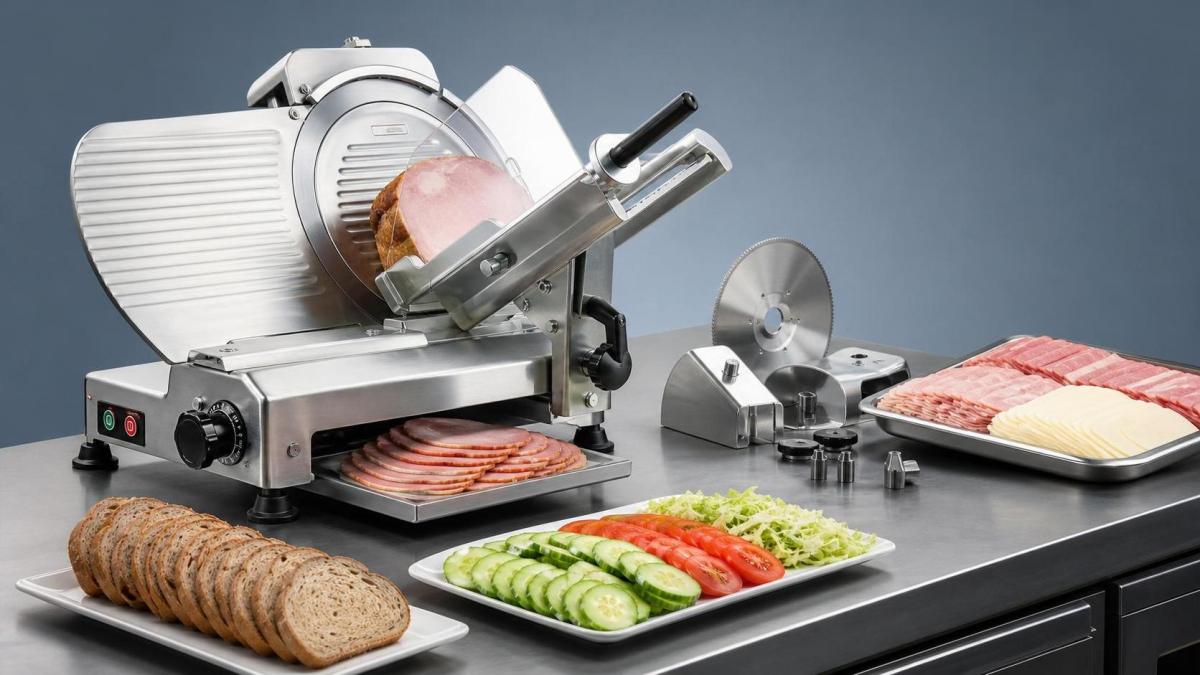
When a food slicer machine starts cutting unevenly, the issue rarely stays small for long.
Portion control drifts, prep speed drops, and product appearance becomes inconsistent across batches.
Jamming adds another layer of risk because operators tend to intervene quickly, often before the machine is fully isolated.
In restaurants, that usually means delayed service and wasted ingredients.
In hotels and central kitchens, the same food slicer machine problem affects larger volumes and stricter timing windows.
Food processing lines feel the impact differently.
There, uneven slices can disrupt packaging weights, downstream automation, and food safety checks.
That is why troubleshooting a food slicer machine should start with operating context, not only with the visible symptom.
The kitchen equipment industry now depends more on consistency, automation, and measurable output.
A slicer that worked acceptably in a low-volume setting may fail under longer shifts, tighter hygiene cycles, or denser product loads.
The same food slicer machine behaves differently across applications
A common mistake is assuming every uneven cut comes from a dull blade.
Blade wear is important, but it is only one part of the diagnosis.
A deli slicing chilled meat, a bakery slicing soft loaves, and a vegetable prep line all stress the machine differently.
Texture, moisture, temperature, feed pressure, and cleaning frequency can all change the failure pattern.
In practical maintenance work, the better question is this: what changed before the problem appeared?
Sometimes the product changed.
Sometimes shift length increased, sanitation chemicals became more aggressive, or replacement parts were sourced from another supplier.
These differences matter because they point to different fixes.
A food slicer machine used in a smart or semi-automated kitchen also introduces sensor and calibration variables.
In those environments, a cut quality problem may come from misalignment between mechanical settings and digital controls.
What uneven cuts usually indicate
- Blade edge is worn, nicked, or poorly sharpened.
- Thickness plate is loose or no longer calibrated.
- Product carriage does not glide smoothly.
- Product temperature is outside the ideal slicing range.
- Operator feed pressure is inconsistent during manual slicing.
What frequent jamming tends to reveal
- Food residue has built up around the blade or guide surfaces.
- Drive components are worn or insufficiently lubricated.
- The machine is handling products beyond its intended density or shape.
- Guard, pusher, or chute alignment has shifted after cleaning.
- Voltage instability or motor fatigue is reducing cutting force.
In restaurant and hotel kitchens, speed often hides the root cause
Fast-paced kitchens usually notice symptoms late because output pressure masks gradual performance loss.
An uneven food slicer machine may still seem usable until portion sizes stop matching menu standards.
For cooked meats and cheeses, the first check should be product temperature and blade sharpness together.
Warm products deform before the blade completes the cut.
That can resemble a mechanical fault even when the machine itself is stable.
Jamming in these kitchens often comes from incomplete cleaning between menu changes.
Sauces, fats, and starch residues collect quickly and reduce carriage movement.
The practical fix is not only deeper cleaning.
It is also adjusting sanitation intervals to match product type, not only shift end.
A food slicer machine handling high-fat proteins needs more frequent wipe-down points than one used mainly for firm vegetables.
Central kitchens and food processing lines need tighter mechanical control
In higher-volume environments, minor drift becomes expensive very quickly.
A food slicer machine that varies by one millimeter may affect yield, packaging consistency, and customer specifications.
Here, manual compensation is less effective because the line depends on repeatable settings.
The first priority is checking calibration points, carriage alignment, and feed system wear.
Belts, bearings, and guide rails often degrade before the blade becomes visibly damaged.
Jamming in processing facilities usually has a narrower cause pattern.
It is commonly linked to product uniformity, throughput overload, or poor synchronization with upstream conveyors.
When automated feeding is involved, an isolated slicer inspection is not enough.
The full path of the product needs review, including entry angle and transfer timing.
Household and light-duty use create a different maintenance pattern
A light-duty food slicer machine often develops problems from long idle periods rather than nonstop production.
Lubrication dries out, seals age, and parts are reassembled incorrectly after deep cleaning.
Uneven cuts in this setting are frequently linked to setup error.
The thickness control may look locked while still sitting between settings.
Jamming is also more common with irregular product shapes.
Users often try to slice partially frozen items or soft foods without stabilizing them properly.
The useful advice here is simple but specific.
Confirm assembly order, inspect the carriage travel by hand, and test with a firm, uniform sample first.
What gets misdiagnosed before the real fix is found
Several food slicer machine issues are misread because the visible symptom feels obvious.
The most common error is replacing the blade immediately without checking surrounding wear points.
Another is blaming the motor when drag actually comes from hardened residue on the carriage track.
There is also a cost-related misjudgment.
Low-cost spare parts may fit physically but change vibration, alignment, or service life.
In globally sourced kitchen equipment, part compatibility should be verified beyond dimensions alone.
Another overlooked point is cleaning chemistry.
Aggressive agents can damage finishes, seals, or adjustment components, then create new slicing defects later.
- Do not judge by blade condition alone.
- Do not assume similar products behave the same when moisture or density changes.
- Do not focus only on purchase cost while ignoring maintenance frequency.
- Do not separate the slicer from upstream and downstream workflow conditions.
A practical way to restore stable slicing performance
For most uneven cut and jamming complaints, a structured check works better than random part replacement.
Start by recording product type, temperature, slicing thickness, run time, and cleaning interval.
Then inspect the food slicer machine in three layers: cutting components, movement components, and operating conditions.
If the problem appears only during peak load, compare performance at startup and after prolonged use.
Heat buildup and fatigue often reveal issues that static inspection misses.
Where digital controls exist, confirm calibration values after maintenance or part replacement.
That matters more as kitchen equipment becomes smarter and more integrated across the production chain.
A reliable food slicer machine is not defined only by motor power or blade size.
It is defined by how well the machine, product, cleaning method, and workload fit each other over time.
The next useful step is to map actual usage conditions, compare recurring failure points, and set service checkpoints by application.
That approach reduces guesswork, improves safety, and keeps slicing quality consistent across changing kitchen environments.
Popular Tags
Kitchen Industry Research Team
Dedicated to analyzing emerging trends and technological shifts in the global hospitality and foodservice infrastructure sector.
Industry Insights
Join 15,000+ industry professionals. Get the latest market trends and tech news delivered weekly.
No spam. Unsubscribe anytime.
Hot Articles



Contact With us
Contact:
Anne Yin (Ceramics Dinnerware/Glassware)
Lucky Zhai(Flatware)