
Commercial Kitchen Tools: How to Equip a High-Volume Kitchen Without Overspending
High-volume kitchens rarely overspend because they buy too little equipment. They overspend because they buy capacity in the wrong places, specify tools around peak-hour assumptions that do not reflect the menu, or treat the purchase price as the full cost of ownership.
For a procurement team, the practical question is not which commercial kitchen tools are considered premium. It is which tools remove the actual bottlenecks in production while remaining serviceable, cleanable, and financially sensible over their working life. A high-output restaurant kitchen, hotel banquet operation, central kitchen, or food production site may all handle large quantities, but their equipment priorities can be very different.
The most disciplined purchasing approach starts with workflow and demand rather than with a supplier catalogue. Buy for the volume that must move through each station, the consistency required by the menu, and the recovery time available when equipment fails. That approach often supports a mixed equipment strategy: durable, high-capacity units where interruption is expensive; simpler manual tools where labor and throughput make them sufficient; and modular systems where demand may change.
Start with the production bottleneck, not the equipment list
A standard kitchen equipment schedule can be useful for budgeting, but it is a poor substitute for operational analysis. Two kitchens serving the same number of meals can need very different prep tables, refrigeration, cooking equipment, holding capacity, and utensil inventories. The difference comes from menu complexity, batch size, service windows, delivery patterns, labor skills, and the distance food travels between stations.
Before requesting quotations, map the flow of food from receiving through storage, preparation, cooking, holding, plating or packing, and washing. For each stage, identify three points: the expected output during the busiest period, the time available to complete the work, and what happens if that station slows down.
For example, a prep area may appear adequately equipped because it has multiple worktables and knives. Yet it can still constrain service if vegetables, proteins, and ready-to-eat ingredients compete for the same refrigeration, sink, or sanitation space. Adding a larger mixer will not solve a shortage of refrigerated mise en place capacity. Similarly, adding burner capacity may not increase output if the kitchen lacks hot holding, blast chilling, tray handling, or dishwashing throughput.
Procurement should ask operations to distinguish between average volume and the short intervals that determine service performance. Equipment sized only for average demand can create predictable congestion. Equipment sized for an extreme peak that occurs rarely can leave expensive capacity idle. A reasonable design target is usually the recurring busy period, with some reserve capacity in stations where downtime would stop production altogether.
- Prep tools: Assess batch size, product variety, cleaning frequency, and whether staff wait for access to cutters, mixers, slicers, scales, or refrigerated tables.
- Cooking line: Match capacity to the cooking method used by the menu. A broad menu may need flexible stations; a narrow, repeatable menu may justify specialized equipment.
- Cold storage: Separate bulk storage from line storage and consider delivery frequency, staging time, and the number of times ingredients are handled.
- Holding and transport: Calculate how long food must remain safe and usable before service, rather than buying holding equipment solely by the number of pans it accommodates.
- Warewashing: Include racks, landing space, drying, waste handling, and staff movement. The machine cycle alone does not define the station's true capacity.
That exercise also exposes where a manual commercial kitchen tool is adequate and where it creates an avoidable labor dependency. A manually operated slicer may be appropriate for intermittent prep. In a kitchen where slicing is a daily production constraint, the labor cost, inconsistent output, and ergonomic burden may justify a more capable machine. The decision should follow measured work, not a general preference for automation.
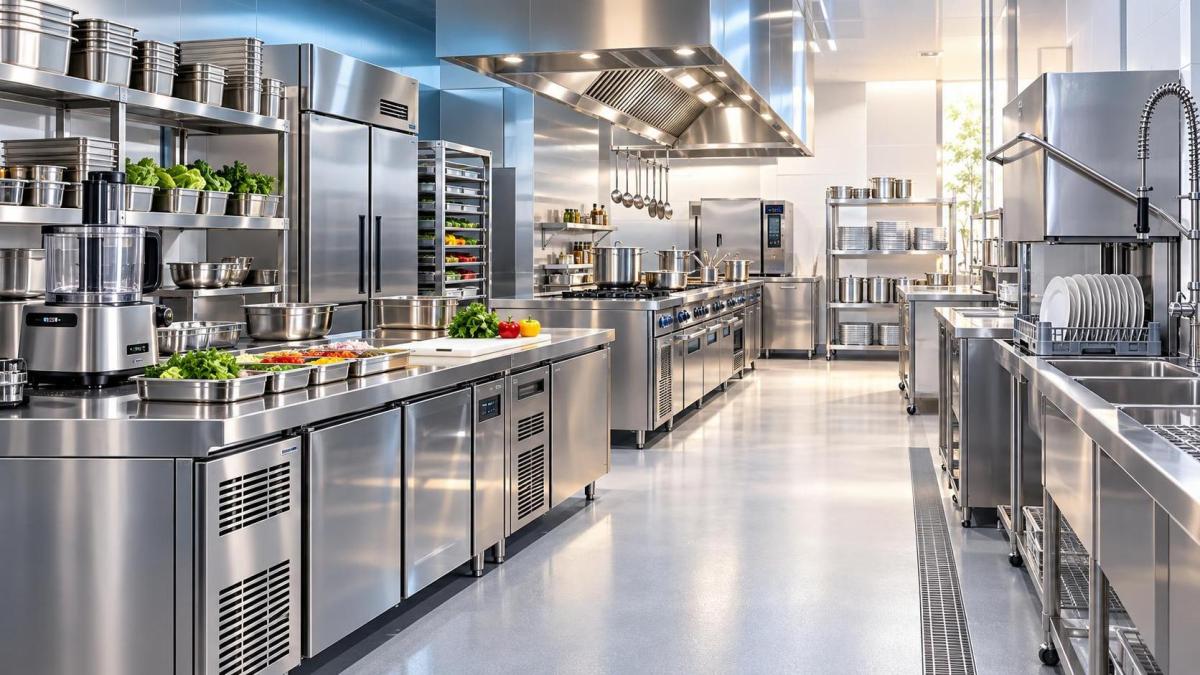
Use a tiered buying strategy instead of applying one quality level everywhere
Not every item deserves the same purchasing standard. A high-volume kitchen needs certain tools to withstand continuous use, aggressive cleaning, and rapid handoffs between staff. Other items can be standardized at a more economical level, particularly when they are easy to replace and do not create a safety or production risk.
Classifying equipment by operational consequence makes this easier. The first category contains production-critical assets: items whose failure immediately limits service, food safety, or product quality. This often includes primary refrigeration, key cooking equipment, dishwashing systems, extraction-related components, and any specialized machine without a workable backup. These purchases should receive the most scrutiny around construction quality, parts availability, warranty terms, installation requirements, and local service coverage.
The second category covers high-use but replaceable tools. Sheet pans, gastronorm pans, tongs, ladles, storage containers, thermometers, knives, and cutting boards can be inexpensive individually yet operationally significant in aggregate. Here, standardization is more valuable than chasing the lowest unit price. A smaller number of compatible sizes reduces storage disorder, simplifies replenishment, and prevents staff from improvising around missing or mismatched items.
The third category includes low-frequency or optional tools. These are often where kitchen projects accumulate unnecessary spend. A tool may look efficient in a demonstration but have little value if it supports a menu item with low sales volume, requires a trained operator, occupies scarce bench space, or adds a difficult cleaning routine. The right question is whether it will be used enough to displace its purchase, maintenance, cleaning, and storage costs.
This tiered approach also prevents a common form of false economy: buying consumer-grade or lightly constructed equipment for a commercial duty cycle. Such products can appear attractive when budgets are under pressure, but their limitations often emerge in hinges, seals, controls, casters, blades, handles, and surfaces that are repeatedly washed or exposed to heat. Replacement may be inexpensive, yet disruption, inconsistent results, and repeated purchasing can make the decision costly.
Evaluate total cost of ownership in the places that matter most
Purchase price should remain visible, but it should not dominate the evaluation of equipment that will be used every day. Total cost of ownership is especially relevant for assets that consume substantial energy or water, require scheduled maintenance, or can interrupt a high-revenue service period.
A useful comparison does not need speculative financial modeling. It can focus on practical cost drivers: installation work, utility compatibility, routine cleaning time, consumables, preventive maintenance, replacement parts, expected repair access, and the operational impact of a failure. A lower-priced unit can be the right choice when it is simple, locally supported, and easy to replace. It becomes a poor choice when repairs are slow, replacement parts are proprietary or difficult to source, or its performance causes labor-intensive workarounds.
Energy-efficient equipment deserves the same disciplined assessment. Efficiency claims are meaningful only when the equipment matches the operating pattern. A highly efficient unit that is oversized, left idle for long periods, or poorly maintained may not deliver the anticipated operating benefit. Conversely, equipment with sound insulation, responsive controls, appropriate recovery capacity, and a suitable operating schedule can lower waste without sacrificing output.
For refrigeration and heated holding, pay particular attention to doors, gaskets, temperature controls, airflow, and the ease of cleaning coils or accessible surfaces. These details affect both energy use and food safety performance. For cooking equipment, review warm-up time, recovery after heavy use, control precision, ventilation implications, and cleaning access. The equipment that saves a few minutes per shift may be valuable, but only if that time removes a real labor constraint rather than merely shifting work elsewhere.
Downtime needs a price, even when it is not shown on the quote
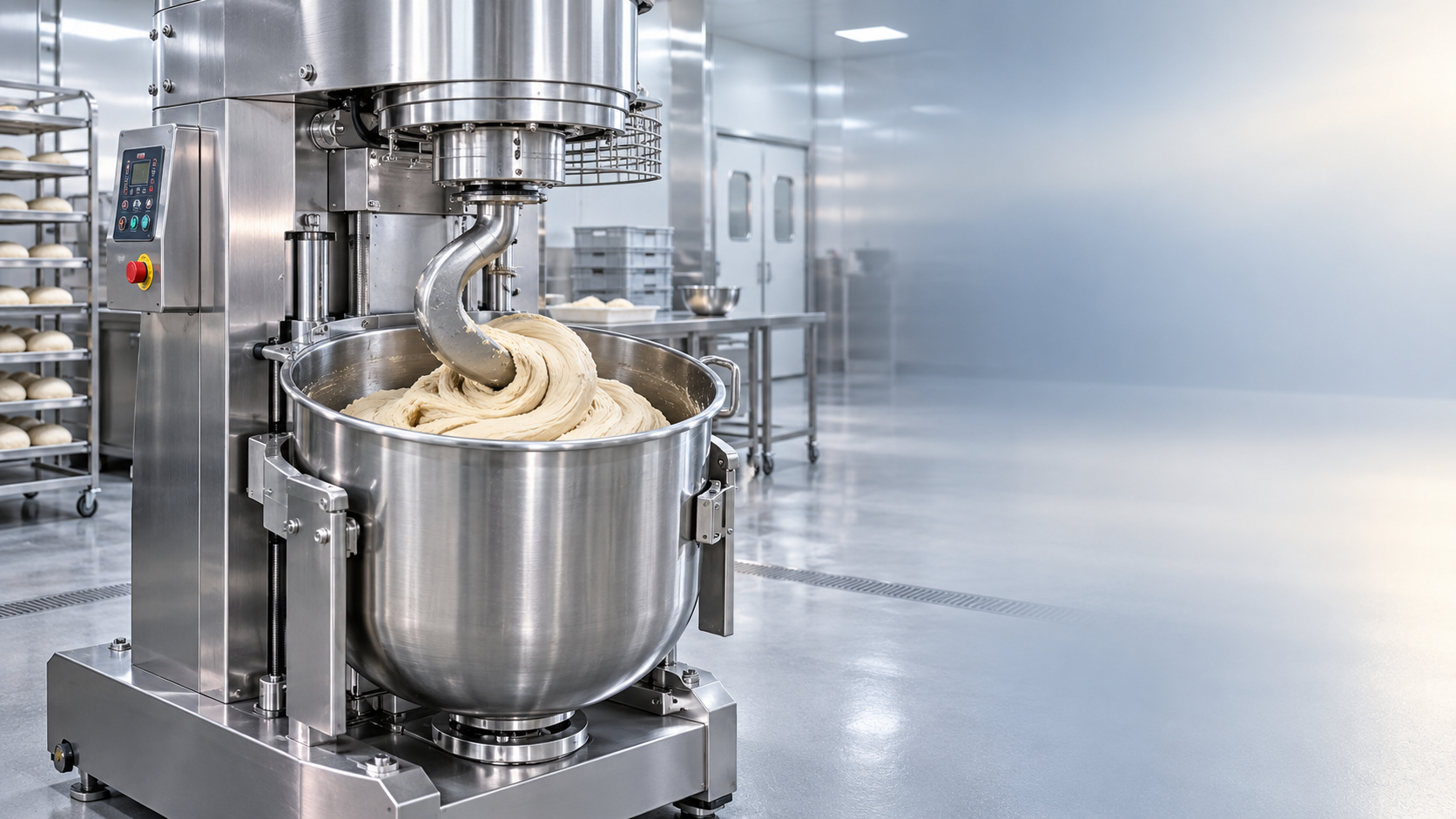
Procurement often compares equipment options line by line while operations experiences the consequences as lost production capacity. A failed refrigerated prep counter may force emergency product movement and disrupt station layout. A dish machine failure can cause service delays within a short period. A specialized processing machine can halt an entire batch if there is no manual fallback.
For each critical item, determine the fallback plan before approving the purchase. The plan may be a backup unit, spare small tools, access to a rental replacement, an alternative production sequence, or a service agreement with defined response expectations. There is no single correct level of redundancy. A kitchen with multiple equivalent ovens may not need a dedicated spare. A site with one essential vacuum packer or combi oven may need a more deliberate contingency arrangement.
Serviceability is often underestimated during sourcing. Ask suppliers how replacement parts are identified, whether common wear parts can be stocked on site, which components require a trained technician, and whether diagnostic information is available to authorized service personnel. Equipment with sophisticated controls can be valuable, but its maintenance model must fit the site. Digital features do not compensate for a lack of local repair capability.
Write specifications that protect the operation, not just the tender
Broad descriptions such as “heavy-duty,” “energy-saving,” or “high capacity” invite inconsistent quotations. Procurement specifications should convert operational needs into verifiable requirements. That does not mean locking the tender to a single brand or imposing unnecessary detail. It means stating the dimensions, output conditions, materials, interfaces, sanitation needs, and acceptance criteria that matter to the kitchen.
For a worktable or storage unit, material grade, load requirement, edge construction, shelf adjustability, caster quality, weld finish, and cleanability may matter more than its appearance. For a food processor, specify the products it must process, batch volume, expected duty cycle, required attachments, safety interlocks, cleaning steps, and available electrical supply. For a refrigeration unit, describe usable internal capacity, required temperature range, ambient conditions at the installation point, door configuration, shelving, alarm needs, and access clearance for maintenance.
Where food-contact tools are involved, purchasing teams should also confirm that material selection, surface finish, seams, and component design allow effective cleaning and do not create difficult-to-reach areas where residue can accumulate. A design that looks durable from the front may still be impractical if handles, joints, lids, drain points, or removable components are difficult for staff to clean during a busy shift.
Acceptance should happen before the equipment is treated as operationally complete. Confirm delivered dimensions, utility connections, safety features, controls, accessories, documentation, and the availability of replacement components. Run a realistic product test where feasible: process the intended batch, check output consistency, observe cleaning steps, and verify that the tool fits the actual workstation. A short commissioning check can reveal problems that a catalogue specification does not.
Control the small-tool spend without starving the kitchen
Smallwares are often handled as a miscellaneous budget line, which makes them vulnerable to both overbuying and chronic shortages. The better approach is to establish par levels based on the kitchen's production cycle. The required quantity of containers, utensils, trays, pans, racks, and measuring tools depends on how many are in use, how many are being washed, how many are cooling or holding product, and how much reserve is needed for breakage or peak demand.
Standard sizes and materials simplify this calculation. They also reduce the hidden costs of incompatible lids, awkward storage, inconsistent portioning, and staff searching for the right tool. A procurement team does not need to specify the most expensive version of every item, but it should avoid mixing formats that cannot stack, seal, rack, or fit into existing equipment.
Track loss and breakage separately from normal replenishment. If a kitchen repeatedly replaces the same category of tools, the cause may be poor construction, unsuitable storage, an unsafe cleaning process, or a workflow that encourages misuse. Buying a larger quantity may conceal the problem while raising inventory cost.
Build flexibility where demand is uncertain
High-volume does not always mean stable volume. Menu changes, catering contracts, seasonal trade, delivery production, and labor availability can alter the equipment mix a kitchen needs. When future demand is uncertain, modularity often has more value than maximum installed capacity.
Mobile workstations, compatible pan systems, interchangeable attachments, scalable shelving, and equipment that can serve more than one menu function can reduce the cost of later changes. Flexibility has limits: a critical station should not be compromised by trying to make one machine perform every task. But in prep, storage, transport, and smallwares, adaptable formats can prevent a major reinvestment when the operation changes.
The final purchasing decision should be easy to explain in operational terms. It should show which bottleneck the tool addresses, what volume and duty cycle it is expected to handle, what it costs beyond the initial quote, and how the kitchen will continue operating if it fails. When those answers are clear, a high-volume kitchen can spend heavily where reliability and throughput demand it, spend carefully where standardization is enough, and avoid paying for equipment that adds little to the service line.
Popular Tags
Kitchen Industry Research Team
Dedicated to analyzing emerging trends and technological shifts in the global hospitality and foodservice infrastructure sector.
Industry Insights
Join 15,000+ industry professionals. Get the latest market trends and tech news delivered weekly.
No spam. Unsubscribe anytime.
Hot Articles
Contact With us
Contact:
Anne Yin (Ceramics Dinnerware/Glassware)
Lucky Zhai(Flatware)