Why Glass Tea Servers Crack—and How to Prevent Thermal Shock When Brewing Tea
A glass tea server brings clarity and elegance to tea service, but sudden temperature changes can cause cracks, leaks, or even breakage. For everyday users and operators, understanding why thermal shock happens is essential for safer brewing and longer-lasting equipment. This guide explains the common causes of glass tea server cracking and shares practical steps to prevent damage when preparing hot tea.
The short answer is that most glass tea server failures result from uneven heating or cooling, not simply from using water that is too hot.
When one area of glass expands or contracts faster than another, internal stress develops. If that stress exceeds the glass strength, cracking can occur suddenly.
Good brewing habits, suitable water temperatures, and proper cleaning routines greatly reduce this risk. Material quality also determines how much temperature change a server can tolerate.
For users and tea-service operators, the practical goal is simple: warm the vessel gradually, avoid extreme contrasts, and inspect equipment before each use.
What Thermal Shock Means for a Glass Tea Server
Thermal shock occurs when glass experiences a rapid temperature difference between its inner and outer surfaces, or between one localized area and the rest.
Glass does not conduct heat as quickly as metal. This slower heat transfer means hot water can warm the interior before the outside adjusts.
As the heated inner surface expands, the cooler exterior resists that movement. The resulting tension can create tiny fractures or visible cracks.
The reverse situation is also dangerous. A hot glass tea server placed under cold water may contract unevenly and break during rinsing.
Cracks do not always appear immediately. Repeated mild thermal stress can weaken the vessel over time until a later brewing session causes failure.
This is why a server may seem reliable for months, then crack while holding water at a temperature it handled previously.
Thermal shock is especially relevant for thin glassware because less material separates the hot liquid from cooler surrounding air or surfaces.
Handles, spouts, lids, and joint areas can be vulnerable because their shapes cool differently and may concentrate stress during temperature changes.
Understanding this mechanism helps operators focus on temperature transitions rather than assuming that all hot tea automatically damages a glass tea server.
Why a Glass Tea Server Cracks During Normal Brewing
Pouring boiling water into a cold server is one of the most common causes. This happens often during winter or in air-conditioned kitchens.
A vessel stored near an open window, refrigerator, or cold preparation station may be much cooler than operators realize before brewing begins.
Adding ice, cold fruit, chilled milk, or refrigerated tea directly into hot glass creates another severe temperature contrast that can cause immediate damage.
Cold countertops are also a frequent problem. Setting a hot glass tea server onto stone, stainless steel, or a wet surface can cool its base abruptly.
Dishwashing routines create risks as well. Removing a hot server from a dishwasher and rinsing it with cool water may stress the glass.
Likewise, a server that has just been washed in cold water should not receive boiling tea immediately, even when it looks dry.
Local heating can be harmful. Direct flame, electric coil contact, induction adapters, microwave hotspots, and warming plates may heat only part of the vessel.
Not every glass tea server is designed for stovetop use. A heat-resistant label does not automatically mean the product can withstand direct heating.
Small chips and scratches lower resistance because they create weak points. Thermal stress naturally concentrates around these existing defects during service.
Know the Glass Before Choosing a Brewing Temperature
Material type matters because different glasses expand at different rates. Lower expansion generally means better resistance to rapid temperature changes during tea preparation.
Borosilicate glass is widely used for heat-resistant tea equipment. It typically handles temperature changes better than ordinary soda-lime glass when used correctly.
However, borosilicate is not unbreakable. Large temperature differences, manufacturing flaws, impact damage, or direct heat beyond specifications can still cause cracking.
Soda-lime glass is common in affordable tableware and decorative servers. It may be suitable for warm tea but requires more careful temperature control.
Tempered glass can be stronger against everyday impact, yet it may fail dramatically after edge damage or exposure to conditions outside its intended use.
Product descriptions should identify the glass type, recommended temperature range, and whether the vessel is suitable for microwave, dishwasher, or stovetop use.
If the supplier provides no temperature guidance, treat the glass tea server conservatively. Preheat it and avoid pouring freshly boiling water into a cold vessel.
Thickness alone is not a complete quality indicator. Thick decorative glass can still crack if its material composition and manufacturing process lack thermal resistance.
For professional environments, consistent specifications are valuable. Purchasing the same rated server model simplifies staff training and reduces accidental misuse across shifts.
Use a Safe Preheating Routine Before Brewing Tea
Preheating is the most effective daily practice for preventing thermal shock. It gradually raises the glass temperature before the main volume of hot tea arrives.
Start with warm water rather than boiling water. Swirl a small amount around the interior so the base, walls, spout, and handle warm evenly.
After fifteen to thirty seconds, discard the warming water. The server is then less likely to experience a sharp temperature jump during brewing.
For delicate glass, use two stages. Begin with lukewarm water, then add hotter water before transferring the fully brewed tea into the server.
Do not preheat a cracked, chipped, or heavily scratched vessel. Warming does not repair structural damage and can trigger failure at the weak location.
When serving several pots quickly, keep clean servers at room temperature rather than storing them beside chilled ingredients or beneath cold air vents.
Operators can make this routine efficient by keeping a dedicated warm-water pitcher nearby. The extra step takes little time and prevents expensive breakage.
Preheating also helps tea stay warmer after service. This provides a quality benefit alongside the safety benefit, particularly for loose-leaf tea presentations.
For home users, the same approach is simple: warm the server while the kettle heats, then empty it shortly before tea transfer.
Match Water Temperature to the Tea and the Server
Using boiling water for every tea is unnecessary and increases thermal stress. Many teas produce better flavor when brewed below the boiling point.
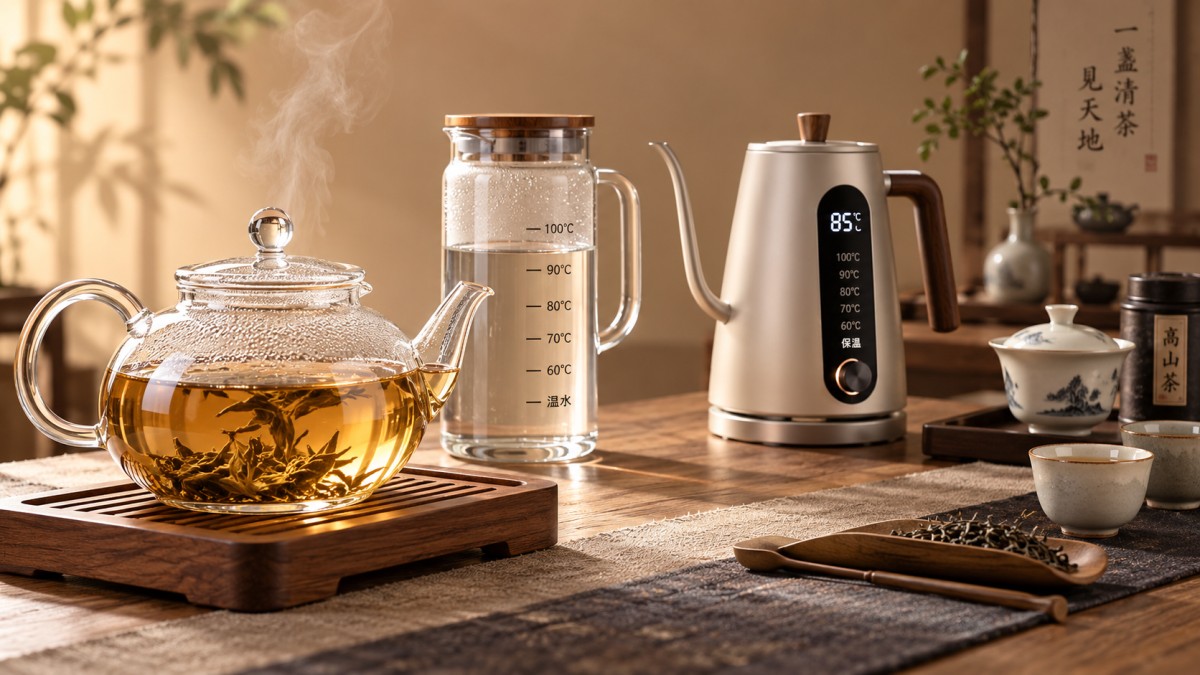
Green tea commonly benefits from water around 70 to 85 degrees Celsius. White tea and many delicate teas often require similarly moderate temperatures.
Oolong teas generally use hotter water, although the correct range depends on oxidation level and leaf style. Check the tea supplier's brewing guidance.
Black tea, pu-erh, and many herbal infusions can handle near-boiling water. Even then, preheating the glass tea server remains a sensible precaution.
Using a variable-temperature kettle gives operators better control. It supports tea quality while reducing the need to manage water that is unnecessarily hot.
If no temperature-controlled kettle is available, let freshly boiled water rest briefly before pouring. This reduces the initial temperature difference across the glass.
Water temperature should also suit the service method. A server receiving brewed tea from another vessel faces less stress than one used for direct infusion.
Do not assume a lower water temperature removes all risk. A warm server can still crack if placed on a cold counter or rinsed abruptly.
The safest approach combines appropriate brewing temperature with gradual warming, stable placement, and careful handling throughout the entire tea-service process.
Prevent Damage During Pouring, Serving, and Cooling
Place a heat-resistant coaster, wooden tray, silicone mat, or folded dry cloth beneath the server before pouring hot tea into it.
Avoid setting hot glass directly on marble, granite, metal, or wet worktops. These surfaces can pull heat quickly from the base.
Pour steadily rather than forcefully. A controlled pour reduces splashing and helps distribute heat around the interior instead of concentrating it in one area.
Do not fill the server beyond its intended capacity. Overfilling increases spill risk and can expose the rim to uneven cooling from ambient air.
Keep cold garnishes and ice separate until the tea has cooled appropriately. Adding them directly to freshly hot tea can shock the glass.
When serving chilled tea, allow the server to cool gradually at room temperature. Do not accelerate cooling with refrigeration, ice baths, or cold running water.
For iced tea production, brew in a heat-rated vessel first, then transfer after partial cooling. Use a separate cold-rated pitcher when practical.
Never carry a hot glass tea server by the lid knob alone. Support the body or handle according to the manufacturer’s intended handling design.
In busy foodservice areas, use trays with stable bases. Sudden contact with cold trays, sinks, or metal racks can create avoidable damage.
Clean and Store Glass Tea Servers Without Creating Hidden Stress
Cleaning is a common point of failure because temperature changes often happen quickly between service, washing, rinsing, and storage procedures.
Let a hot server cool naturally before washing. Once it reaches a comfortable temperature, begin with warm water instead of cold tap water.
Use mild detergent and nonabrasive tools. Scouring pads, metal brushes, and aggressive powders can leave scratches that become future crack initiation points.
Tea stains can usually be removed with warm water, gentle detergent, and sufficient soaking time. Avoid forcing residue away through harsh mechanical scrubbing.
When using a dishwasher, confirm that the glass tea server is dishwasher-safe. Position it securely so other items cannot strike its rim or walls.
After washing, avoid stacking servers directly inside each other unless they are designed for nesting. Rim contact can produce chips that weaken the glass.
Store servers away from oven exhaust, freezer doors, and direct sunlight near cold windows. Stable room temperature helps preserve readiness for brewing.
Inspect the spout, rim, base, handle joints, and lid seating area regularly. These locations often reveal early damage before a full crack appears.
Remove a damaged server from service immediately. Small cracks can release hot liquid unexpectedly, creating burn hazards for users, staff, and guests.
When a Cracked Glass Tea Server Should Be Replaced
A visible crack means the server should be replaced, even if it does not leak during a quick test. Heat and handling can enlarge damage suddenly.
Do not attempt to repair a tea server with household glue, resin, tape, or sealant. These materials are not reliable for hot food-contact applications.
Replace equipment showing chips on the rim, deep scratches, loose handles, cloudy stress lines, or damage near the base and pouring spout.
For commercial operators, documenting breakage incidents can identify patterns. Repeated failures may indicate unsuitable glassware, poor storage, or inconsistent staff procedures.
Consider replacing low-cost unmarked vessels with rated borosilicate models where hot tea is served frequently. The lower breakage risk often justifies the purchase.
Choose a size that fits the actual serving volume. Oversized vessels encourage partial filling and heat loss, while undersized ones invite overfilling and spills.
A practical replacement policy protects both service quality and workplace safety. Keeping approved spare servers available prevents damaged equipment from returning to use.
Supplier instructions should remain accessible near the tea station. Clear limits for heat sources, dishwasher use, and temperature handling support consistent operation.
Build a Simple Daily Routine for Safer Tea Service
Before brewing, check that the glass tea server is clean, dry, undamaged, and close to room temperature. Do not use equipment with visible defects.
Warm the server with a small amount of warm water, then discard it. Select water temperature based on the tea type and product instructions.
Place the server on a dry insulating surface before adding tea. Keep cold ingredients, wet cloths, and chilled containers away from the hot vessel.
After service, allow the server to cool naturally. Wash with compatible water temperature, use nonabrasive tools, and store it where temperatures remain stable.
This routine is easy to teach because each step addresses a specific risk: uneven heating, sudden cooling, surface damage, or unnoticed structural weakness.
A glass tea server can provide attractive, practical tea service for years when treated as heat-sensitive equipment rather than ordinary decorative glassware.
The key judgment is not whether hot tea is safe for glass in general. It is whether the glass, temperature change, and handling method are compatible.
By preheating, avoiding extreme temperature shifts, using appropriate brewing temperatures, and replacing damaged pieces promptly, users can prevent most thermal shock failures.