
What Restaurant Supplies Should Every Food Service Operation Keep in Stock?
What counts as essential restaurant supplies today?

Every food service operation depends on more than major equipment. Daily performance often comes down to basic restaurant supplies that stay available, clean, and easy to replace.
In practical terms, essential stock includes prep tools, storage items, food safety products, cleaning materials, and service basics. These are the items used constantly, not occasionally.
That matters even more now. Kitchens are becoming smarter, faster, and more energy-aware, but smooth service still depends on simple supplies being ready when needed.
Whether the setting is a restaurant, hotel kitchen, central prep area, or food processing support space, the same rule applies: missing basics slow everything down.
A good supply plan supports food quality, safer handling, better workflow, and less stress during busy periods. It also protects expensive equipment from misuse and avoidable downtime.
Which restaurant supplies should never run out during daily service?
The shortest answer is this: anything tied to safety, speed, and sanitation should always have backup stock. These supplies keep the operation moving even when demand shifts suddenly.
Most kitchens should keep the following categories covered:
- Food prep tools such as knives, peelers, tongs, cutting boards, mixing bowls, and measuring tools.
- Food storage supplies including containers, lids, labels, date markers, shelving liners, and wrap.
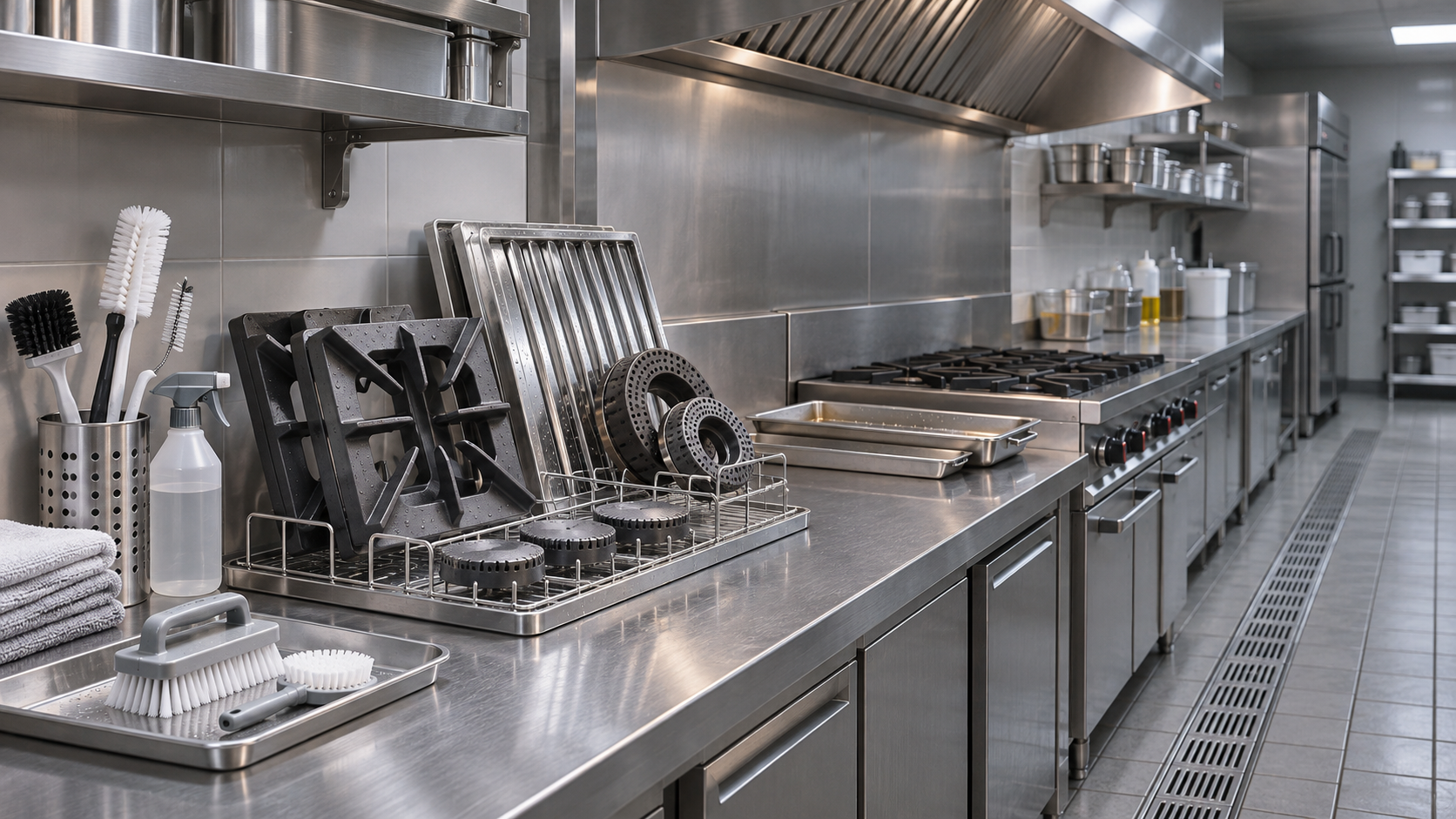
- Cleaning products like sanitizer, degreaser, dish brushes, cloths, mop heads, and disposable gloves.
- Safety items such as aprons, oven mitts, first aid supplies, floor signs, and thermometer probes.
- Service essentials including trays, takeaway packaging, napkins, cups, cutlery, and portioning tools.
Not every kitchen needs the same quantities. A high-volume outlet may burn through gloves and takeaway containers quickly, while a hotel kitchen may need more storage pans and labeling supplies.
The more useful question is not only what to stock, but what gets touched every shift. Those high-contact items should sit at the center of your restaurant supplies list.
How do you decide what belongs on a core stock list?
A solid stock list starts with task frequency. If an item is used in prep, cooking, holding, cleaning, or service every day, it belongs on the core list.
The next filter is replacement risk. Some restaurant supplies are inexpensive but operationally critical. Labels, probe wipes, food wrap, and disposable gloves are good examples.
It also helps to group supplies by work zone. That makes ordering easier and reduces the chance that one area gets overlooked.
This kind of table is especially helpful in mixed operations where commercial kitchen equipment and manual tools work side by side.
As kitchens adopt automation and digital management, supply tracking becomes easier. Even so, physical restaurant supplies still need manual checks and clear reorder points.
Are disposable items or durable tools more important?
This is a common question, but it usually leads to the wrong comparison. Most operations need both, just for different reasons.
Durable tools support repeat use and stable performance. Think stainless steel utensils, storage racks, mixing containers, thermometers, and heavy-duty prep tools.
Disposable restaurant supplies reduce contamination risk and simplify fast-moving tasks. Gloves, paper towels, piping bags, labels, wipes, and takeaway packaging fit this role.
A better way to judge them is by function:
- Choose durable items where control, heat resistance, and repeated washing matter.
- Choose disposables where hygiene, convenience, and quick turnover matter more.
- Review total cost, not unit cost alone. Cheap items replaced too often can become expensive.
In real kitchen workflows, the strongest setup usually blends both categories. That balance supports efficiency without sacrificing cleanliness or consistency.
What mistakes lead to stock problems and wasted budget?
Stock issues rarely come from one big failure. More often, they build from small habits that look harmless until service gets busy.
One frequent mistake is ordering by memory. Without a standard list, restaurant supplies become unevenly stocked, and urgent replacements cost more.
Another problem is ignoring compatibility. Storage lids that do not match pans, or cleaning chemicals that do not suit surfaces, create waste quickly.
Operations also tend to overfocus on large machines. Commercial kitchen equipment matters, but small support items often determine whether that equipment can be used efficiently.
A few warning signs deserve attention:
- Frequent last-minute purchasing
- Too many similar tools with uneven quality
- Expired labels or unclear date marking
- Broken thermometers or missing calibration checks
- Cleaning supplies stored without clear separation
These issues matter across the wider kitchen equipment industry because food safety expectations are rising, and efficient operations now depend on tighter control over both tools and consumables.
How often should restaurant supplies be reviewed and replenished?
There is no single schedule that fits every site. The right timing depends on service volume, menu complexity, storage space, and supplier reliability.
Still, a simple review rhythm works well for many operations:
- Check fast-moving restaurant supplies daily.
- Review backup stock every week.
- Inspect tool condition and replacement needs each month.
- Reassess the full stock list when menus, volumes, or workflows change.
Digital kitchen systems can support these routines. Automated reminders, usage tracking, and integrated ordering are becoming more common, especially in larger kitchens.
Even with smarter systems, visual checks still matter. A well-run supply routine combines software visibility with real shelf inspection and practical staff feedback.
If supply problems keep repeating, it may be time to reset par levels, simplify item choices, or align stock planning more closely with daily production patterns.
So, what is the smartest next step?
Start with a clear count of the restaurant supplies already used every day. Separate them by prep, storage, cooking, cleaning, and service.
Then identify three things: which items run out fastest, which ones affect food safety most, and which tools cause delays when missing or damaged.
That review creates a more useful supply plan than a generic shopping list. It also helps connect small-item decisions with bigger goals like energy efficiency, workflow control, and equipment protection.
As the kitchen equipment industry continues moving toward smarter and more integrated systems, well-managed restaurant supplies remain a basic advantage. They support consistency, reduce waste, and make daily work easier.
If you are refining stock standards, compare current usage with actual service needs, set reorder triggers, and review problem categories first. That approach usually brings the quickest improvement.
Popular Tags
Kitchen Industry Research Team
Dedicated to analyzing emerging trends and technological shifts in the global hospitality and foodservice infrastructure sector.
Industry Insights
Join 15,000+ industry professionals. Get the latest market trends and tech news delivered weekly.
No spam. Unsubscribe anytime.

Contact With us
Contact:
Anne Yin (Ceramics Dinnerware/Glassware)
Lucky Zhai(Flatware)