
How to Choose a Glass Jar for Dry Storage: Sizes, Lid Types, and Sealing Problems
Why does the right glass jar matter for dry storage?
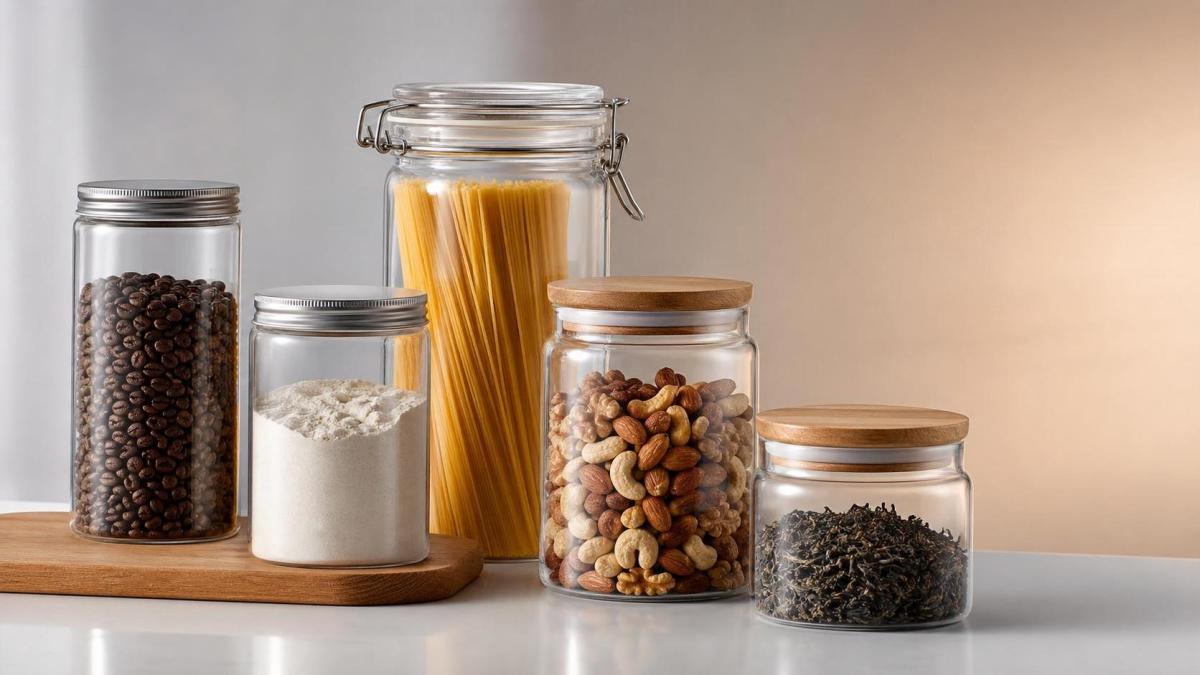
A good glass jar does more than hold food. It protects texture, slows moisture exposure, and keeps ingredients easy to see and reach.
That matters in busy home kitchens and in foodservice spaces where speed, cleanliness, and consistency are part of daily work.
In practical terms, the wrong jar often creates small but annoying problems. Flour clumps, coffee loses aroma, snacks go stale, and shelves become harder to organize.
A well-chosen glass jar helps solve those issues because glass is nonporous, easy to clean, and less likely to hold odors than many plastics.
It also fits current kitchen trends. Across household and professional equipment, people now expect storage tools to support food safety, visibility, and efficient workflow.
So the real question is not whether a glass jar looks nice. It is whether the jar matches the food, the shelf space, and the way it gets used.
What size glass jar actually works best?
Size is usually the first decision, and it is where many storage mistakes begin.
A large glass jar seems efficient, but it is not always better. If you open it often and keep little product inside, trapped air becomes a bigger freshness problem.
Smaller jars work better for spices, tea, nuts, seeds, and specialty grains. They reduce repeated air exposure and are easier to finish quickly.
Medium jars are often the most flexible choice. They suit pasta, rice, lentils, cereal, and baking ingredients used several times each week.
Larger jars make sense for bulk flour, sugar, pet treats, or pantry staples with steady turnover. The key is using them only when refill cycles are realistic.
A simple way to judge size is to think in weeks, not liters. Ask how much of that item you normally use before quality starts to drop.
The table below helps match jar capacity to common dry storage needs.
If shelving height is limited, a shorter wide-mouth glass jar may work better than a tall cylinder, even at the same volume.
Which lid type keeps dry food fresher?
Lid design matters almost as much as jar size because sealing performance depends on both the closure style and the gasket quality.
Screw-top lids are common and easy to use. They are practical for everyday pantry access, especially when the threads close smoothly and the liner is intact.
Clamp lids with rubber gaskets usually provide a stronger seal. They are a reliable option for coffee, sugar, flour, and ingredients sensitive to humidity.
Push-on lids look simple, but performance varies a lot. Some are fine for short-term snack storage, while others loosen after frequent opening.
Wooden or bamboo lids are popular because they suit modern kitchen design. Still, the real seal comes from the silicone ring, not the lid material itself.
In actual use, better sealing is especially helpful in climates with high humidity or in kitchens where steam and temperature changes happen often.
- Choose screw-top lids for quick access and stacked storage.
- Choose clamp lids for stronger moisture protection.
- Choose wide-mouth openings when scooping is more important than pouring.
- Check whether replacement gaskets are available before buying.
That last point is often overlooked. A durable glass jar is only as useful as the seal you can maintain over time.
Why do some glass jars still have sealing problems?
When a glass jar fails to keep food crisp, the lid is not always the only reason.
One common issue is a warped gasket. Silicone and rubber rings can shift, crack, or flatten after heat, washing, or repeated pressure.
Another problem is residue on the rim. Fine flour, sugar dust, or oil from hands can interrupt the seal more than people expect.
Threaded lids may also feel closed while sitting slightly off-center. That creates tiny gaps, which are enough to let in air and moisture.
Storage conditions matter too. A quality glass jar placed near a stove, dishwasher vent, or sunny window will face extra humidity and temperature stress.
If dry goods are filled while still warm, trapped condensation can form inside. That is a direct path to clumping, loss of crunch, and shorter shelf life.
A quick troubleshooting check usually solves most sealing complaints.
- Inspect the rim for chips or food particles.
- Press or tighten the lid again after cleaning the contact area.
- Replace worn gaskets instead of forcing a weak seal.
- Move the glass jar away from steam and direct heat.
- Refill only when the food is fully cool and dry.
Is there a better glass jar for pantry use, baking stations, or coffee corners?
Yes, because one storage style rarely fits every zone in the kitchen.
For general pantry shelves, stackable shapes save space and improve visibility. Straight-sided jars are often easier to line up than decorative rounded ones.
For baking areas, wide-mouth glass jar designs work better. Scoops fit easily, and measuring is cleaner when flour or sugar is used often.
For coffee corners, airtight lids become more important than shape. Aroma-sensitive products need a reliable seal and a size that empties at a steady pace.
In commercial prep zones or shared kitchens, labels matter almost as much as the jar itself. Clear identification supports safer rotation and faster ingredient access.
This reflects a broader shift in the kitchen equipment world. Storage tools are expected to support workflow, hygiene, and simple inventory control, not just appearance.
If you want fewer mismatches, choose by use point rather than by set. A coordinated set looks good, but a mixed group often works better.
What buying mistakes should you avoid before choosing a glass jar?
The most common mistake is choosing based only on style. Clear glass looks clean and premium, but performance still comes down to lid fit, weight, shape, and everyday handling.
Another mistake is ignoring mouth width. A narrow opening can frustrate scooping, cleaning, and refilling, especially with sticky or powdery foods.
Many people also overestimate capacity. A jar may technically hold the volume, but not comfortably once a scoop, headspace, or pouring clearance is needed.
Weight matters more than expected. A heavy glass jar on a high shelf becomes inconvenient fast when used every day.
It is also worth checking whether the jar is dishwasher safe, whether the lid needs hand washing, and whether replacement parts are sold separately.
A quick comparison before buying can prevent disappointment later.
How do you make the final choice without overcomplicating it?
A practical glass jar choice usually comes from four checks: what you store, how fast you use it, where it sits, and how often it opens.
If the food is moisture-sensitive, prioritize sealing. If the item is bulky, prioritize shape and shelf fit. If access is constant, prioritize comfort and mouth width.
For many kitchens, the best setup is not one perfect jar. It is a small combination of sizes with lid types matched to ingredient behavior.
That approach aligns with how modern kitchen tools are chosen more broadly: by efficiency, maintenance, and real use conditions rather than appearance alone.
If you are comparing options now, start by listing three foods you use most, measure the shelf area, and note which items lose freshness fastest.
From there, select a glass jar size for turnover, a lid type for sealing strength, and a shape that makes daily use simpler. That is usually the right balance.
Popular Tags
Kitchen Industry Research Team
Dedicated to analyzing emerging trends and technological shifts in the global hospitality and foodservice infrastructure sector.
Industry Insights
Join 15,000+ industry professionals. Get the latest market trends and tech news delivered weekly.
No spam. Unsubscribe anytime.
Hot Articles

Contact With us
Contact:
Anne Yin (Ceramics Dinnerware/Glassware)
Lucky Zhai(Flatware)