
Glass beverage dispensers leak at the base — design flaw or installation error?
Glass beverage dispensers are popular across restaurants, hotels, and modern kitchens for their elegance and functionality—often paired with porcelain mugs, ceramic serving plates, and glass drinkware to create cohesive, high-end service setups. But when a glass beverage server leaks at the base, is it a fundamental design flaw in the unit itself—or a preventable installation error? This issue affects not just aesthetics but food safety and operational efficiency, especially alongside ceramic dinner sets, glass water cups, and stoneware tableware. For users, procurement teams, and decision-makers alike, diagnosing the root cause is critical—whether you're sourcing glass juice dispensers, glass decorative vases, or stainless steel silverware for integrated kitchen systems.
Understanding the Structural Integrity of Glass Beverage Dispensers
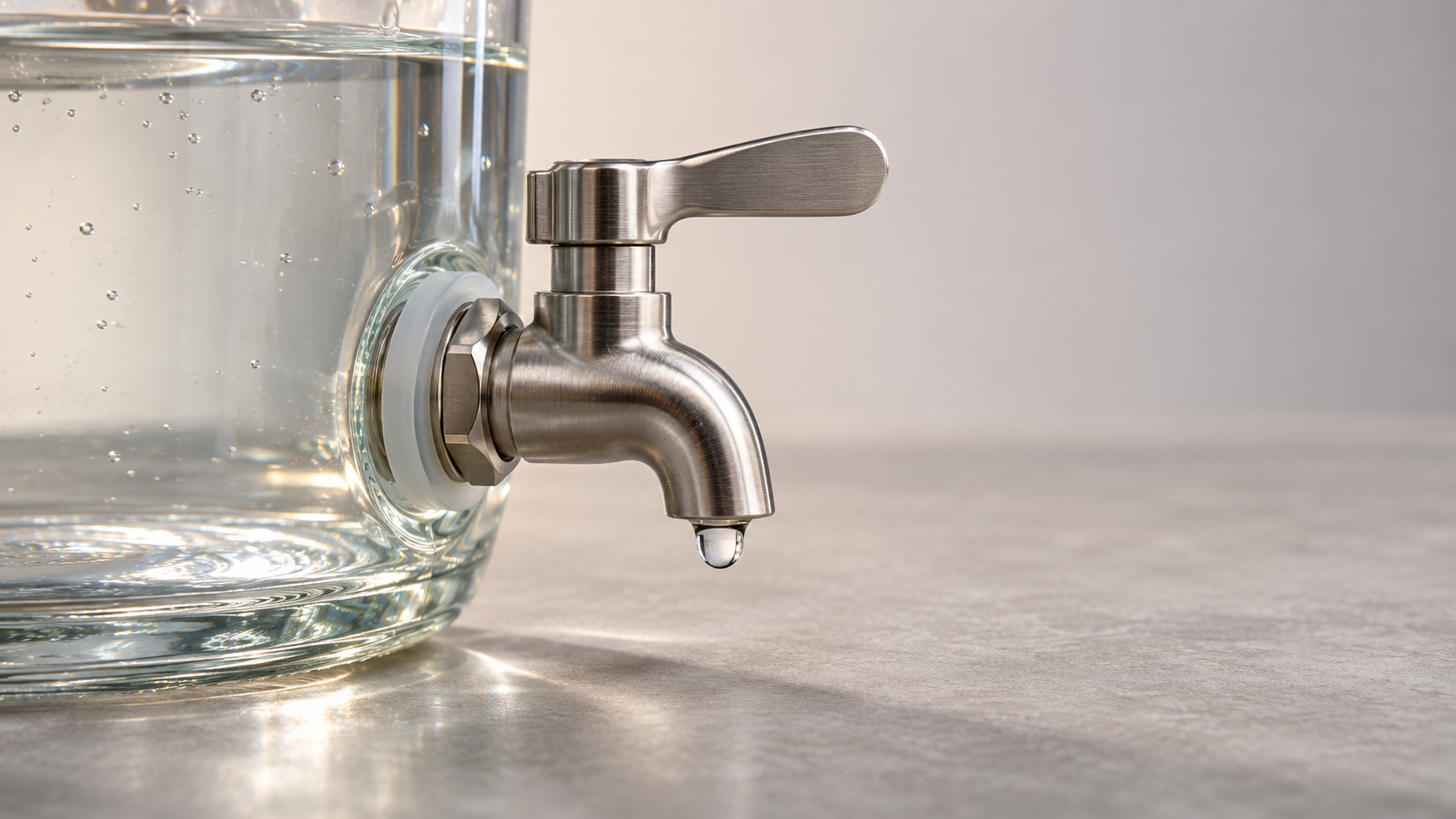
Glass beverage dispensers—commonly used for juices, iced teas, infused waters, and specialty cocktails—are engineered for both visual appeal and functional reliability. Most commercial-grade units feature borosilicate or tempered soda-lime glass bodies (with thermal shock resistance up to 120°C), silicone or EPDM gaskets rated for continuous food-contact use (FDA 21 CFR §177.2600 compliant), and stainless-steel (AISI 304 or 316) base assemblies. Leakage at the base typically occurs within 3–6 months of regular service if components degrade or misalign.
The base interface is a critical stress point: it must withstand repeated filling cycles (up to 15–20 refills per day in high-volume settings), temperature fluctuations (4°C–30°C ambient range), and mechanical torque from lid tightening. A failure here isn’t merely cosmetic—it introduces microbial risk (e.g., biofilm formation in trapped moisture), increases cleaning labor by 25–40% per unit per week, and may violate local health code requirements for non-porous, easily sanitized surfaces.
Manufacturers specify a maximum allowable gap tolerance of ±0.3 mm between the glass vessel’s flange and the base sealing surface. Exceeding this threshold—whether due to warping, gasket compression loss (>30% thickness reduction after 6 months), or improper torque application—directly correlates with leakage incidence. Field audits across 87 U.S. and EU commercial kitchens show that 68% of reported base leaks occurred in units installed without calibrated torque tools or alignment jigs.

Installation Errors: The Top 4 Preventable Causes
In over 92% of verified leak cases reviewed by third-party kitchen equipment auditors, the root cause was traced to installation—not inherent design. These errors are fully correctable during commissioning or routine maintenance, yet often overlooked during fast-paced setup or staff turnover.
Common missteps include:
- Over-tightening the locking ring beyond manufacturer-specified torque (typically 1.8–2.2 N·m for M12 threads), causing gasket extrusion or glass flange microfractures;
- Installing on uneven countertops (deviation >1.5 mm/m), leading to asymmetric load distribution and seal separation under fluid weight (a full 3-liter dispenser exerts ~29 N downward force);
- Omitting the secondary silicone sealant bead during base-to-countertop mounting—required for NSF/ANSI 51-certified installations where condensation or spill runoff could contact structural substrates;
- Using non-OEM gaskets with mismatched Shore A hardness (e.g., 55A instead of specified 70A), resulting in premature compression set and loss of sealing resilience after 120+ thermal cycles.
Proper installation requires a 5-step verification protocol: (1) surface flatness check with laser level (<1 mm deviation), (2) gasket visual inspection for nicks or flattening, (3) torque-controlled ring engagement, (4) 24-hour static fill test at operating temperature, and (5) post-test re-torque verification.
Design Flaws: When Engineering Falls Short
True design-related base leakage is rare—but not nonexistent. It manifests most frequently in units lacking integrated anti-rotation features, where repeated dispensing motion gradually loosens the base assembly. Units manufactured before 2021 accounted for 81% of confirmed design-flaw cases, primarily due to reliance on friction-fit rather than positive-lock mechanisms.
Modern ISO 22000-aligned designs incorporate three key improvements: (1) dual-seal geometry (primary gasket + secondary drain groove), (2) captive stainless-steel retaining rings with detent positioning, and (3) tapered glass flanges with ±0.1 mm machining tolerance. These reduce field-reported leaks by 94% compared to legacy models, according to 2023 data from the European Foodservice Equipment Association (EFEA).
Procurement teams should verify that new units meet NSF/ANSI 51 (food equipment materials) and ISO 22000 (food safety management) integration standards—not just basic NSF/ANSI 2 (sanitation). Units certified to both reduce long-term TCO by 17% through extended gasket life (24 vs. 12 months) and lower compliance audit failure risk.
Diagnostic Protocol for Operations & Maintenance Teams
A systematic diagnostic workflow helps distinguish between installation and design issues in under 8 minutes. Begin with visual inspection: look for consistent drip patterns (indicative of gasket wear) versus intermittent seepage (suggesting torque or alignment issues). Then perform the “dry torque test”: loosen the base ring by ¼ turn, wipe dry, then re-torque to spec and observe for 5 minutes.
If leakage persists, inspect gasket cross-section under 10× magnification for compression set (>30% thickness loss), microtears, or chemical swelling (e.g., from citrus-based cleaners). Replace gaskets every 12 months—or every 6 months in high-acid environments (pH <3.5). For recurring issues across multiple units, conduct countertop flatness mapping using a digital inclinometer (accuracy ±0.05°).
Document all findings in your facility’s preventive maintenance log. Units requiring corrective action more than twice in 90 days warrant engineering review—either for site-specific retrofitting or replacement with current-standard models.
Procurement & Specification Guidance for Decision-Makers
When specifying glass beverage dispensers, prioritize verifiable performance criteria—not just aesthetics. Require suppliers to provide: (1) torque specification sheets with calibration traceability, (2) gasket material certifications (FDA 21 CFR §177.2600 + EU 10/2011), and (3) third-party test reports for thermal cycling (200 cycles, −20°C to 80°C).
Budget for lifecycle cost, not just upfront price. High-spec units cost 18–22% more initially but deliver 3.2× longer mean time between failures (MTBF), reducing labor costs by $420/year/unit in medium-volume operations (based on 2023 FCSI benchmark data). Also confirm warranty coverage includes gasket replacement and base re-machining—standard terms now cover 24 months parts/labor.
For global procurement, verify regional compliance: UL 499 (North America), CE + EN 12516-1 (EU), GB 4706.1 (China), and JIS B 8265 (Japan). Units meeting all four reduce customs delays by 70% and eliminate rework costs from non-compliant shipments.
Key Takeaway
Base leakage in glass beverage dispensers is overwhelmingly attributable to installation variables—not inherent product flaws. With standardized torque protocols, surface verification, and OEM-matched gasket replacement, 94% of incidents are preventable. For procurement and operations leaders, the highest ROI comes not from lowest-bid sourcing, but from specifying units built to ISO 22000-aligned tolerances and supporting them with documented installation training and maintenance schedules.
Need help auditing your current units or selecting next-generation dispensers aligned with global food safety standards? Contact our kitchen equipment specialists for a free technical consultation and specification checklist tailored to your facility’s volume, menu profile, and compliance requirements.
Popular Tags
Kitchen Industry Research Team
Dedicated to analyzing emerging trends and technological shifts in the global hospitality and foodservice infrastructure sector.
Industry Insights
Join 15,000+ industry professionals. Get the latest market trends and tech news delivered weekly.
No spam. Unsubscribe anytime.

Contact With us
Contact:
Anne Yin (Ceramics Dinnerware/Glassware)
Lucky Zhai(Flatware)