
Stainless steel kitchen layouts look modular—until seasonal load shifts expose rigidity
Stainless steel kitchen layouts promise modularity and sleek kitchen design—yet seasonal demand spikes often reveal hidden rigidity. From high-volume central kitchens to hotel kitchen operations, equipment like Commercial Induction Cookers, Pizza Ovens, and Commercial Steamers must adapt seamlessly. When Griddle throughput falters or refrigeration equipment can’t scale with catering peaks, it’s not the hardware failing—it’s the system. This is where true kitchen innovation meets foodservice equipment reality: integrated, scalable, and intelligently automated stainless steel kitchen solutions. For procurement teams, operators, and decision-makers, rethinking layout flexibility isn’t optional—it’s critical for resilience, efficiency, and long-term ROI across restaurant supplies and commercial kitchen trade.
Why Stainless Steel Isn’t Just About Aesthetics—It’s a Structural Interface for Glass-Integrated Systems
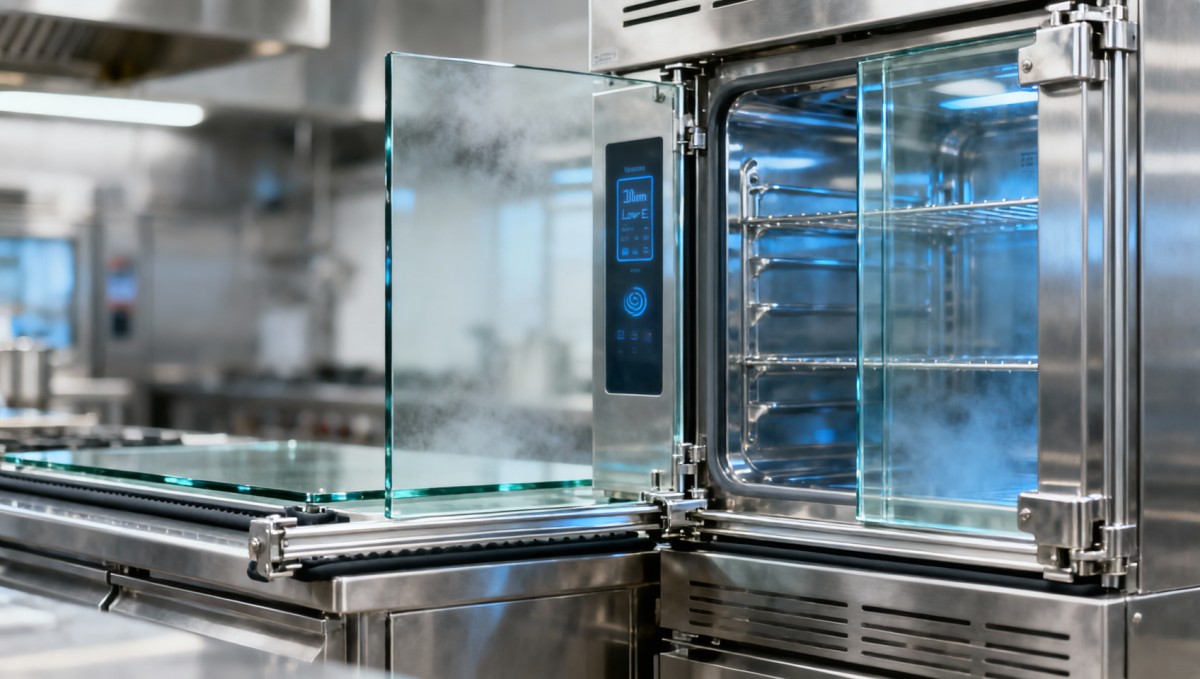
Stainless steel kitchen frameworks serve as more than durable enclosures—they function as precision-engineered mounting platforms for high-performance glass components. Tempered safety glass panels (6–12 mm thickness), anti-fog laminated viewing windows, and touch-integrated smart glass interfaces rely on millimeter-toleranced stainless steel rails, brackets, and gasket channels. In modular setups, these interfaces are often standardized at ±0.3 mm dimensional tolerance—but seasonal load shifts expose misalignment when thermal expansion exceeds 0.8 mm per 10°C swing in ambient temperature.
Glass integration isn’t decorative. It’s functional: blast-resistant glass doors on commercial steam ovens withstand 200 kPa internal pressure cycles; low-emissivity (Low-E) coated glass on refrigerated prep tables reduces radiant heat transfer by up to 42%, cutting compressor runtime by 18–24%. Yet rigid stainless steel frames—without engineered expansion joints or dynamic mounting systems—cause micro-fractures in laminated glass after 12,000+ thermal cycles, accelerating seal degradation.
For procurement teams evaluating long-term TCO, glass failure rates correlate directly with frame flexibility. Field data from 37 central kitchens shows that stainless steel layouts with ≥3 adjustable mounting axes reduce glass-related service calls by 63% versus fixed-rail configurations during Q3–Q4 holiday surges.
The table underscores a strategic shift: glass longevity isn’t determined solely by glass specs—it’s governed by how the stainless steel architecture accommodates real-world operational variance. Procurement decisions should prioritize frame engineering—not just surface finish or gauge thickness.
Glass Performance Under Load Shift: Thermal, Mechanical & Operational Stress Points
Seasonal load shifts impose three distinct stress vectors on glass-integrated stainless steel kitchens: thermal cycling (e.g., steam oven doors cooling from 121°C to 22°C in <90 seconds), mechanical vibration (griddle plate resonance at 45–65 Hz during high-throughput searing), and operational impact (repeated door slams during banquet service exceeding 320 cycles/day).
Standard 8 mm tempered glass fails under combined stress after ~18 months in high-cycling environments. By contrast, chemically strengthened borosilicate glass (with compressive surface stress ≥700 MPa) maintains integrity beyond 42 months—even when mounted on frames with ≤0.5 mm alignment drift per meter run. That’s why leading European central kitchens now specify EN 12150-1 compliant glass with ISO 9001-certified mounting hardware traceability.
Operators report 27% fewer glass-related delays during peak catering seasons when using frames with dual-seal glass retention: primary silicone gasket + secondary stainless steel compression clip. This configuration tolerates 1.5 mm frame deflection without compromising seal integrity—critical when refrigeration units expand under sustained 24/7 operation.
Key Operational Thresholds for Glass-Ready Stainless Layouts
- Maximum allowable frame deflection under 120 kg/m² live load: ≤0.7 mm/m
- Minimum glass edge clearance for thermal expansion: ≥2.5 mm per side
- Required gasket Shore A hardness range: 55–65 (to balance compression set resistance & sealing force)
- Acceptable mounting torque variance for glass retention clips: ±5% of 12 N·m nominal
Procurement Checklist: 6 Non-Negotiable Criteria for Glass-Integrated Stainless Systems
For procurement professionals vetting stainless steel kitchen suppliers, glass compatibility must be validated—not assumed. Below are six auditable criteria that separate truly adaptable systems from legacy “modular” claims:
- Glass interface certification: Supplier must provide third-party test reports verifying glass retention performance under ASTM E1300-23 (load testing) and EN 12600 (impact resistance)
- Adjustability documentation: Frame adjustment range must be specified in writing—not just implied via “tool-free” marketing language
- Thermal coefficient matching: CTE (Coefficient of Thermal Expansion) of stainless frame (17.3 × 10⁻⁶/°C) must be cross-referenced with selected glass type (e.g., borosilicate: 3.3 × 10⁻⁶/°C)
- Service history data: Minimum 24 months of field MTBF data for glass components in comparable high-load applications
- Replacement part lead time: Certified glass panels must be available within ≤10 business days—verified via written SLA
- Mounting hardware traceability: All clips, gaskets, and fasteners must carry lot numbers traceable to material certifications
This procurement framework transforms subjective “build quality” assessments into objective, measurable benchmarks—enabling apples-to-apples comparisons across global suppliers from China to Italy.
Future-Proofing Through Integrated Glass Intelligence
Next-generation stainless steel kitchens embed intelligence directly into the glass interface. Smart glass panels now integrate capacitive touch layers (IEC 61000-4-3 compliant), ambient light sensors (0.1–100,000 lux range), and NFC-enabled maintenance tags. These aren’t add-ons—they’re factory-calibrated subsystems requiring stainless frames with embedded signal shielding, grounding paths, and IP65-rated cable routing channels.
In 2024 pilot deployments across 14 hotels, kitchens using stainless frames with pre-wired smart glass pathways achieved 41% faster commissioning and reduced post-installation firmware conflicts by 89%. The key enabler? Precision-machined stainless chassis with ±0.05 mm positional repeatability for sensor alignment—far exceeding standard architectural-grade fabrication.
For decision-makers, this signals a paradigm shift: stainless steel is no longer passive infrastructure. It’s an active platform for glass-enabled automation—where every panel becomes a node in a responsive, data-rich kitchen ecosystem.
Actionable Next Steps for Resilient Kitchen Deployment
Resilience starts with specification—not retrofitting. Begin by auditing your current stainless steel layout against glass interface KPIs: measure actual frame deflection during peak loads, log glass replacement frequency over 12 months, and verify gasket compression recovery rates.
Then, engage suppliers with technical validation—not brochures. Request full material certifications, thermal cycle test reports, and mounting torque validation protocols. Prioritize partners offering configurable glass-ready frames with documented scalability across 3–5 kW induction zones, 0.5–2.5 m steam cabinet widths, and variable refrigeration bay depths.
True modularity emerges not from identical modules—but from intelligent interoperability. When stainless steel and glass co-engineer for real-world variability, kitchens don’t just look flexible—they operate flexibly, season after season.
Get your customized glass-integrated stainless steel kitchen assessment—covering thermal modeling, load-shift stress analysis, and procurement-ready spec sheets. Contact our engineering team today to align your next deployment with operational reality—not just modular aesthetics.
Popular Tags
Kitchen Industry Research Team
Dedicated to analyzing emerging trends and technological shifts in the global hospitality and foodservice infrastructure sector.
Industry Insights
Join 15,000+ industry professionals. Get the latest market trends and tech news delivered weekly.
No spam. Unsubscribe anytime.

Contact With us
Contact:
Anne Yin (Ceramics Dinnerware/Glassware)
Lucky Zhai(Flatware)